Updated Apr 29, 2026

Stridewise
Boots, Denim and Casual Stuff
There’s no high-quality statistics on the matter, but data suggests that most jeans sold are made with stretch denim.
Hiroshi Kato, though, took the everyday stretch denim and figured out how to make it luxury: it’s designed with four-way stretch, woven on rare antique shuttle looms, and made with core spun yarns that ensure it’ll fades just like vintage jeans.
And they say they’re the only brand in the world that ticks all these boxes.
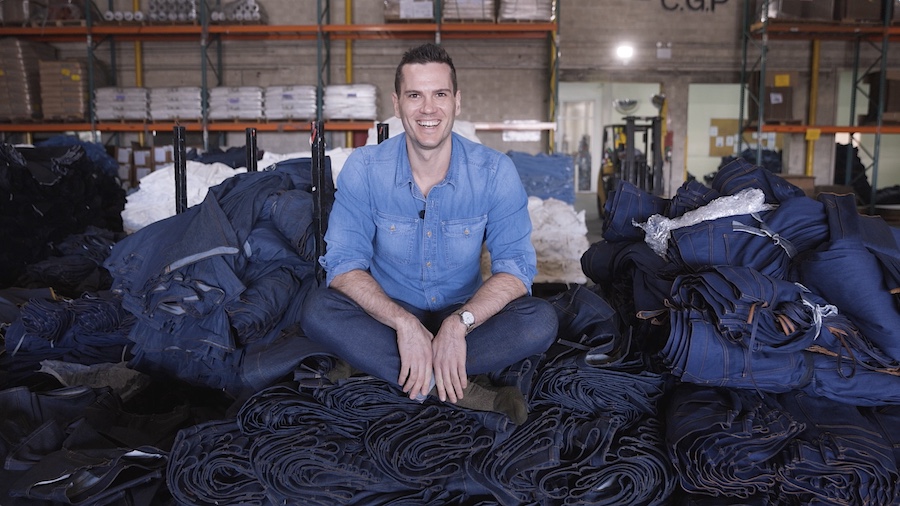
On a recent trip to Los Angeles to visit my aunt, I finally convinced the crew at Hiroshi Kato to let me visit their California jeans factory, which is also the name of my upcoming synth pop album.
Join me for a peek behind the curtain that includes something I’d always wondered: how do they “pre distress” jeans at the factory?
Before we go through the details, here is a quick summary of Hiroshi Kato’s process:

High end stretch denim that's woven on antique looms and spun in a way that makes it wear and fade like vintage jeans.
Before it’s sent to California to be transformed in to jeans, the denim is woven in Japan.
It’s worth emphasizing that Kato’s denim is selvedge, meaning it’s woven on antique shuttle looms. They’re harder to maintain, work more slowly, and tend to be used to make denim that’s thicker and/or more textured than the denim you’ll find in cheaper brands.
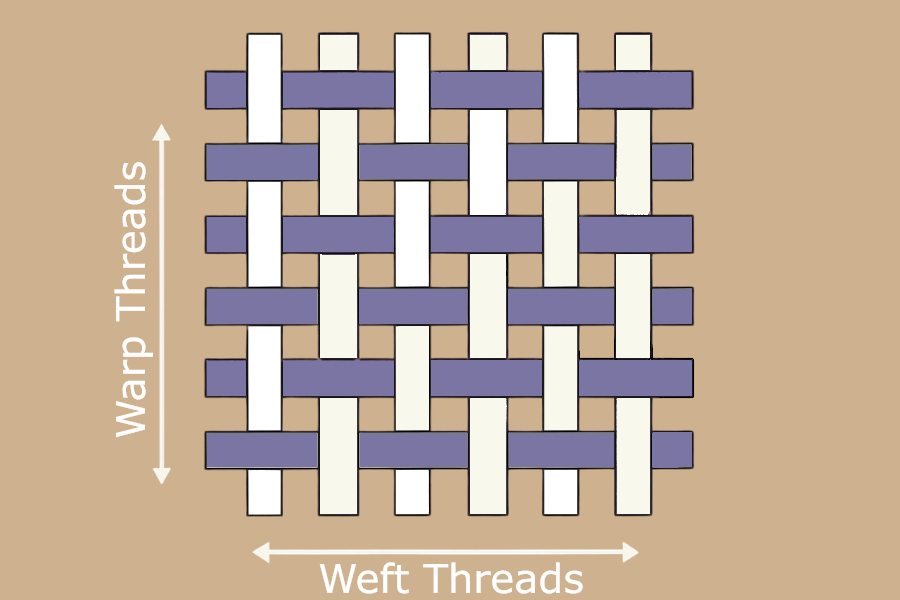
Now, denim is made by weaving yarns in two directions: the warp and the weft.
“Our fabric is created by incorporating polyurethane into both the weft and the warp yarns in the looms,” says Ashley Walters, the Director of Development. “When this process is done on vintage shuttle looms — an old-school method — it results in a natural twisting of the fabric, characteristic of traditional old-school denim.”
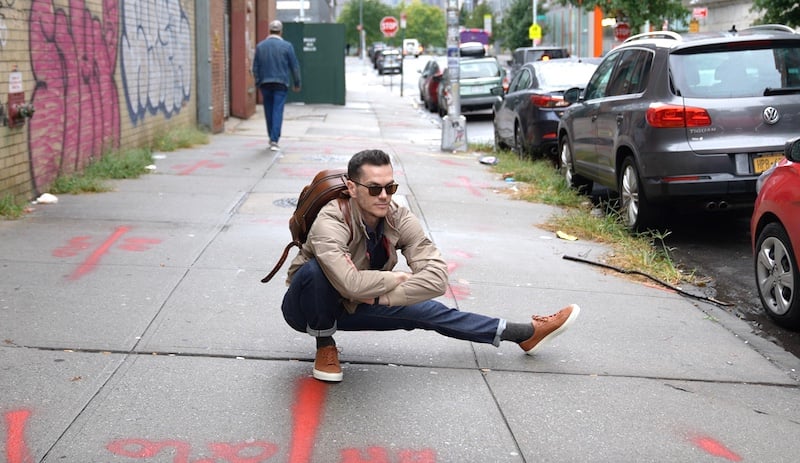
Making both the warp and the weft yarns stretchy is less common than you’d think in high end “selvedge” denim. It creates what they call both “four-way stretch” and “360 degree stretch,” which mean what you’d think: it stretches in every direction, making supremely sweatpants-y feeling jeans.
After it’s woven, the denim is sanforized, a process that treats the fabric with some combination of heat, pressure, moisture, and/or chemicals that effectively “pre shrink” it. Before sanforization was invented, all jeans were “shrink to fit”: they’d shrink a good two sizes on the first wash.
Further Reading
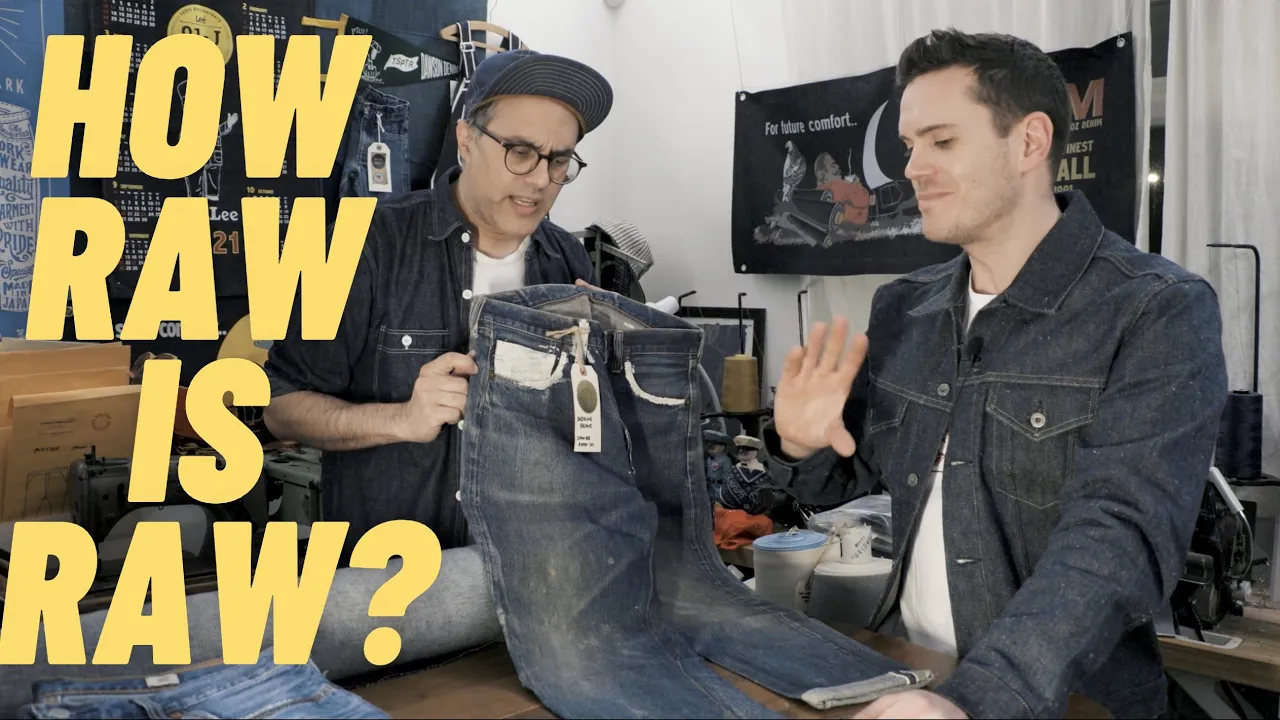
In London, an expert walks through why most jeans are sanforized — and why his aren’t. Learn more →
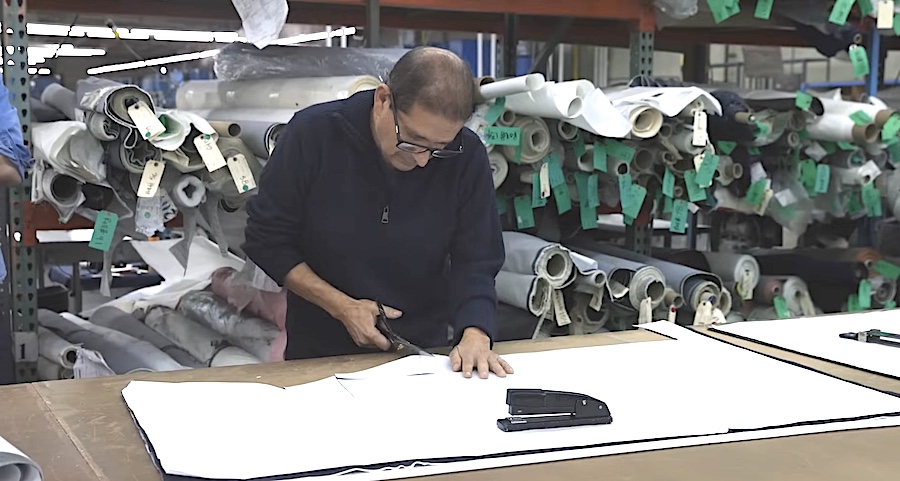
After the fabric is woven, the next step is cutting and sewing. The fabric goes to the cutting table, where it is laid out and cut. At Hiroshi Kato, the fabric is cut by hand.
Every jean is made with a “pattern,” which lays out the size and shape of all the pieces that will get sewn together. Patterns are expensive to produce and closely guarded: they have everything to do with how the garment eventually fits.

“The selvedge fabric is spread out and cut manually, unlike most places that perform this step with a machine,” says Jose Zavala, the Director of Production. “It’s important to cut by hand so that we can preserve the selvedge edge of the denim, which many customers value as a signifier of how it’s woven.”
One of many ways selvedge denim is different to the regular kind is that there’s a “self finished edge” running along the fabric. That “self edge” is what a lot of denimheads show off when they cuff their jeans.
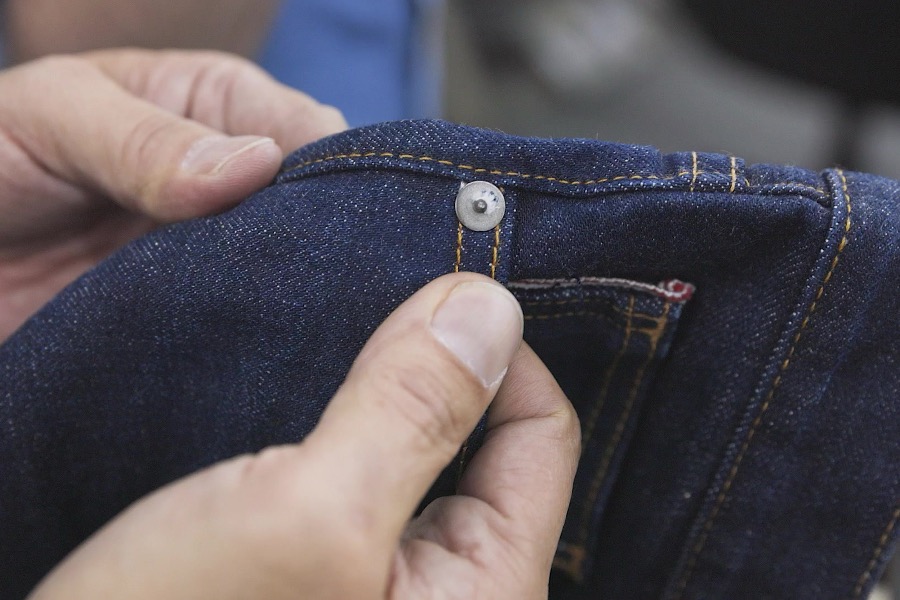
For sewing, Hiroshi Kato focuses on key details that distinguish the Kato brand.
“The brand concept is vintage meets comfort,” explained the (very important) Brand Director, Takayuki “Nick” Noguchi. “I have a private collection of many vintage jeans with vintage details and hardware.”
Jeans vary in their construction more than you might think, and Kato put a lot of thoughts into how and where they attach rivets, where they use dense “bar tack” stitching instead, where they display the selvedge fabric’s edge, the belt loop design, and exactly how to sew the back pockets.
Since it was central to the original patent, it can be argued that jeans are defined by the presence of rivets at stress points. This makes them less likely to tear apart than regular stitching.
Kato uses vintage rivets such that when the nail punctures the garment, it creates an excess of fabric, which is a cool detail in the jeans. Enthusiasts notice when the rivet has a little cotton stuck on the end and they know that this means the brand went the extra mile to mimic traditional garment making.
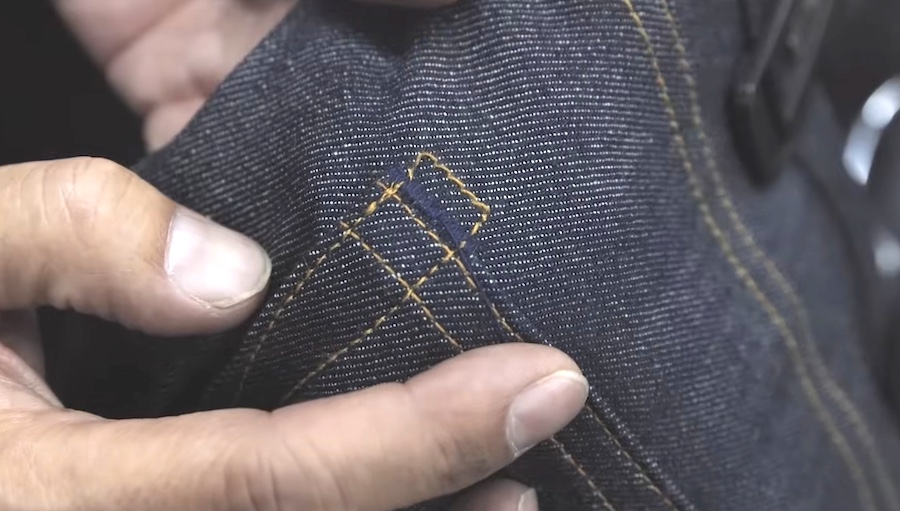
But you can instead decide to reinforce these points with bar tacks: an extremely dense series of stitches that also adds a huge durability boost.
“We use a vintage method of bartacking: on top of the stitch, we have a zig-zag going across to give that reinforcement,” says Jose. “It requires a lot of attention to detail. When the operator creates this bar tack, they must ensure it lands exactly between the panel and the back pocket. It’s a traditional and special feature for Kato construction.”
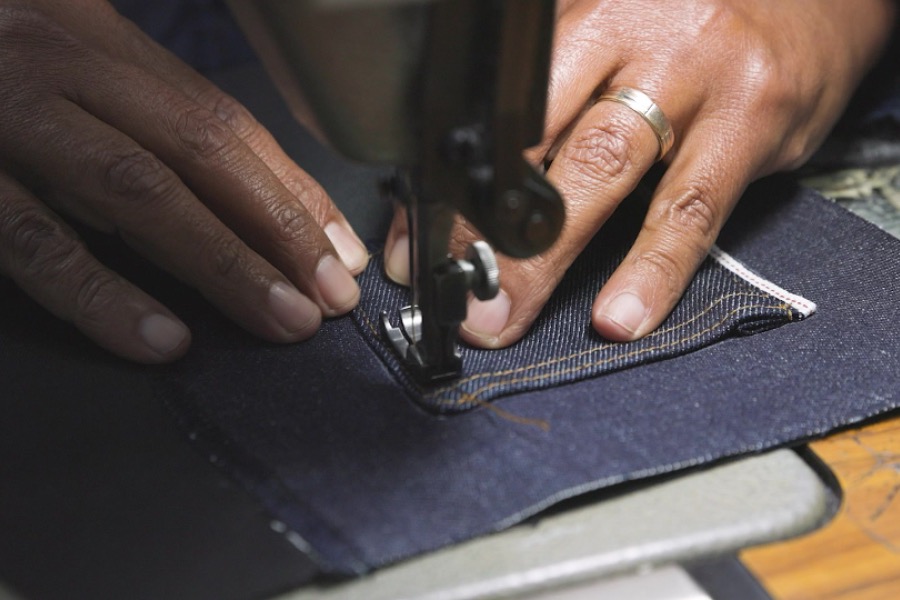
That “selvedge edge” is sacred, and enthusiasts tend to love it when a brand goes to the trouble of including it on the coin pocket.
“Nick made sure the selvedge ID would show on the top portion of the garment, rather than just on the bottom,” says Jose.
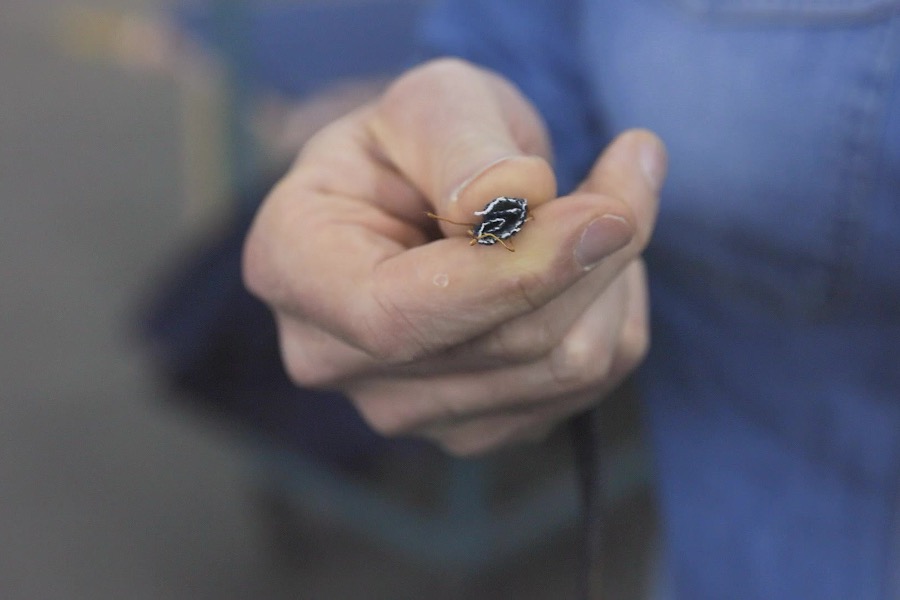
Belt loops are another detail to which Hiroshi Kato pays close attention.
Instead of laying a couple of piece of fabric on top of each other, they roll a longer piece of fabric together and bunch it up, creating a belt loop that’s denser and stronger than most.
“That helps the belt loops withstand heavy abrasion, and it makes them fade in a more interesting way ,” says Jose.
High end stretch denim that's woven on antique looms and spun in a way that makes it wear and fade like vintage jeans.
A lot of Kato’s jeans are raw, meaning they haven’t been softened, faded, or distressed before you buy them.
But most jeans on the market aren’t raw; even if they don’t look faded, they’ve been washed to make them softer.
Like most jeans companies, Kato has a wide range of “washes” (washing processes) that create different looks for their products. (Designing “washes” can include complex chemistry and is one of the jobs our pal Mohsin Sajid performs for denim brands.)

For example, if they’re trying to mimic a particularly well worn pair of jeans, they’ll add potassium to the thighs to heighten the fades — because people rub and rest their hands on their thighs more than they realize.
If they’re trying hard to recreate the softness of well worn jeans, they’ll stonewash them: literally pouring pumice stones into large washing machines that beat up the fabric as it spins.

Some extra distressed jeans will also involve abrading them with a mixture of sandpaper by hand and whirring, dremel-like tools that create the kind of pocket fraying you’ll get after years of putting your hands in and out of your pockets.
Further Reading
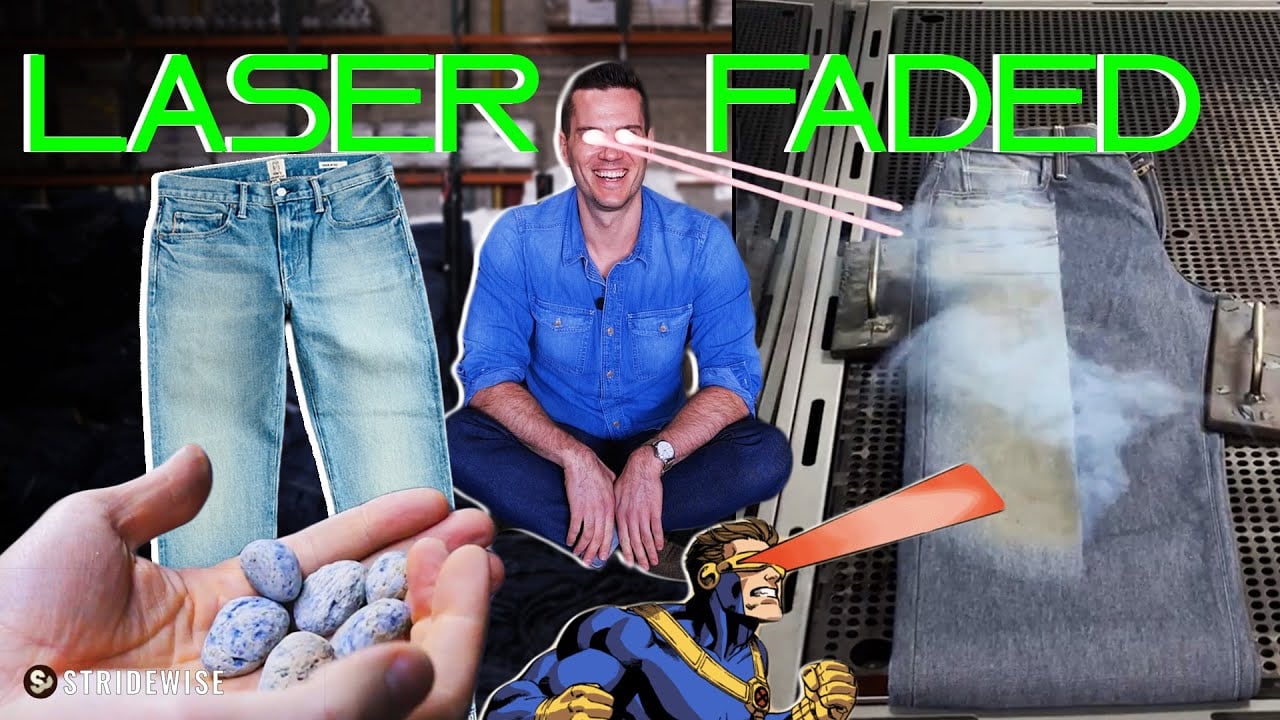
A more in-depth look at the process, chemicals, and stones they use to make new jeans look old.
Learn more →
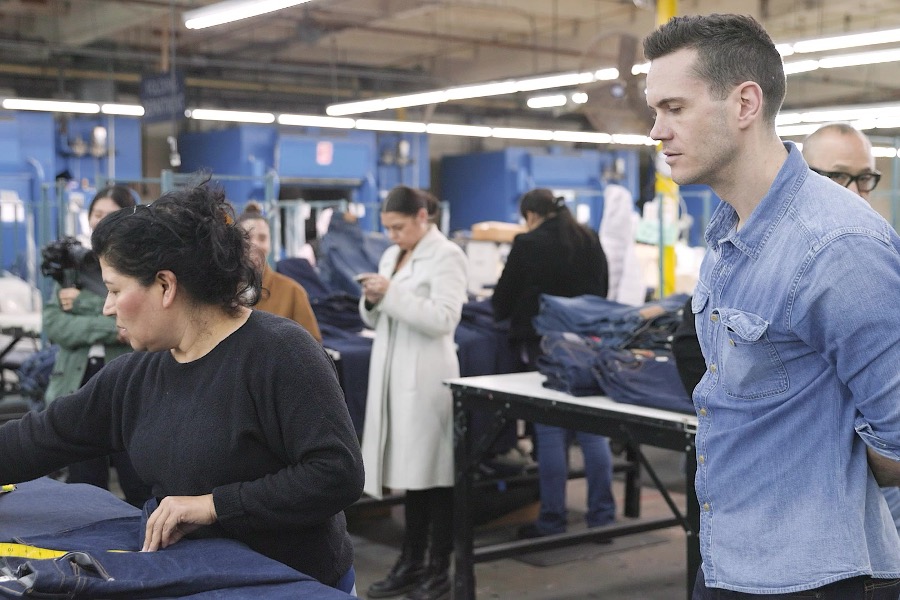
After sewing, they measure the fabric. Then it goes to the laundry. When it comes back, they remeasure it. This allows them to calculate garment shrinkage and adjust the pattern correctly, ensuring that after the wash, the jeans hit their target specifications.
Working in this field for a while, I’ve realized that fit consistency can make or break a brand. Many brands might have good prices and fabric, but if you can’t count on the fit, that reputation spreads and can tank the brand.
“We have a very minimal tolerance for being out of spec, usually a maximum of half an inch,” says Ashley. “This ensures that when you buy your size 30, it will fit you consistently like your other pairs from us.”
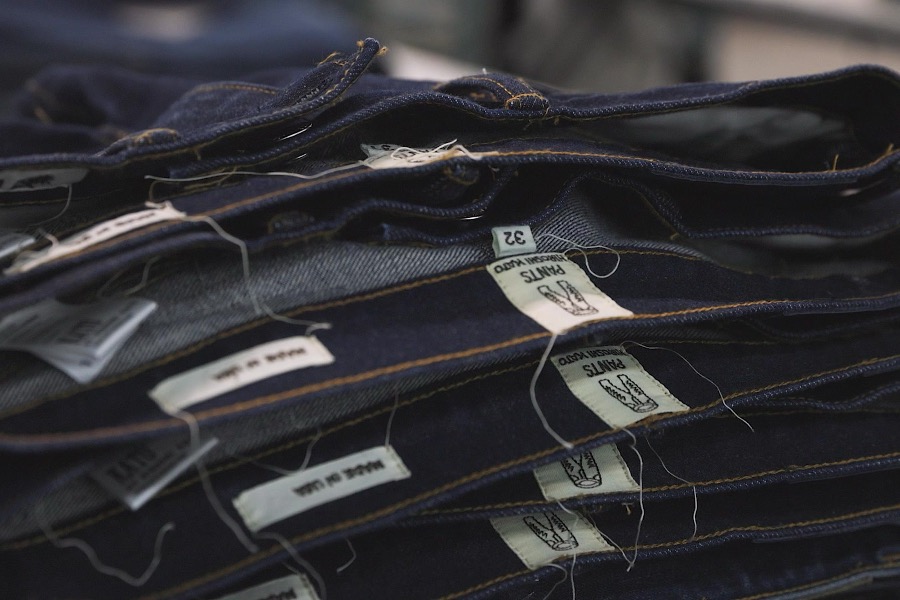
No matter how many times I visit a factory, I’m surprised by how much time is spent “finishing” the products.
This is where they apply all labels, buttons, and rivets, and then they press the jeans.
“One of the most critical processes in finishing is the inspection,” Jose explained. “If any quality issues are found, those garments are pulled aside and not shipped as first quality.”
The most common (and somewhat unavoidable) defects are fabric flaws. It can be difficult to catch these flaws earlier in the process, but the washing process usually makes them easier to find.
High end stretch denim that's woven on antique looms and spun in a way that makes it wear and fade like vintage jeans.
I’m really grateful they let me visit their factory — they aren’t usually the most aesthetic places, so it’s rare for a brand to grant access.
From the four-way stretch fabric to when they choose bar tacks over rivets, Hiroshi Kato’s approach of blending vintage and modern garment making sets its selvedge denim apart.

This is my website, so I'll just write in first person. I'm the founder and editor of Stridewise, where I have spent nearly a decade covering boots and casual menswear.
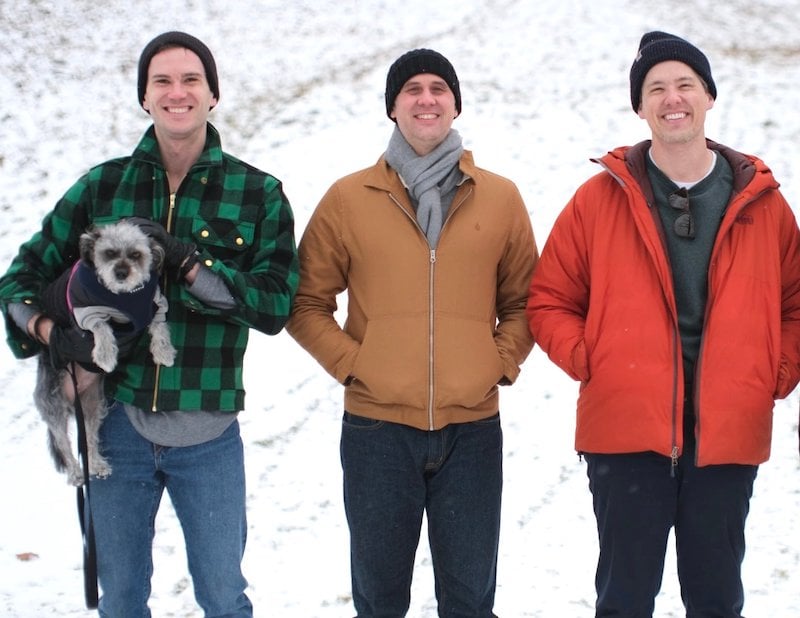
by Nick English
Founded in 2018 to help men buy the best boots, we’ve since expanded our team and purview to review and celebrate casual footwear and menswear that’s as close to “buy it for life” quality as possible. We take great pride in being a trusted source for information while maintaining complete editorial independence. At no extra cost to you, we might earn a commission from a brand when you purchase through our links, which helps us keep our mission alive. Learn More
Casual Durable™.
Yup, we even trademarked it. Just because you’re dressed down, doesn’t mean you have to dress bad.
This site started to help guys find the best boots for their dollar and has since expanded to cover the highest quality casual menswear, from leather jackets to selvedge jeans to canvas bags — the kind of simple, fashionproof classics that help you get dressed without overthinking your “style.” Read more
Subscribe for an exclusive article to help you find the best deals on quality footwear.