Updated May 14, 2026

Stridewise
Boots, Denim and Casual Stuff

Expert Verified By: George Vlagos, Founder, Oak Street Bootmakers & Michael Batson, Vice President, North Star Leather Company
Cows, bison, and buffalo all come from the Bovine family, but they have a lot of differences. And yes, buffalo and bison are usually different animals.
Despite how widespread bison are in American culture and Native American history, awareness and prevalence of bison leather products are still quite small.
While cowhide is the most widely used leather in the world — technically, we’re referring to steerhide, as bulls and dairy cows seldom become meat — bison leather is an attractive alternative for leather goods and footwear.
Or it can be, if the customer can handle its completely different appearance.
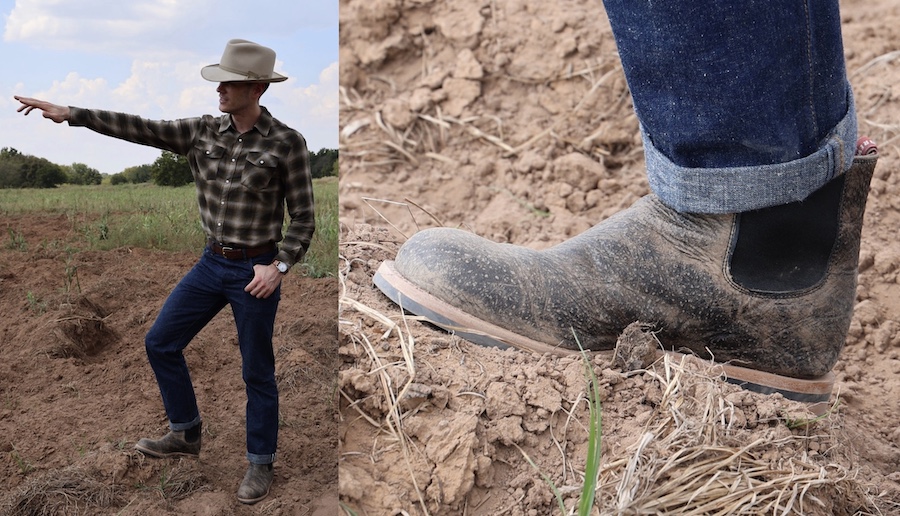
We spoke with a bootmaker, a leatherworker, and a leather maker for this article.
First is George Vlagos, founder of Oak Street Bootmakers; there’s also Michael Batson from North Star Leather Company; and finally, we spoke to perhaps the world’s foremost authority on bison leather: Ryan Law of Law Tanning, the best-known producers of the stuff.
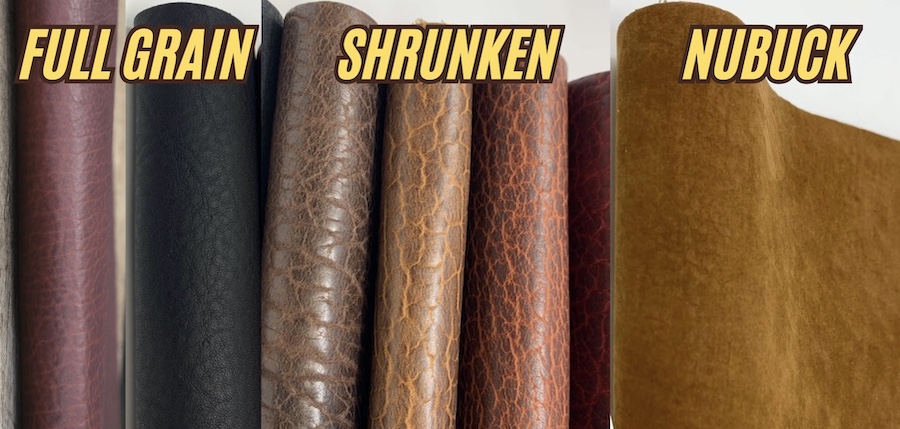
“Bison is native to the United States, so we call it the original American leather,” says Law. “When compared to cowhide, it has a much more ‘pebbled’ appearance with a more distinctive grain pattern and natural striations.”
Bison leather is well known for the wrinkly, pebbly look you can see in the picture of Law’s “full grain” bison leather (an article they call Iowa) on the left side of the image above. But you might not know that tanners can make all sorts of leathers here: they can remove a lot of that character by making nubuck or suede, or they can accentuate the character by making shrunken bison.
(“Shrinking” is achieved by a few hard-to-describe processes at the tannery that concentrate its density.)
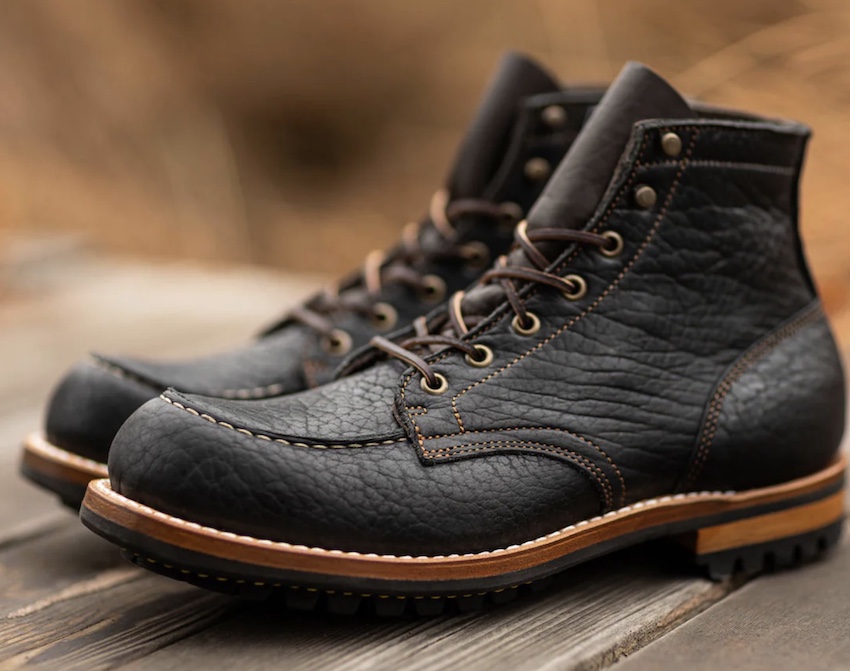
We all love easy answers, but that’s rarely how leather works: the way it’s made usually has a bigger impact on look and performance than which animal it’s from.
“It’s hard to say conclusively about bison leather being better because the characteristics are so varied,” says Batson. “Unlike cowhide, bison leather hides are not as stretched in the process in order to preserve the unique grain pattern of the hide. This makes bison leather marginally thicker and stronger than cow leather.“
“Bison could be stronger than steerhide, but it depends on the age of the animal, the thickness of the side, and what you’re putting into it as far as extracts, tannins, waxes, oils, fillers, if and how much you’re tumbling it, and more,” says Law.
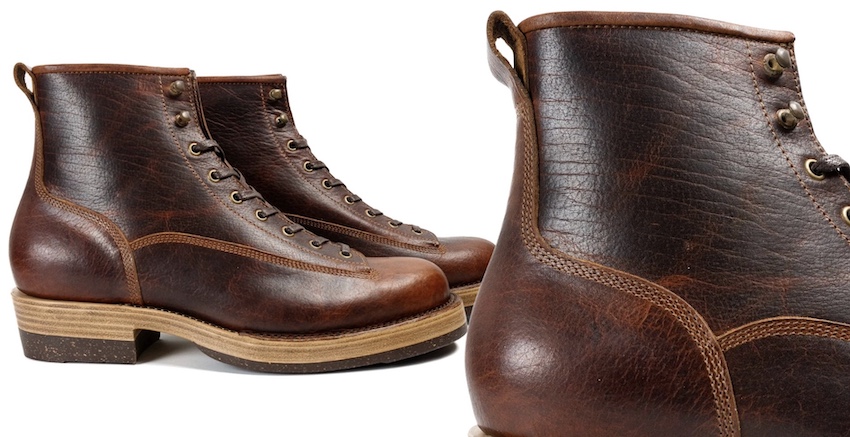
When discussing a leather’s “strength,” we’re usually talking about tensile strength, and bison leather will probably have greater tensile strength than cowhide.
But bison is not always stronger by definition. And more importantly, it’s not like boots made from cowhide leather are known for tearing. Comparing the leathers’ tensile strength is interesting from an academic perspective, but when it comes down to it, your decision should be based more on what kind of look you prefer — and what kind of story.
“We sell both cowhide and bison, and they perform about the same on all the grain tests we’ve done,” says Law. “They perform similarly, but they look different.“
Further Reading
To learn more about the difference between animals’ leathers, check out our interview at an American jacket factory. Learn more →
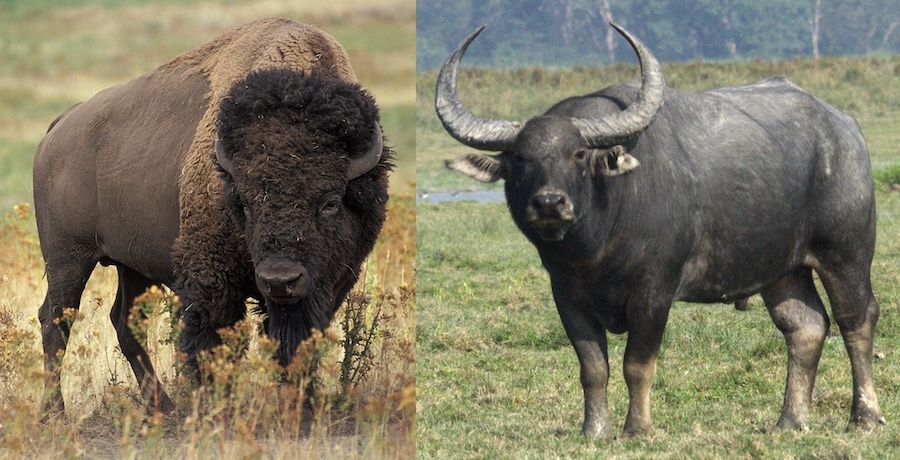
The first thing Batson wants you to know is that even though buffalo and bison are often used interchangeably, they are indeed two separate animals.
“Many Americans think buffalo and bison are the same, but they are not,” he explains. “If an American company sells it, it’s probably from the North American bison. But if you see a leather product called buffalo, it might come from the Asian Water Buffalo or the African Cape Buffalo.”
When you’re classifying animals, it goes Kingdom, Phylum, Class, Order, Family, Subfamily, Genus, and Species. Asian and African buffalo are in the same Subfamily as the American bison, which is called Bovinae.
But they’re not just different Species, they’re in a different Genus: the bison’s is called Bison (shared by the European bison), the buffalo’s is called Bubalus.
“Asian buffalo has a totally different grain structure,” says Law. “Both are very strong, and it depends on what you want. Buffalo has a much bigger hair follicle structure, but it has a flatter look overall. Bison has a more conspicuous grain and much denser hair follicle density, but the hairs are finer. I think there’s a lot more natural character to the American bison.”
So, whether you’re looking for buffalo or bison leather, make sure you get more information than just the words “buffalo leather” so that you know which species — nay, Genus — it comes from.
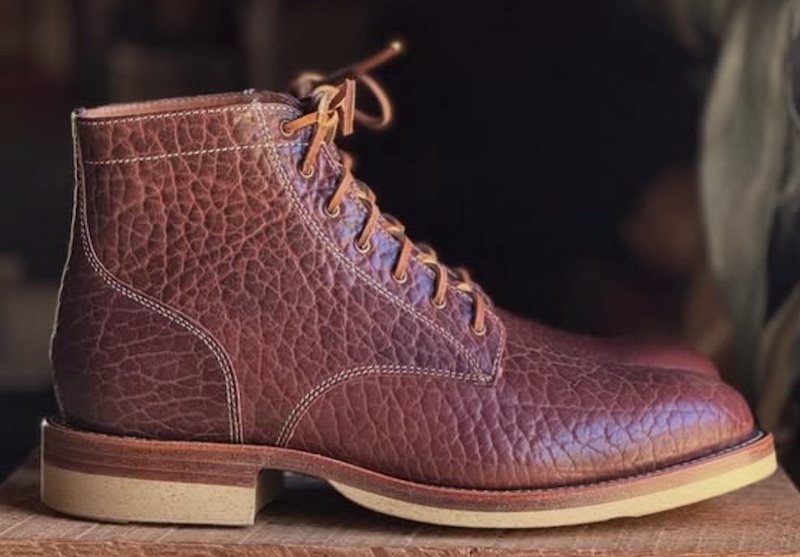
Again, this has way more to do with how the leather’s made than what animal it comes from.
“We can tan it in any number of ways,” says Law. “We can have a pure veg tan for a nice stiff leather, or we can leave it very soft as well. We can do shrunken, which accentuates and draws all those natural wrinkles in, giving them an even more pronounced grain character. Or we can do a smoother bison, we can do all different things.”
Still, it’s worth noting that bison have larger pores and widely spaced fibers, which can mean greater breathability.
But because customers tend to associate bison with tough — in other words, because customers tend to want bison to be extra durable — Law tends to make their bison leathers pretty dense and hardy, so their bison tends to be less soft and stretchy and thin than cowhide. Just keep in mind that cow isn’t softer by definition, and there are plenty of very thick and stiff cowhide leathers out there.
Remember what Law said: cowhide and bison perform very comparably; the difference is more in how they look and how they’re made.
[Related: Chrome vs Vegetable Tanning – What’s the Difference?]
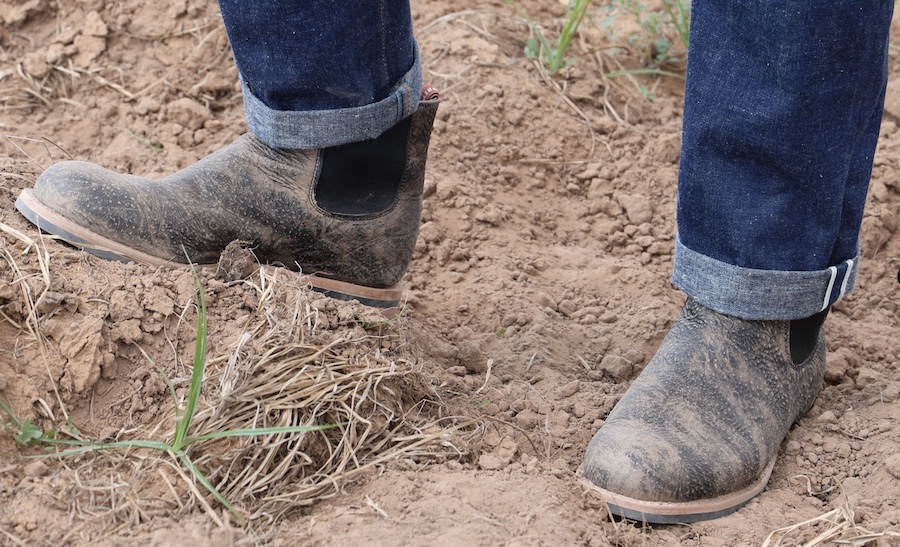
Bison are larger animals, but the hides are typically smaller in area because they aren’t as stretched. They also tend to cost more to farm, and there are way fewer tanneries making bison leather — but the price difference isn’t all that noteworthy.
“I usually only buy a few skins at a time, which are slightly more expensive,” says Batson. “But if you buy larger quantities, the price of bison versus cow is more comparable.”
[Related: The Pros and Cons of Camel Leather]
Treating and caring for bison leather is similar to that of other leathers.
“Brush it when it gets dirty, and if it gets wet, let it dry properly before wearing them again,” says Batson. “And remember to condition the boots if they get dry.”
As bison’s tanning process usually (but not by definition!) does not include surface finishes, bison leather tends to dry out faster than other kinds of leather, so it is important to condition bison leather boots to keep them strong.
The industry recommendation is Leather Honey, which is explicitly useful for bison leather.
Is bison leather for you, or should you go with cowhide, or some kind of buffalo? It comes down to what kind of look you want and how the leather was made.
If you’re comparing two different products, ask the brand about the differences in how each leather performs. This will tell you a lot more about the practical implications of your boot choice than merely knowing which animal the leather is made from.
Thanks to Cecil Miskin at Herd Wear for his help with this article.
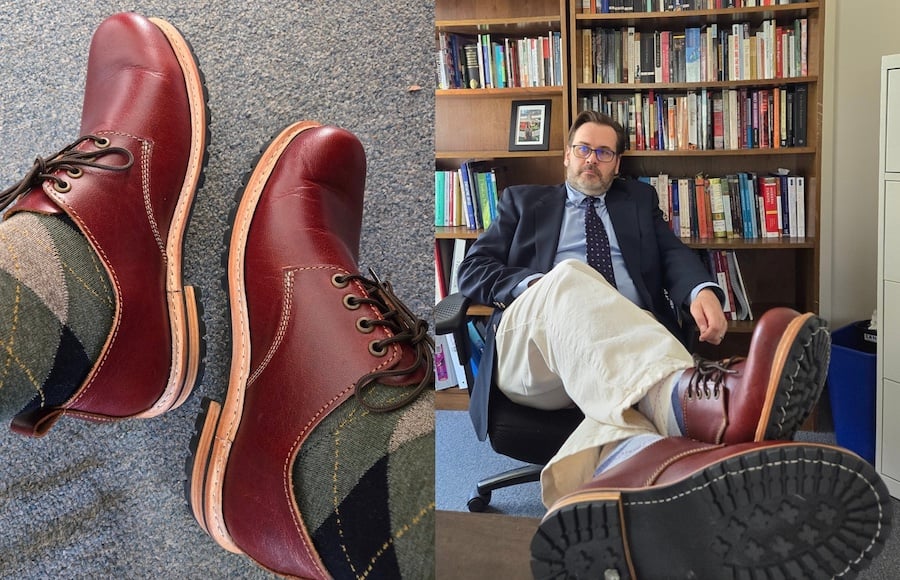
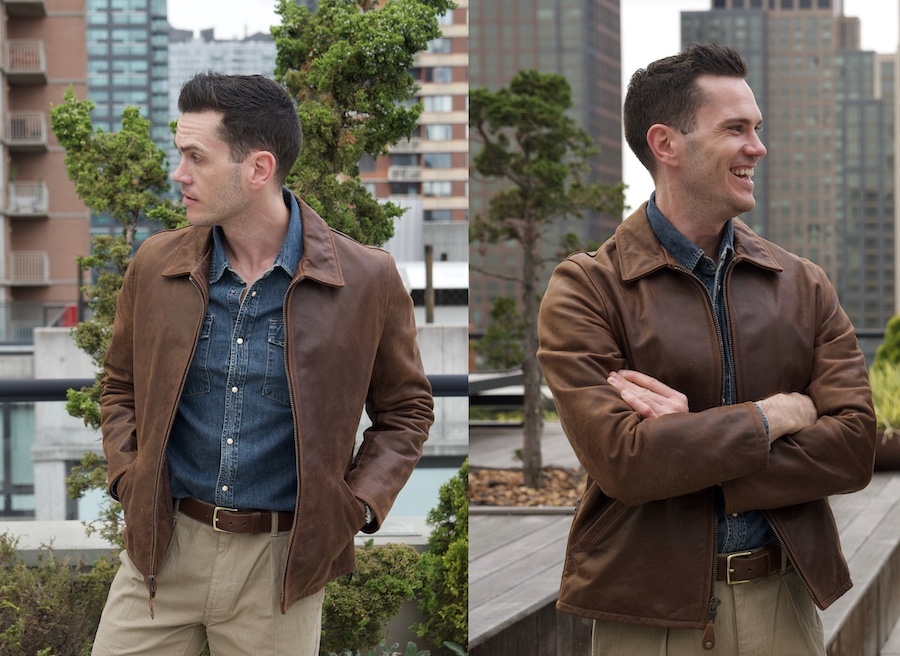
Thanks to Law Tanning, Caswell Boot Co, and Truman Boot Co for supplying images.

This is my website, so I'll just write in first person. I'm the founder and editor of Stridewise, where I have spent nearly a decade covering boots and casual menswear.

by Nick English
Founded in 2018 to help men buy the best boots, we’ve since expanded our team and purview to review and celebrate casual footwear and menswear that’s as close to “buy it for life” quality as possible. We take great pride in being a trusted source for information while maintaining complete editorial independence. At no extra cost to you, we might earn a commission from a brand when you purchase through our links, which helps us keep our mission alive. Learn More
Casual Durable™.
Yup, we even trademarked it. Just because you’re dressed down, doesn’t mean you have to dress bad.
This site started to help guys find the best boots for their dollar and has since expanded to cover the highest quality casual menswear, from leather jackets to selvedge jeans to canvas bags — the kind of simple, fashionproof classics that help you get dressed without overthinking your “style.” Read more
Subscribe for an exclusive article to help you find the best deals on quality footwear.