Updated Feb 10, 2026

Stridewise
It's a Boot Time
Most articles treat “types of jeans” like it’s all about the fit. It isn’t. You want to make sure you get the most comfortable fit and the right fabric, because there literally thousands of different combinations of the humble jean.
With so many different cuts, washes, weights, and textures, buying a pair of jeans can be a challenge.
If you’re just trying to buy one pair that won’t make you feel like you’re chasing a trend, focus on fit first. A sensible fit can make even budget jeans look put-together, while an awkward fit will make even expensive selvedge denim look off.
I spoke with denim experts, tailor Alejandro Jomar and Benzak Denim Developers founder Lennaert Nijgh, to find out how you can buy the best type of jeans that’ll look great for years to come.
Related reading: Best Selvedge Denim | Best Athletic Fit Jeans (Relaxed Tapered) | Raw vs Selvedge vs Sanforized vs One-Wash
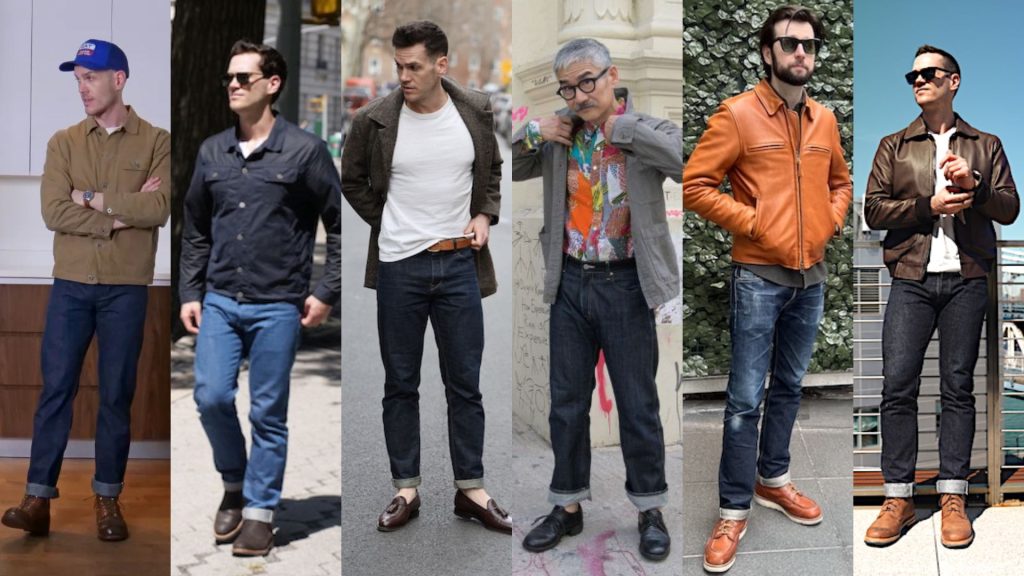
If you want the least controversial option, start with straight leg. If you lift or have big thighs, go relaxed tapered. If you’re wearing smart casual shoes or loafers, mind the hem and the shoe shape and go with a straight tapered fit. Most guys can skip extremes like baggy or skinny fits unless you’re going for a very specific look.
| Fit type | Cut | Best for | Notes from Stridewise experts |
|---|---|---|---|
| Straight leg | Even width to hem | Most guys; most shoes and boots | The safe default. |
| Straight + tapered | Narrows below knee | Smart-casual; loafers and leather sneakers | Works best with sleeker loafers and sneakers and a not-too-tight hem. |
| Relaxed / loose | More volume through leg | Casual, streetwear; comfort | Roomy can look intentional if rise and hem are right. |
| Slim / skinny | Closer to the body | Minimal fits; sharp shoes | Less popular now, but still wearable |
| Relaxed tapered | Room + taper | Guys with bigger thighs | Our often recommended “modern” fit. |
Two details matter across every fit: rise and hem. A higher rise generally looks cleaner (and stays put, no plumber’s crack) on more body types; a hem that’s too tight makes the whole outfit feel cramped, while a hem that’s too wide can swallow your shoes.
The goal is balance.

Straight leg jeans keep the leg opening consistent from the thigh down to the hem. They don’t hug the ankle, and they don’t balloon out. That balance is why straight leg is the most reliable option for almost any age or body type.
When you want to dress as uncontroversially as possible, straight leg is the way to go. It’s also the fit that makes the most sense if your denim has a lot of texture (slub or nep, more on that later), because the fabric can be the “statement” while the cut is middle of the road.
“When in doubt, stick with a timeless straight-leg,” Alejandro Jomar. “Full Count’s 1101 (or a classic 501 repro) is ideal.”
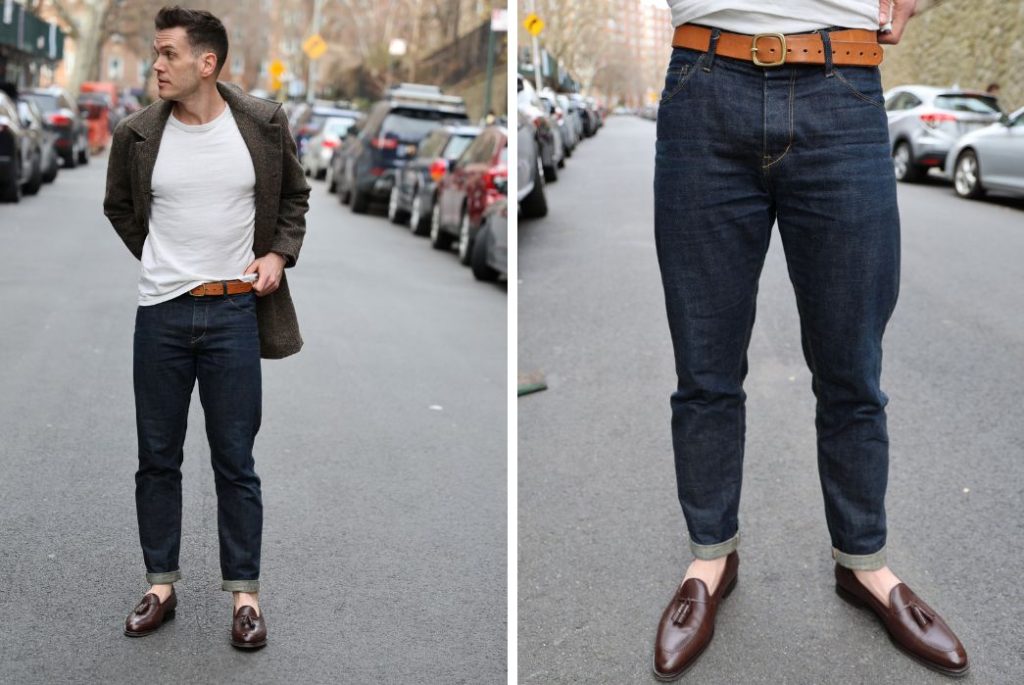
If we had to pick one cut that solves a lot athletic guy’s biggest problems: big thighs, bigger glutes, or just wanting jeans that move — it’s relaxed tapered. You get room where you need it, and a taper so you still look put-together.
In our athletic-fit guide, we argue for a specific combo: high rise plus relaxed taper. A higher rise helps keep the waistband stable when you sit and move, and the extra room in the seat and thigh reduces pinching and premature blowouts.
“Through painstaking trial and error I have found selvedge brands with the right fit for guys who lift,” says Nick English Stridewise Editor in Chief. “That fit is: the high rise relaxed tapered.”
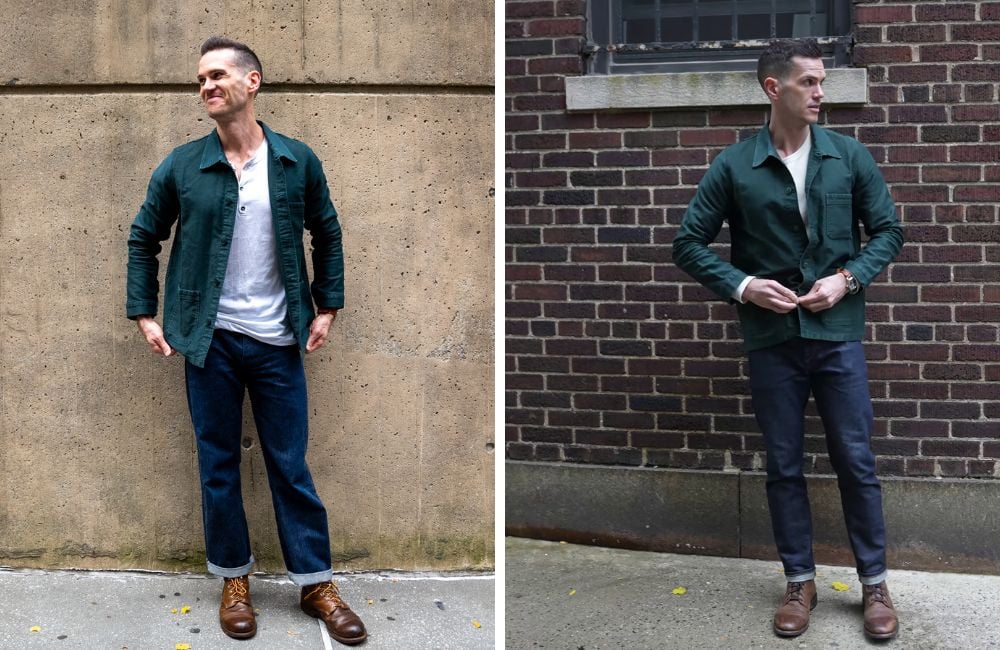
Skinny jeans aren’t the default style move anymore, but slim and skinny cuts aren’t automatically “out.” The issue is extremes: tight waist, tight thigh, and tight ankle all at once is where comfort and style usually fall apart.
Our best advice is to treat modern skinny like “strong taper,” not “painted on.” A good “skinny” jean usually has at least one pressure-release valve: stretch in the fabric, a curved waistband, or an ankle opening that isn’t vacuum-sealed to your leg.
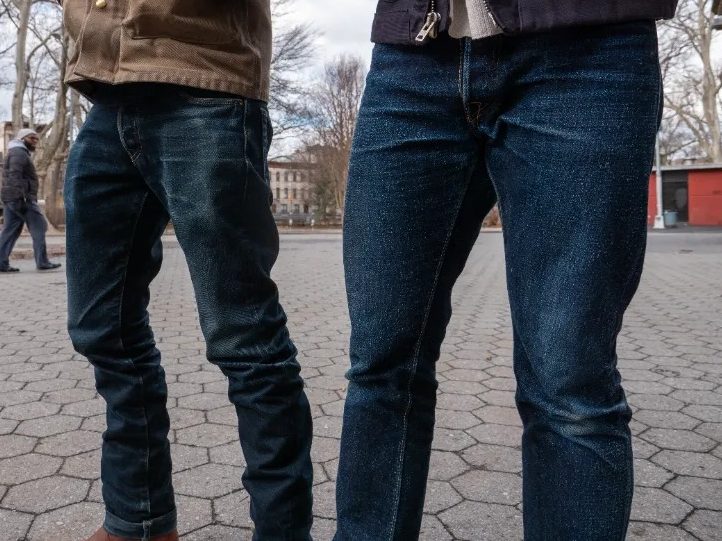
Outside of denim hobbyists, fabric is the least appreciated factor when choosing a type of jean.
Fabric is a key part of the experience: how stiff the jeans feel at first, how they shrink, how they fade, and how long they last.
Below are the core terms, using definitions we verified with denim expert and Benzak Denim Developers founder Lennaert Nijgh.
One more thing: “stretch vs non-stretch” is its own axis. Stretch can make slimmer fits dramatically more wearable, but a lot of stretch (and cheaper blends) can also bag out at the knees over time. If you want structure and strong fades, keep stretch minimal. If comfort is the whole point, stretch is your friend.
| Term | Definition | Why it matters |
|---|---|---|
| Raw denim | Unwashed denim | Stiff at first; breaks in as you wear it, you get unique fades |
| Washed denim | Pre-washed / softened | Comfort out of the box; less personalized fading |
| Selvedge denim | Shuttle-loom woven; self-finished edge | Heritage appeal; cool selvedge tags |
| Sanforized | Pre-shrunk to reduce shrinkage | More predictable sizing |
| Unsanforized | Not pre-shrunk (shrink-to-fit) | Can shrink about two sizes |
| One-wash | First wash done by the brand | Shrink handled; no longer fully raw |
| Slub | Uneven yarn thickness | More texture; often more vertical fades |
| Nep | Knots of fiber in yarn | Speckled “snowy” texture that evolves with wear |
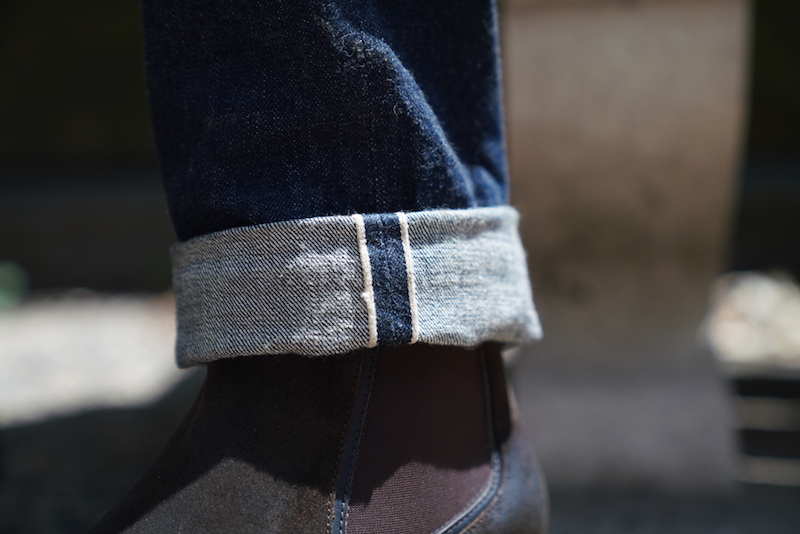
Selvedge denim is woven on antique-style shuttle looms that produce narrower fabric more slowly than modern looms. The edge of the fabric is self-finished (a “self edge”), which is why you can see a clean ID when you cuff the jeans.
The myth to avoid: selvedge does not automatically mean “better.” It can be better, and it often is, but quality also depends on cotton, yarn, weave density, and how the jeans are built. Selvedge is more like a production method you can choose for its heritage and character.
“These are machines that have been taken care of and the quality that comes out of those machines is typically higher,” explains Lennaert. “There are a lot of high-quality, non-selvedge fabrics out there.”

Raw denim means the jeans haven’t been washed, distressed, or softened before you buy them. That’s why they can feel stiff at first, and why enthusiasts like them: the fades are driven by how to you wear them, wash them, and size them.
Raw and selvedge aren’t the same thing. Selvedge describes how the fabric is woven; raw describes what’s been done to it afterward. Many premium jeans are both, but the terms aren’t interchangeable.
Sanforization removes most shrinkage before the jeans reach you. Unsanforized denim (sometimes called loomstate or shrink-to-fit) will shrink after the first wash, often around two sizes.
“Raw, unsanforized denim shrinks some ten percent,” says Lennaert. “You’ll lose more in the length of the legs than in the width of the waist.”
For most people, sanforized raw denim is the sweet spot: you get a crisp break-in and great fading potential, but sizing is less stressful.
One-wash usually means the brand washed an unsanforized jean once to remove the major shrink. It makes sizing safer, but if you want a truly crisp raw feel, sanforized and unwashed is the cleaner option.
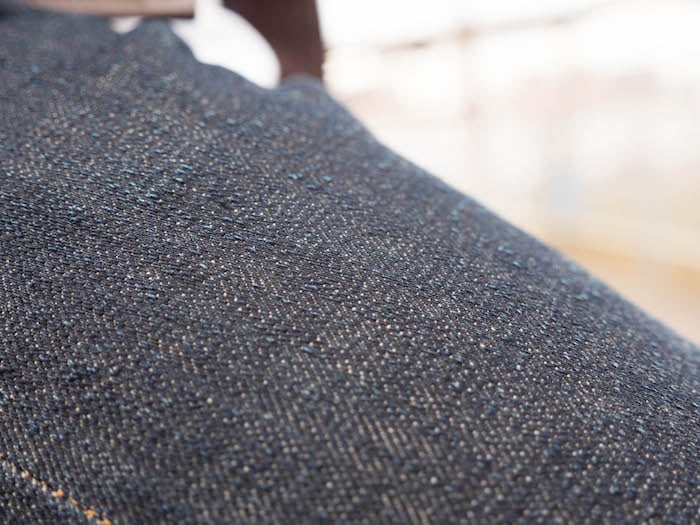
Slub and nep are texture terms. Slub shows as streaks from uneven yarn thickness; nep shows as scattered little knots that look like a light snowfall on the surface.
“Slub is a streaky, irregular texture that’s visibly uneven, rather than smooth or uniform,” explains Lennaert. “Nep refers to small knots of fiber embedded in the yarn, these visible knots scattered across the surface.”
If you want more contrast and more visual “story” as your jeans age, slub and nep are worth trying. If you want a cleaner look, stick to smoother denim.
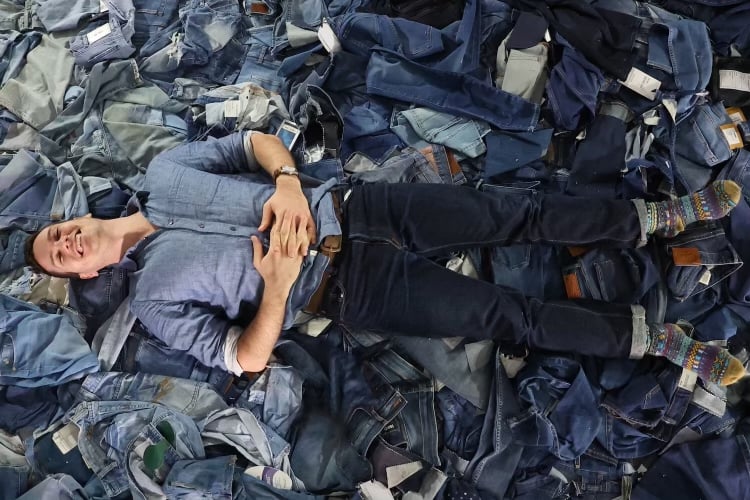
Use this shortcut: pick the fit first, then pick the fabric.
Straight leg is the default for a reason, relaxed tapered is the best modern all-rounder, and slim fits still work when they aren’t extreme. On the fabric side, remember the big three: raw means unwashed, selvedge means shuttle-loom woven, and sanforized means less shrink.

Cody Gohl is a New York-based writer with extensive experience covering men's fashion and health and wellness.
by Nick English
Founded in 2018 to help men buy the best boots, we’ve since expanded our team and purview to review and celebrate casual footwear and menswear that’s as close to “buy it for life” quality as possible. We take great pride in being a trusted source for information while maintaining complete editorial independence. At no extra cost to you, we might earn a commission from a brand when you purchase through our links, which helps us keep our mission alive. Learn More
Casual Durable™.
Yup, we even trademarked it. Just because you’re dressed down, doesn’t mean you have to dress bad.
This site started to help guys find the best boots for their dollar and has since expanded to cover the highest quality casual menswear, from leather jackets to selvedge jeans to canvas bags — the kind of simple, fashionproof classics that help you get dressed without overthinking your “style.” Read more
Subscribe for an exclusive article to help you find the best deals on quality footwear.