Updated Mar 9, 2026

Stridewise
It's a Boot Time
You might be familiar with denim and chambray as a pair because for just about 150 years, denim pants and chambray work shirts comprised a popular “outfit” for many working men. (Of course, they’d never use the word “outfit”!)
They’re both blue and white, they’re both casual, they’re both durable, they both wear in and soften with wear, but they aren’t the same thing.
The main thing for you to know is that chambray tends to be thinner than denim, which is one reason why it’s more popular on shirts than on pants.
I spoke to two experts, Lennaert Nijgh of Benzak Denim Developers and Peter Noah of Peter’s Prism, to learn what else is worth knowing so you can wear them more thoughtfully.
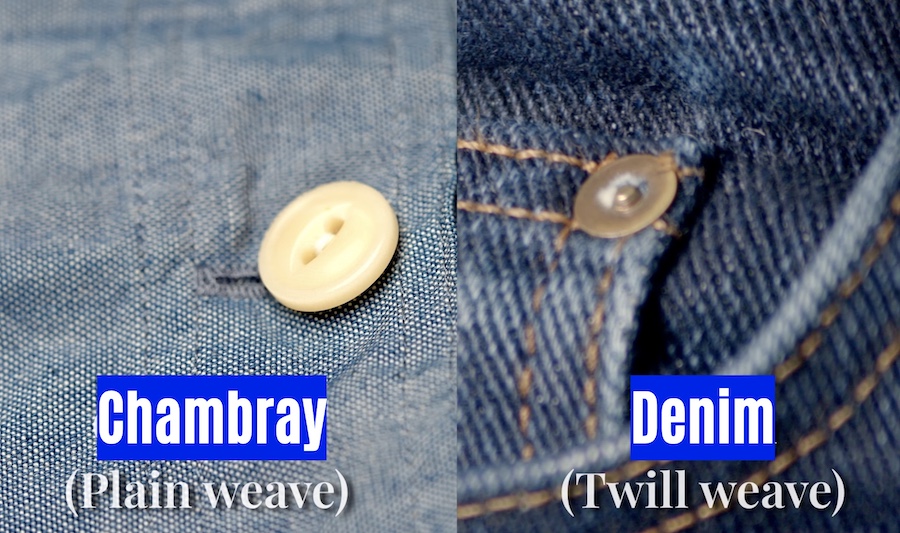
Chambray and denim are both casual, durable, and usually comprised of a mixture of blue and white yarns. The difference is in how they’re woven.
Both are made by weaving yarns from different directions: the warp runs vertically and the weft runs horizontally. There are three main kinds of fabric weaves: plain, twill, and sateen. (We’re not talking about sateen here, but I covered it in this excellent guide to fatigues.)
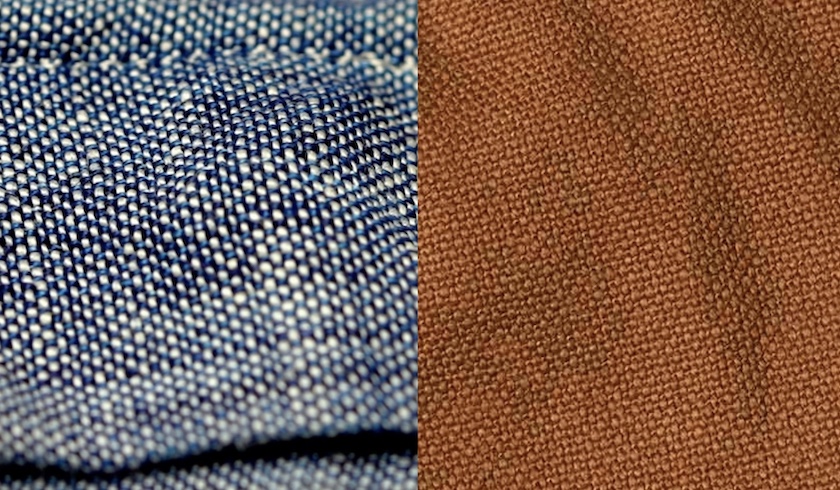
Chambray is a plain weave.
The warp and weft go over and under each other in a ratio of 1:1, so it has a checkerboard or crosshatched look to it.
“You will sometimes see plain weaves out there from a couple of different colors, like chambray,” says Lennaert Nijgh of Benzak Denim Developers. “But usually they’re all one color, as is the case with canvas.”
Other examples of plain weaves are canvas (you use it for real tough pants) and Oxford cloth (you use it for quite nice shirts).

“Plain weaves are usually lighter than twill weaves because of the construction of the weave: it’s much tighter and more compact, which is why it doesn’t stretch out as much as denim with wear,” says Lennaert. “The difference in strength is probably negligible if you have a chambray and a denim of the same weight, but that seldom happens. Plain weaves are always used at lighter weights in garment making.”
Chambray named after the French city of Cambrai and was originally linen, but nowadays your typical chambray is made of blue and white cotton yarns.
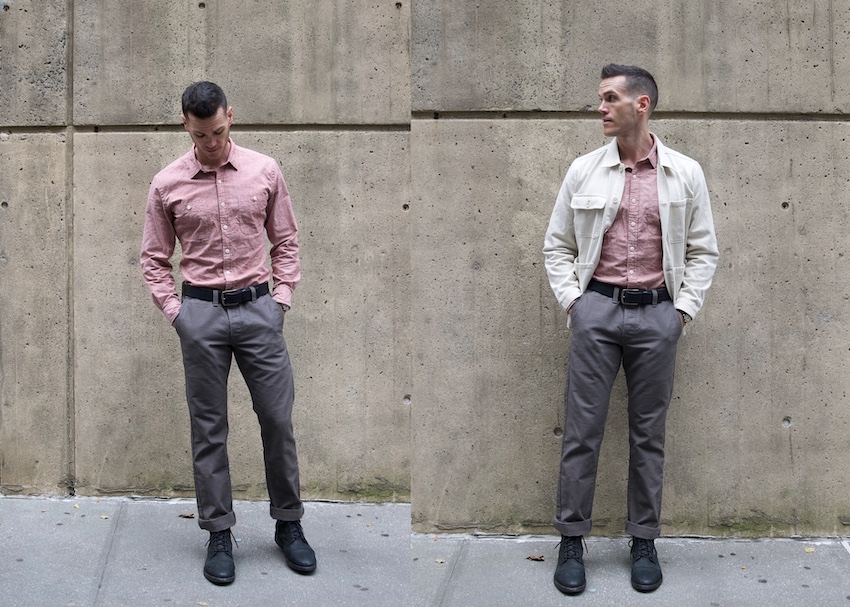
Sometimes you’ll find it in other colors; a reddish warp is probably the next most common, which I’m wearing below.
Further Reading

When pants are made with a plain weave, it’s usually duck canvas and not chambray. I visited an expert to learn the pros and cons of each.. Learn more →
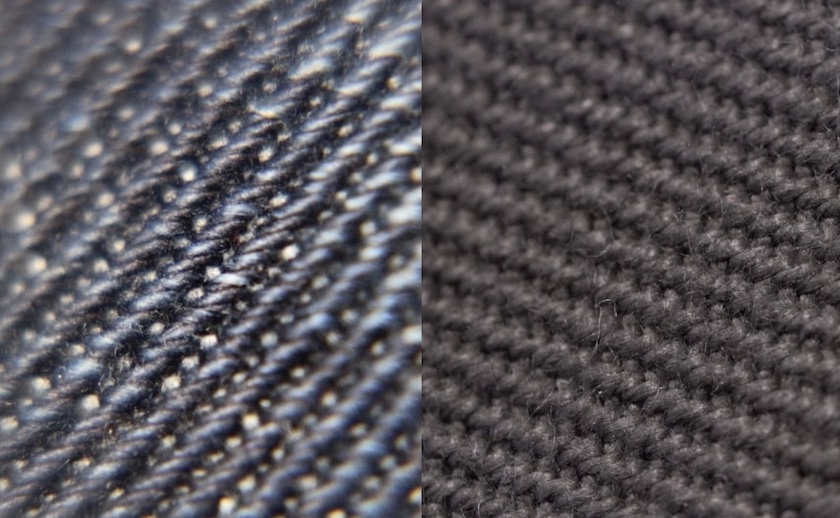
Denim is a twill weave.
It’s more complex than the 1:1 construction of plain weaves like chambray. Instead of going over and under in that 1:1 ratio, in denim, the warp yarn alternates over and under two or three weft threads, and the surface looks more like a bunch of diagonal lines (called wales) than a checkerboard.
Other examples of twill weaves are chino cloth (on your chinos) and corduroy.
Not everyone agrees on when a twill is officially denim — there are plenty of “denim jeans” that are a solid color, especially the black kind — but generally speaking, twill is denim when the warp yarns are blue and the weft yarns are white or undyed.
You see less of the white weft than you do on chambray, but there’s still enough white poking through that denim has a mottled, textured look to it.
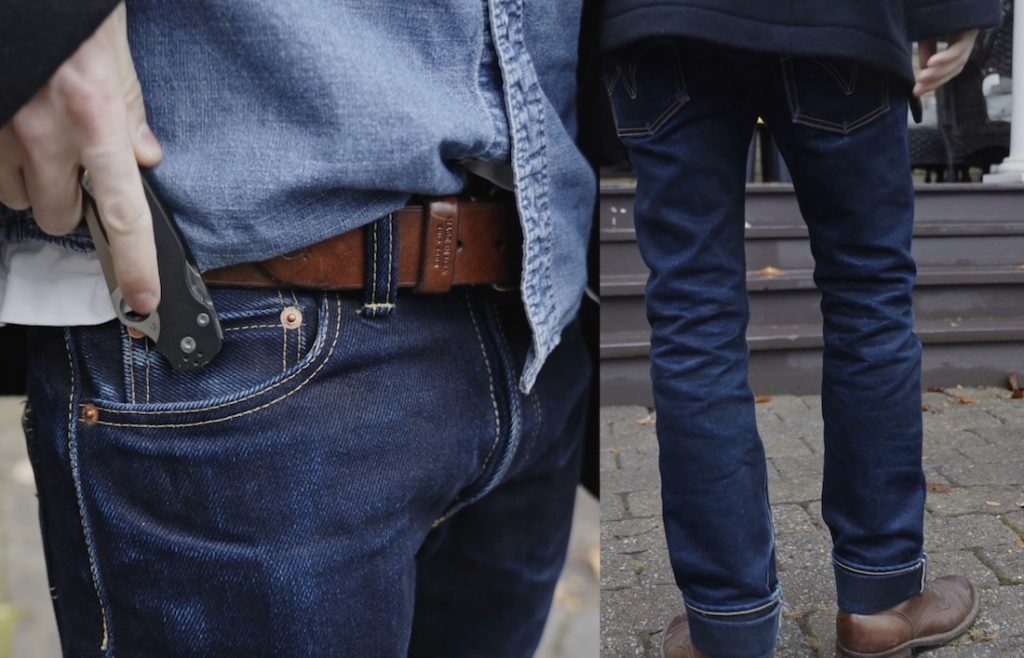

It’s much more common to have lightweight chambray than lightweight denim. This is partly due to chambray having a tighter weave and higher thread count.
It’s not hard to find shirts made of chambray that weighs 6 ounces or even less, so it’s a really good summer fabric. That goes double if you get chambray made of linen — it’s more uncommon, but chambray originated as a linen fabric.
“As a fabric, chambray (also) has a certain quality that is a little softer,” says Peter Noah from Peter’s Prism. “And denim has more cultural baggage, to the point that it’s often forbidden in workplaces. I think chambray is one of the most versatile shirt options in your closet.”
Further Reading

Interested in high-quality denim? We’ve spent years searching for the best jeans. Learn more →
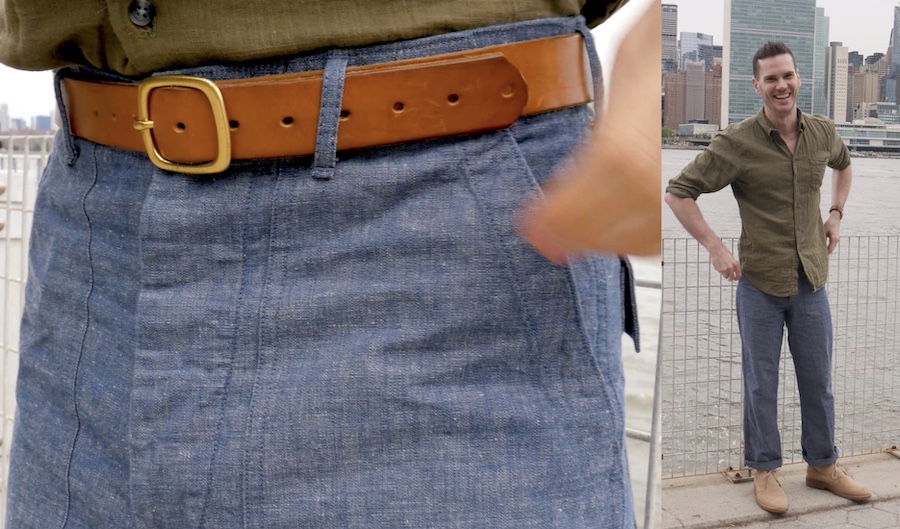
So now you know that denim and chambray are pretty different! Although they have similar histories in American style, denim is far more widely recognized as a casual and durable fabric with origins in workwear. Chambray has stayed more under the radar, making it a fabric that can be worn in more ways.
Denim, with its diagonal weaving and weight, is a great fabric to mold to your shape or when you want a more rugged look. Chambray is far more versatile, but you might want to save it for spring and summer.
But as different as these fabrics are, you can always honor their shared history and pair them together. It’s the thinking man’s Canadian tuxedo.

By day: Manhattan-based journalist with reporting experience on four continents, published in Vice, Men's Health, Popular Science, and a bunch of other places.

by Nick English
Founded in 2018 to help men buy the best boots, we’ve since expanded our team and purview to review and celebrate casual footwear and menswear that’s as close to “buy it for life” quality as possible. We take great pride in being a trusted source for information while maintaining complete editorial independence. At no extra cost to you, we might earn a commission from a brand when you purchase through our links, which helps us keep our mission alive. Learn More
Casual Durable™.
Yup, we even trademarked it. Just because you’re dressed down, doesn’t mean you have to dress bad.
This site started to help guys find the best boots for their dollar and has since expanded to cover the highest quality casual menswear, from leather jackets to selvedge jeans to canvas bags — the kind of simple, fashionproof classics that help you get dressed without overthinking your “style.” Read more
Subscribe for an exclusive article to help you find the best deals on quality footwear.