Updated May 4, 2026

Stridewise
Boots, Denim and Casual Stuff
In all likelihood, you’re here to choose which kind of jean is best for you. Fortunately, I’ve spent the better part of a decade reviewing and exploring brands all over the world, a “career” that has brought me to factories and workshops in England, Holland, Canada, Malaysia, Indonesia, and more.
So I’ll break down how to choose:
Your body will largely determine the waist and thigh measurements you need. The two details that really determine the look and which you have the most control over are the rise (how high the butt is) and the hem (a.k.a. “leg opening”).
A higher rise generally looks cleaner, works for the most body types, and stays put — no plumber’s crack.
The leg opening has a big influence on your silhouette. Whether narrow or wide leg openings are in style depends on the hour of the day; wide came back in a big way in the 2020s, but the winds may have shifted.
If it’ll fit you, the straight leg is the most immune to trends.

| Fit type | Cut | Best for | Notes from Stridewise experts |
|---|---|---|---|
| Straight | Medium rise, very slight taper at ankle | Most guys; most shoes and boots | Timeless and trendproof. |
| Relaxed Straight | Roomy thighs, medium or high rise, slight taper | Guys with bigger thighs or who prefer looser shirts/jackets | The best way to have a roomy fit that won’t look dated. |
| Relaxed Taper | Wide thigh, tapers close to the ankle | Sleek footwear; Athletic guys who want a slim fit | More or less follows the natural shape of the leg. |
| Slim / skinny | Closer to the body | Thin guys; minimalist style; sharp shoes | Goes in and out of style; easier to pull off with black jeans. |
| Wide / loose / baggy | Wide thigh and a wide leg opening | Bigger guys; chunky footwear; streetwear | The most casual fit; might go out of style before you get home. |
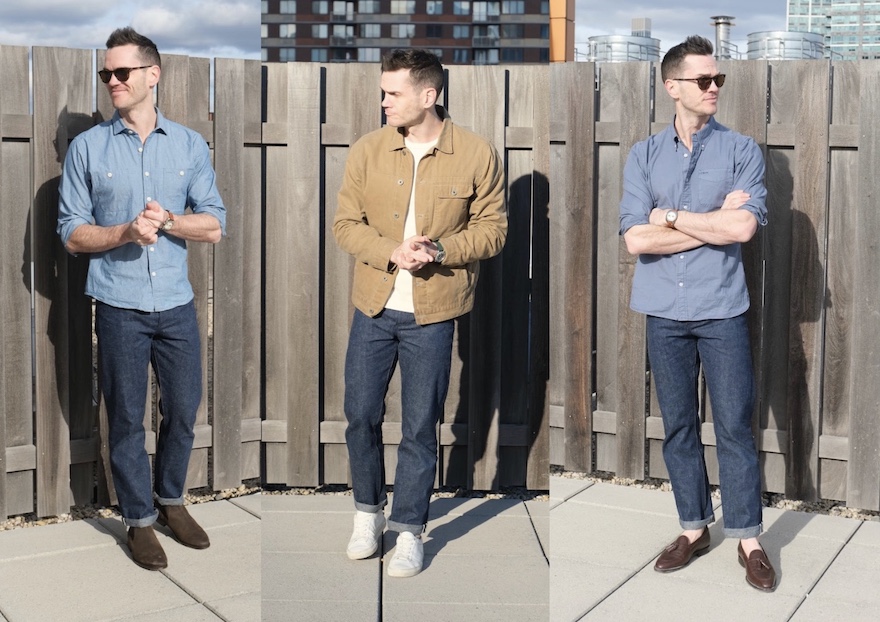
The “straight leg” is the most popular and time-tested fit. Designed to flatter as many body types as possible, the waist isn’t too low and the only-slightly-tapered leg opening isn’t too narrow or wide.
“Straight” means they look straight, but it doesn’t mean the thigh and leg opening are the same diameter; those jeans would look extremely wide. More often, a straight fit’s leg opening is about the same width as the knee.

Our favorite American-made jeans are made with selvedge denim and the best straight leg fit that we've come across. Eat your heart out, Levi's.
Straight fits are the default and they deserve to be, steadfastly remaining popular as loose and slim fits go in and out of style.
“When in doubt, stick with a timeless straight-leg,” says Alejandro Jomar. “Full Count’s 1101 or a classic Levi’s 501 repro is ideal.”
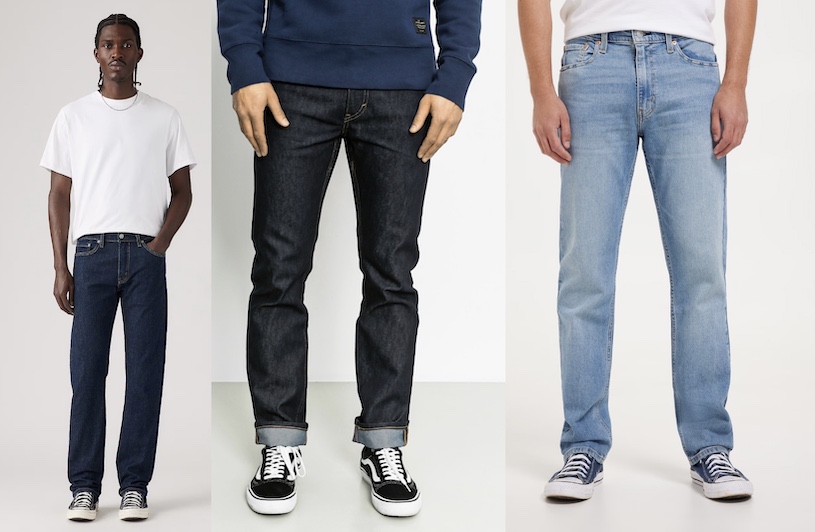
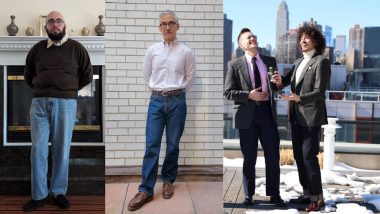
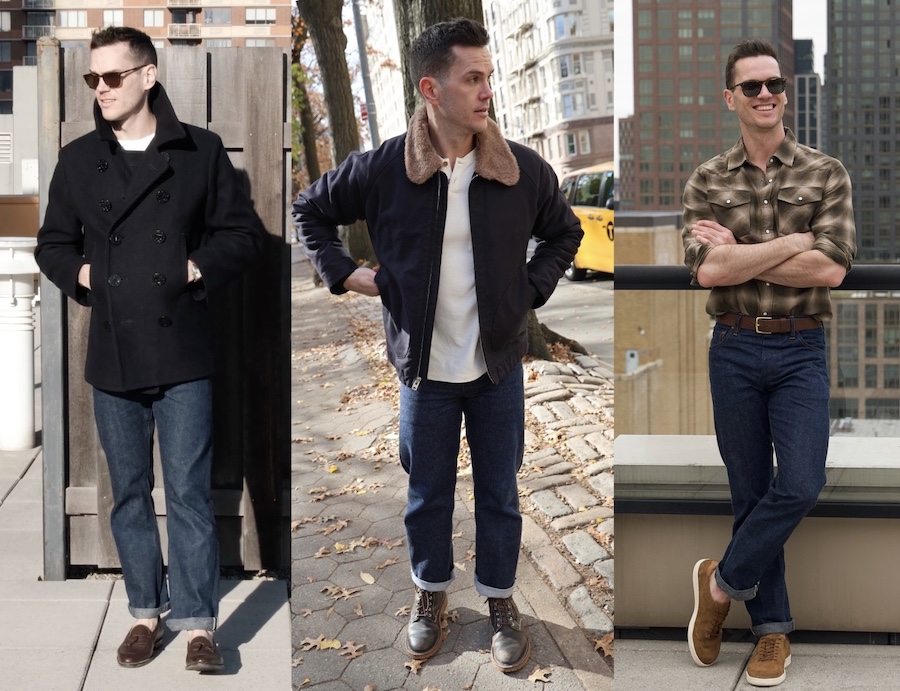
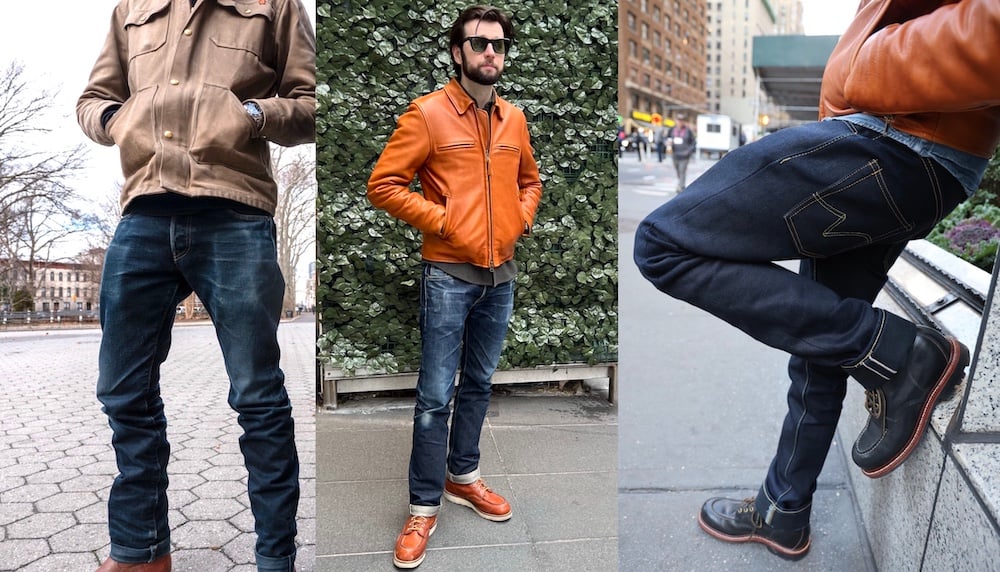
Levi’s 511 is a popular example I used to wear a lot before I started squatting. All three of the photos above are of Levi’s 511: whether or not the slim straight looks slim on you depends on how big your thighs are.
You might call a Slim Straight the best fit for a slim guy who wants the look of a straight fit, but a regular straight fit looks too loose on his thighs.
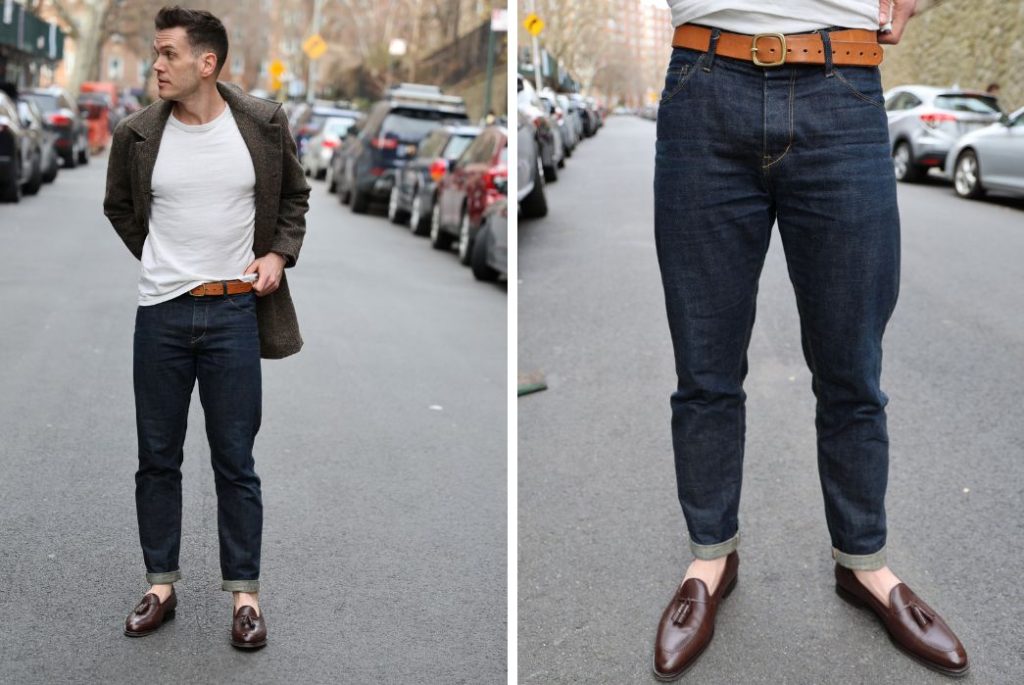
Relax Tapered jeans are big in the thighs, high in the rise, and slim at the ankle. They basically mimic the shape of the human leg but are better suited for guys with bigger thighs.
Above, I said the Slim Straight is good for slim guys who want the look of a straight leg jean. The Relaxed Taper is good for bigger guys who want the look of a slim jean. (Big thighs just won’t fit a Slim jean.)
Relax Tapered is a favorite of guys with extra weight on their thighs, whether that’s because they lift heavy or because they could stand to lose a few pounds.
Relaxed Straight is a little harder to come by, but as a guy with big thighs, it’s my favorite fit. It’s ideal for guys who like the silhouette of the classic straight leg but want more room in that top block for their butt and thighs.
They were in during the 2000s, then out in the 2020s, and they may be coming back — I’m too old to follow these trends that closely.
I doubt I need to explain that slim jeans are for slim legs and skinny jeans are for skinny legs, but I will point out that the rise tends to be low on these fits as well.
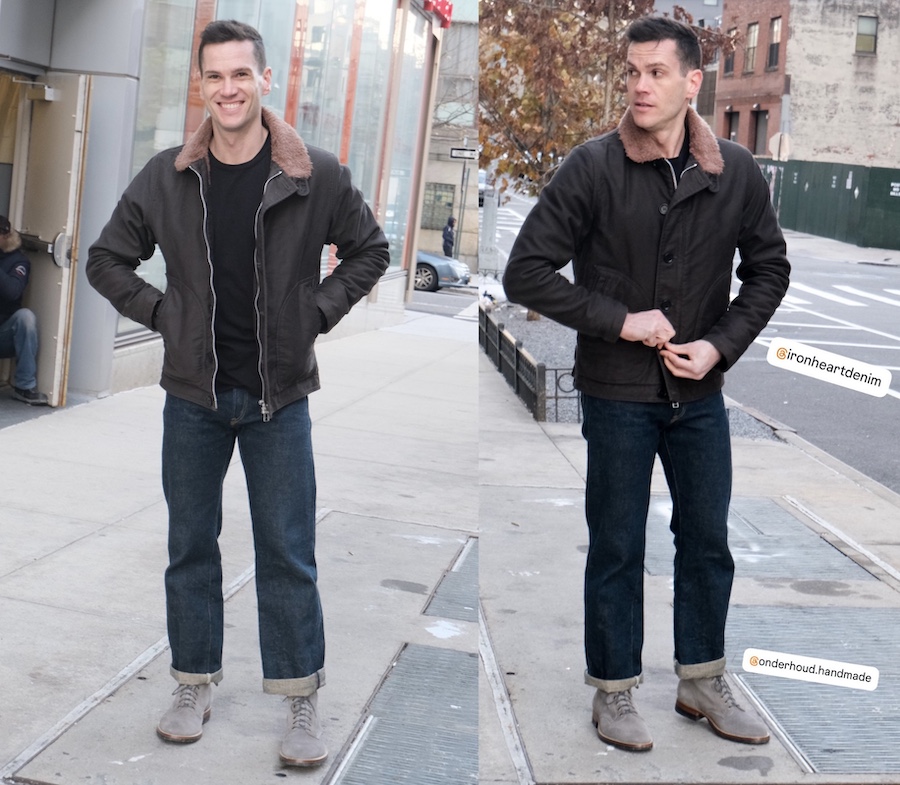
Stridewise writer Troy Barmore is in the photos above in slim fit Iron Heart jeans. Because he’s a slim guy and he didn’t go for skinny, they look totally normal on him.
Such slim fitting models usually have at least one pressure-release valve: stretch in the fabric, a curved waistband, or an ankle opening that isn’t vacuum-sealed to your leg.
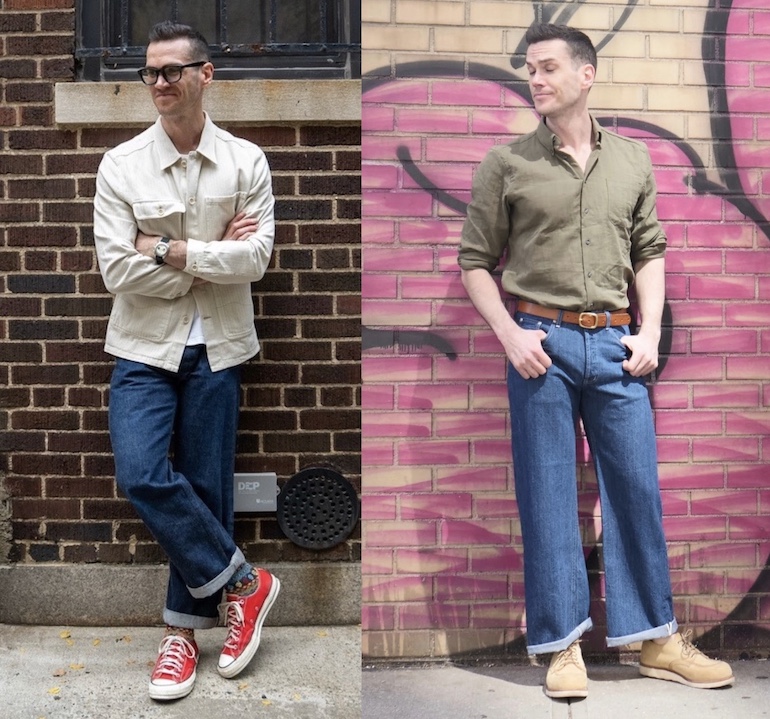
In the 2020s, Gen Z brought wide jeans back in style. As a guy with big thighs I thought they’d be ideal, and it’s true that if you have big legs and a small waist, then a “wide” leg that properly fits your waist can look pretty subtle.
Measurements-wise, loose jeans don’t always have a high rise, but they do tend to fall straight from the thigh to the leg opening without tapering at all.
Fabric might have even more to do with the experience than fit. Denim hobbyists love to pore over specific weaves and specific looms, but for this kind of article I thought I’d just write out this quick glossary to help you choose.
| Term | Definition | Why it matters |
|---|---|---|
| Selvedge denim | Woven on (slow, expensive) shuttle looms | Favored by enthusiasts, selvedge denim tends to have more texture and character than the regular kind |
| Washed / rinsed denim | Washed in a big machine at the factory after it’s sewn | Most jeans are washed because it makes them softer out of the box |
| Raw denim | Jeans that haven’t been washed after they’re made, so they’re stiffer | Less comfortable at first, but does a better job of shaping to your body with time; good for fading |
| Stretch denim | Cotton is spun with a synthetic material like elastane, spandex, lycra, or polyurethane | More form fitting and more forgiving on bigger bodies. 2 percent stretch is enough; more than 10 percent and they won’t feel much like jeans. |
| Unsanforized / “Shrink-to-fit” | Not sanforized, a process that uses heat and/or chemicals to pre-shrink the denim | This is rare, but if it’s unsanforized. it’ll shrink about two sizes on the first wash |
| One-wash | Washed at the factory to soften fabric or reduce shrinkage | Washing usually helps with comfort; it also means the denim won’t shrink much if it’s unsanforized (again, rare) |
| Faded / distressed | Washed with chemicals to fade the color and often abraded with sandpaper, stones, and/or tools to mimic long term wear | Most jeans these days have been pre-distressed to a degree |
| Stonewashed | A form of distressing, the denim has been literally washed in a machine with a bunch of pumice stones | Softens and distresses the fabric for an extra worn-in effect |
| Heavyweight | Most denim used for jeans is about 11 ounces in weight; ‘heavyweight’ tends to be 20 ounces and up | It feels more like armor and is great to wear in winter, but even though it softens with wear, it’s not the kind of comfort you’re used to. |

Selvedge is a kind of denim that’s woven on shuttle looms, which were largely replaced by more efficient looms in the mid-20th century.
Selvedge denim’s more expensive because modern looms make fabric about ten times faster, plus shuttle looms require a lot of maintenance.
Denim enthusiasts prefer selvedge because it tends to make fabric that’s more textured. It’s not true that selvedge denim is always thicker, stronger, or better. But it is true that people and brands who are really passionate about denim usually work with selvedge.
Is selvedge denim better than regular denim? No. Is it way more likely to be better than regular denim? Yes.
Use this shortcut: pick the fit first, then pick the fabric.

I'm the founder and editor of Stridewise, where I have spent nearly a decade covering boots and casual menswear.
by Nick English
Founded in 2018 to help men buy the best boots, we’ve since expanded our team and purview to review and celebrate casual footwear and menswear that’s as close to “buy it for life” quality as possible. We take great pride in being a trusted source for information while maintaining complete editorial independence. At no extra cost to you, we might earn a commission from a brand when you purchase through our links, which helps us keep our mission alive. Learn More
Casual Durable™.
Yup, we even trademarked it. Just because you’re dressed down, doesn’t mean you have to dress bad.
This site started to help guys find the best boots for their dollar and has since expanded to cover the highest quality casual menswear, from leather jackets to selvedge jeans to canvas bags — the kind of simple, fashionproof classics that help you get dressed without overthinking your “style.” Read more
Subscribe for an exclusive article to help you find the best deals on quality footwear.