Updated Mar 15, 2026

Stridewise
It's a Boot Time
Today I’ve got a review of a hard-to-pin-down boot from a hard-to-pin-down boot brand from the Pacific Northwest that I’ve actually never worn before. And it’s in a leather from an animal I’ve never worn before either, so we’ve got a lot of firsts here.
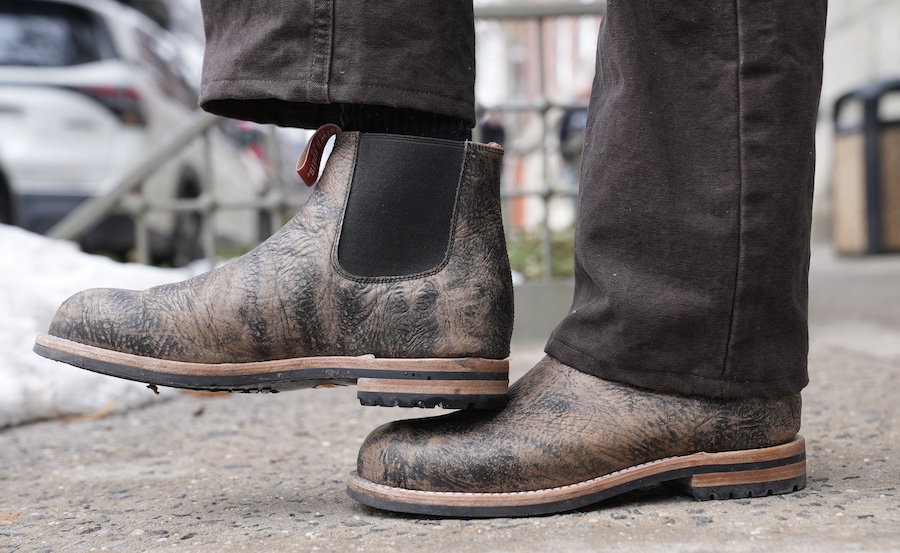
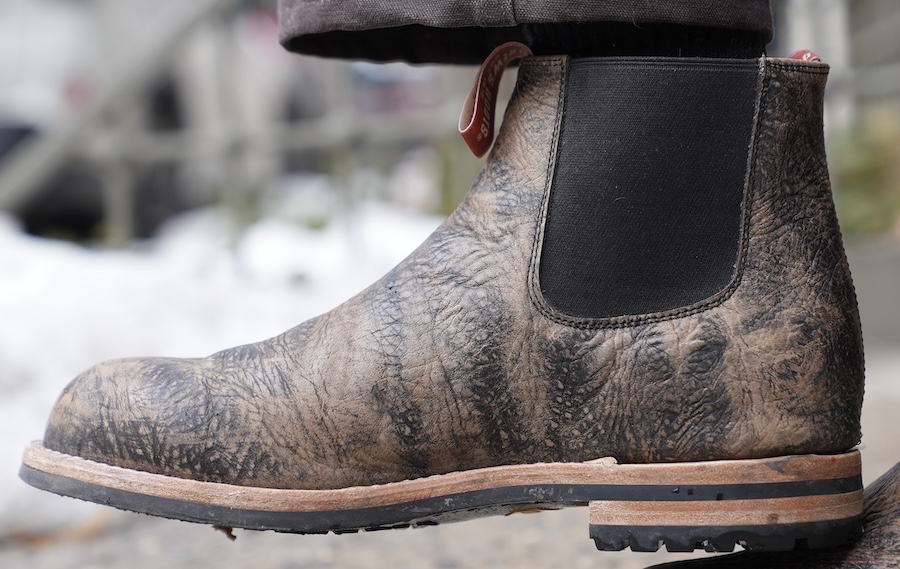
This is just called “The Chelsea” and it’s one of the newer models from Drew’s Boots. I’ve been wearing these boots on and off for almost six months, which have included a trip to Oklahoma farmland, and there are many ways this boot defies categories and stereotypes.
So in this review, I’m going to talk about why this boot is so different to the other brands and the other boots from the Pacific Northwest, I’ll tell you if I think it’s worth it, and I’ll tell you how to avoid the fit and sizing problems I had.
If you aren’t the type to read a thousand words about a pair of buffalo boots, here’s a summary of my thoughts.

This is the rare Chelsea that's neither disposable nor dressy, Drew's uses rugged leathers and Goodyear welts to make a pretty reasonably priced casual boot.
There are many kinds of boots in the world, and the Pacific Northwest has its own particular history and climate — and its own genre of boots.
And while bootmakers up there tend to sell a range of boots, if you were to describe the stereotypical ‘Pacific Northwest boot’ you’d say that it would be:
Drews Chelsea is a Pacific Northwest boot that doesn’t meet any of those criteria — it’s not even made in America. Yet, I can understand why someone would consider this a Pacific Northwest take on the Chelsea boot.
Further Reading

Three collectors get together to define and expand on the category of super tough “PNW boots.”
Learn more →
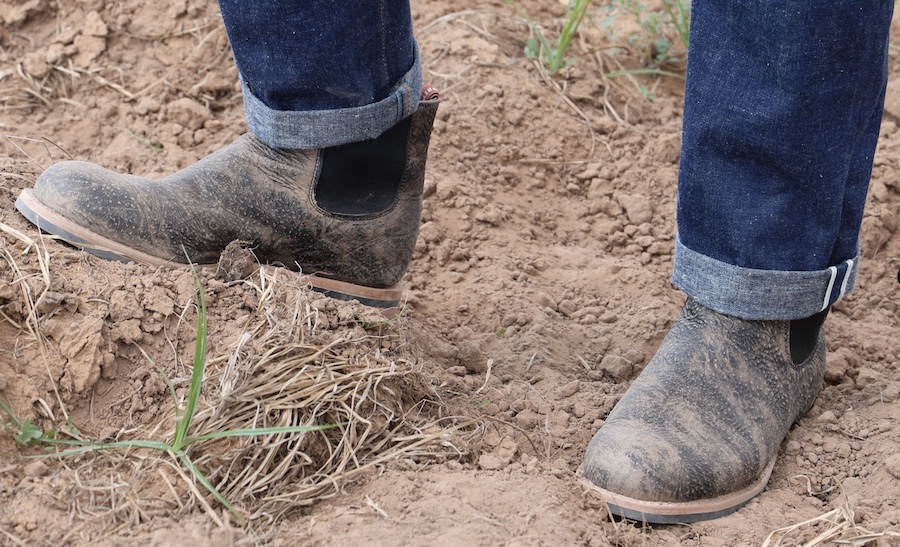
Unlike moc toe boots and logger boots, the Chelsea boot didn’t originate as an outdoorsy boot for work. It’s a uniquely European design that was originally made as a walking shoe for Queen Victoria.
I have no patience for guys who argue that bOoTs aRe JuSt fOr WoRk. But even if you were to argue that, like, a moc toe boot should be tough and outdoorsy because that’s what it was originally designed for, you can’t get away with that line of reasoning for the Chelsea boot. Its original purpose was to be something easy to put on when you go outside and don’t want to step on glass. You know: a shoe.
Sure, today there are plenty of Chelseas designed for work, but they usually aren’t resoleable or very high quality. In fact, it’s always been a bit unusual to find any kind of Chelsea boot in the Pacific Northwest at all.
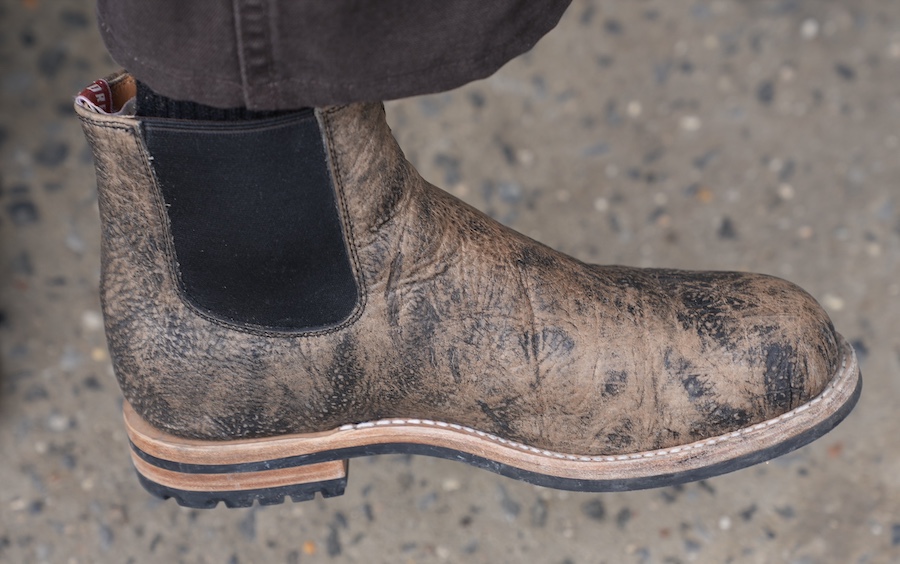
Drews Chelsea is unusual in a lot of ways, because this extra casual look is relatively rare for resoleable Chelsea boots, which are usually smart casual.
Drew’s Chelsea is also unusual because in the rare instances of someone trying to make a high quality, resoleable Chelsea boot that fit into the pantheon of Pacific Northwest boots, they’ll typically make them with thicker work boot leathers, stitchdown construction, and an upper made with multiple pieces of protective leather.
So Drew’s Chelsea is weird for a Chelsea — and it’s weird for a Pacific Northwest boot.
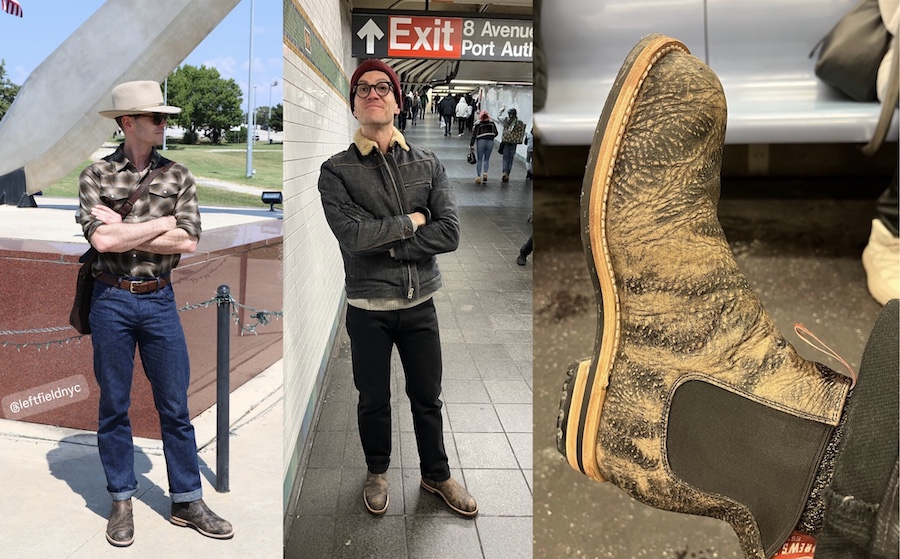
Sure, Blundstones and Redbacks are very casual, but they aren’t high quality or resoleable. (Nor are they priced as though they are — don’t think I’m knocking those cheaper brands!)
Once you’re in the resoleable boot territory, Chelseas are almost always smart casual: almond shaped toes, sleek designs, and constructed to be comfortable and longlasting rather than able to withstand brutal working conditions.
Drew’s Chelseas are neither refined nor suitable for jobsites that need ASTM ratings. They’re boots for casual wear! And casual boots are great. And it’s unusual for them to be this casual and this high quality at the same time.
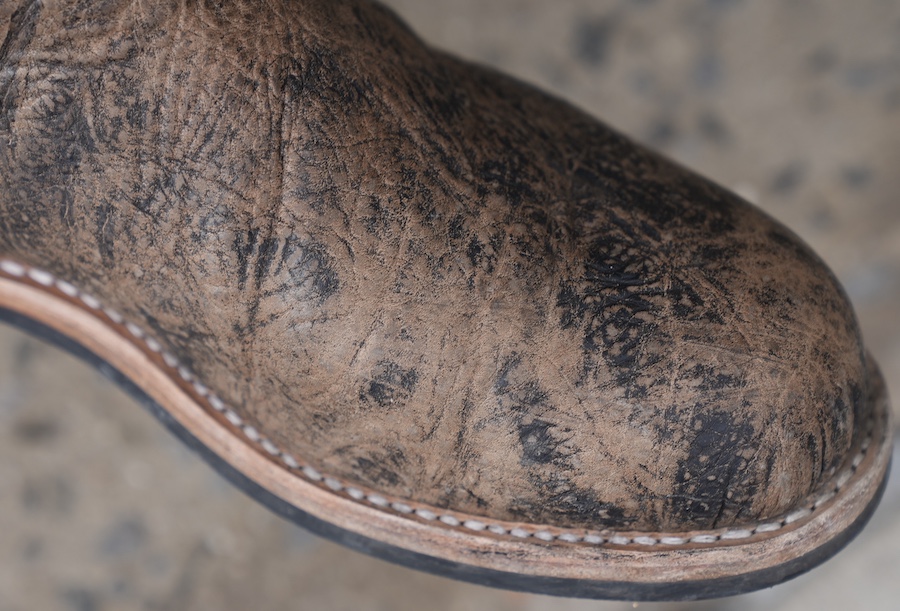
This is bison leather.
Many people use that word synonymously with “buffalo,” but a lot of the time, “buffalo leather” means it’s made from Asian water buffalo, which has a pretty different grain structure.
Drew’s Boots are made with the original American leather: bison.
You probably think a bison could beat a cow in a fight, and that therefore this leather is tougher than cow leather. I’d love to tell you as much, but the truth is that when it comes to tensile strength or how it performs in certain conditions, the way a leather is tanned and produced is much more relevant than what animal it comes from. (Especially when both leathers are bovine.)
Further Reading
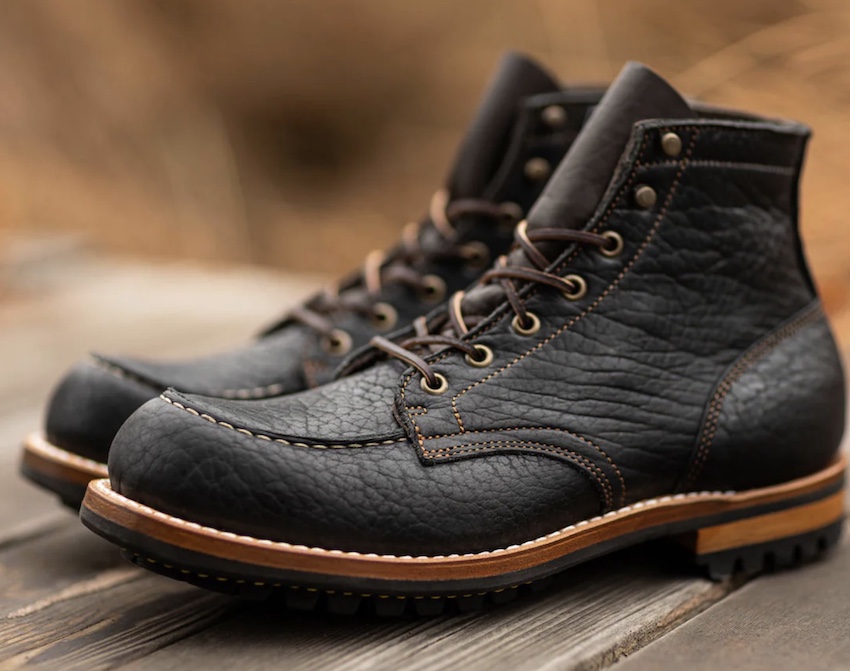
I interviewed the most famous producer of bison leather to separate fact from fiction.
Learn more →
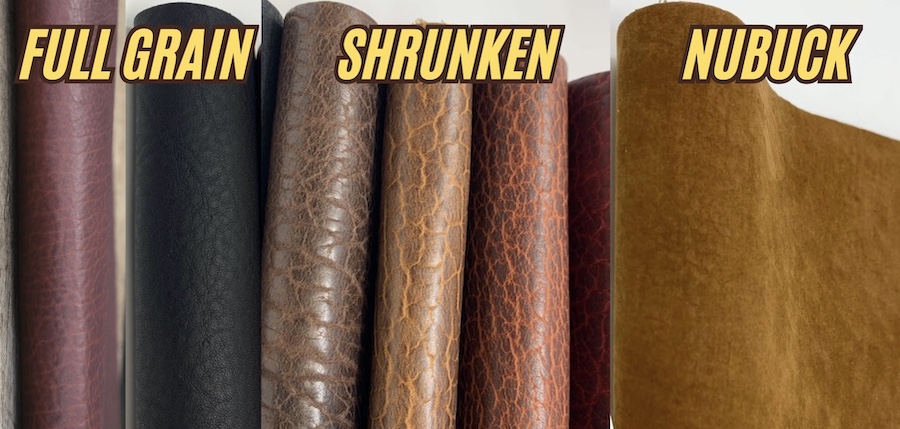
But what i will say is: this leather is cool. It has a cool story, it’s hard to find, and it looks cool as hell. Plus, this isn’t just bison leather — it’s shrunken bison. Drew’s also sells non-shrunken bison on some products, but shrinking it is more common than you might think.
If the chemistry is similar to calfskin, which i learned about here at Gallun Leathers in Tennessee, it’s made by shocking it in the pickle and using glutaraldehyde to make a pucker in the leather. Tanning jargon aside, when you make a ‘shrunken’ leather it actually does condense it to an extent: the leather gets a bit thicker and it does indeed look like you’ve zoomed in on the surface.
It probably has a bit more tensile strength, but the main reason people like shrunken bison is that it looks wilder. When people buy bison, they prefer it when it doesn’t look like cowhide.
And hey, there’s nothing wrong with wearing something just because you think it looks cool.
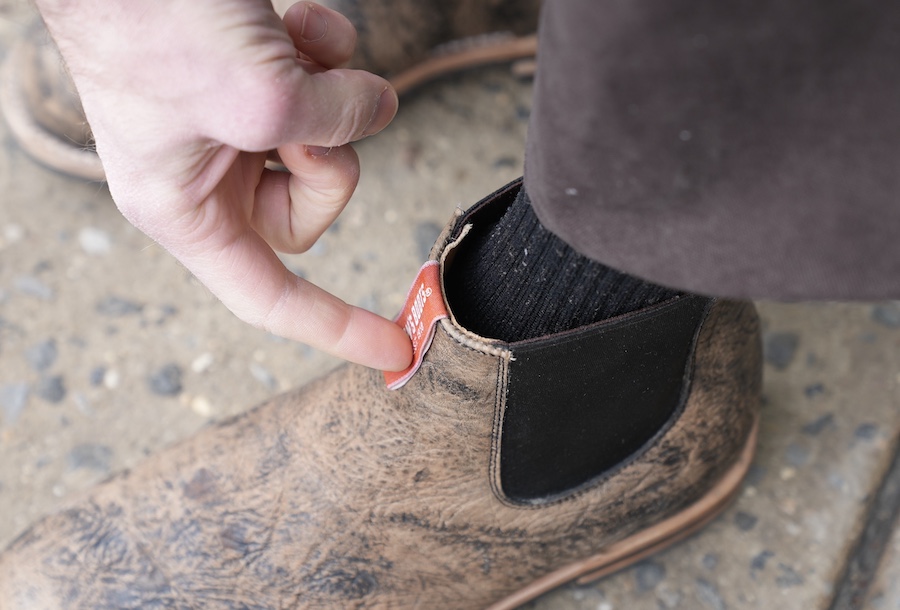
Alas, the sizing is wack.
Long story short: my true size on a Brannock device (the thing they use to measure you in the shoe store) is 11.5. My sneakers are all size 12 or 11.5, while just about all my boots are size 11.
Drew’s told me you to order my true size (11.5), which is unusual for a boot. And yet, it was still too small. I exchanged it for a size 12, and even after a few weeks of wear, it was still very tight on the ball of my foot.
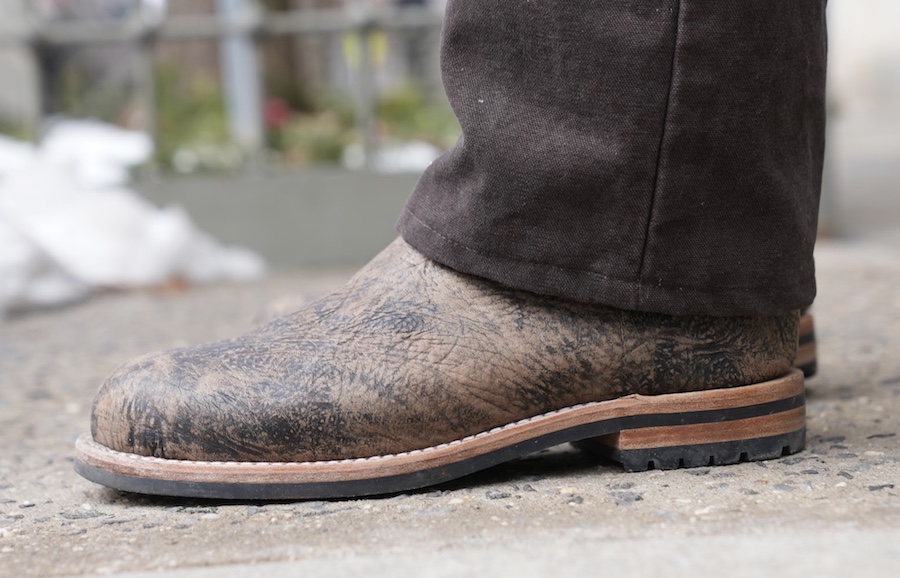
After some wear, I realized I could remove the thick, padded insole to give myself extra room. (The layer beneath the insole is Poron foam, so I still had decent shock absorption.) Adding volume to the boot by removing the insole made it perfectly comfortable on the ball of my foot, but now my toes hit the front of the boot when I walk.
Honestly? I think a size 12.5 would have been better for me — that’s an entire size up from their recommendation, and 1.5 sizes up from my usual boot size.
It feels crazy for me to recommend such a big difference from the brand’s own sizing advice, but two other friends (one was Rose Anvil) who tried this boot had a similar experience. And they don’t have any wide sizes, which can sometimes be helpful for hard to size boots.
Chelseas are tricky because you have very little control over the fit of a laceless boot.
There are pretty much only two ways to adjust the fit of a Chelsea boot: an insole or a tongue pad.

Whether it's boots or loafers, these inexpensive pads simply fill space on the instep, but you'll be amazed how effective they are for fixing heel slip.
Adding or removing an insole is good because you might already have some insoles lying around, or being used by another pair of boots that doesn’t need them as much.
The tongue pads are my favorite method because they’re cheap and you don’t mess so much with the intended fit of the boot.
A surprising fact is that heels slipping in laceless boots doesn’t have much to do with the heel: it’s usually about too much room on the instep (the area on top of the foot near the ankle). When a tongue pad fills that space, voila: suddenly the heel doesn’t slip. Game changer!
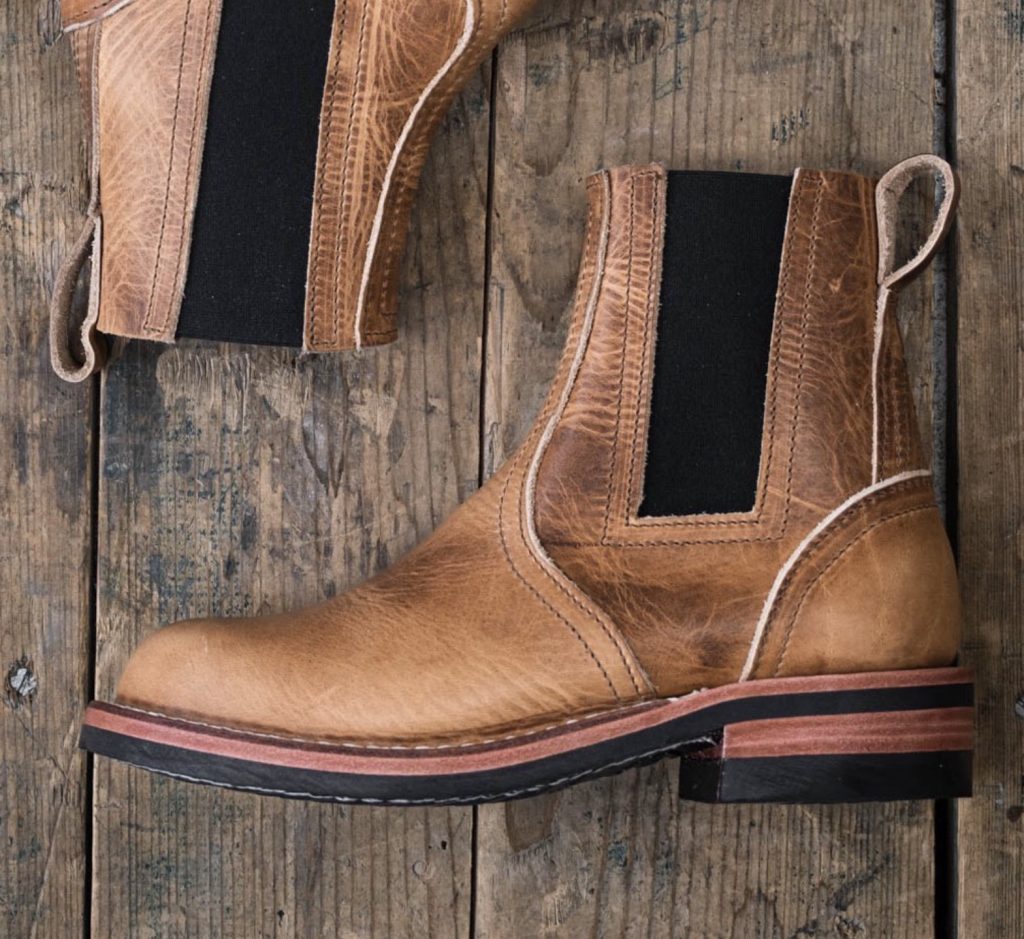
Unlike most PNW boot brands, these boots are not made to order. They’re “ready to wear”: sitting in Oregon waiting to be shipped to you.
So if, ultimately, you just can’t get your size to work for you, it’s easier to do a size exchange with these Drew’s boots than with most PNW brands. Most PNW brands need you to wait months and months for your boots to be made for you, and they’re still double the price of these Chelseas.
If you look at Red Wing’s Classic Chelsea, you could get ready to wear Chelseas that are made in America for about the same price. But they’re not whole cut and they more synthetics and less leather than Drew’s.
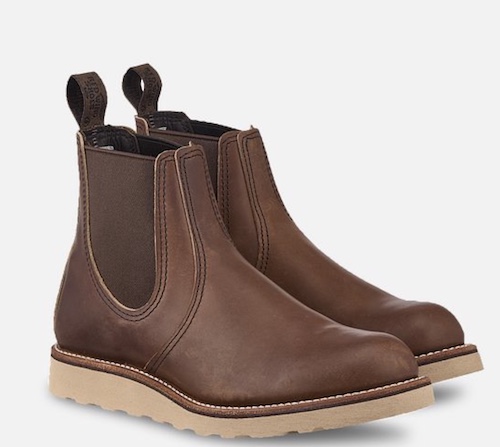
With a work-friendly wedge sole, shock absorbing insole, and gorgeous American leather, these hit all the right notes for casual work or for streetwear.
If you looked for the Pacific Northwest Chelseas from Nicks or Whites, they’ll cost at least $600 and take many months to be made for you.
Those PNW Chelseas would also be made with stitchdown construction, and it really is worth remembering that while stitchdown is cool, the average person won’t find it any tougher than a Goodyear welted boot like Drew’s — and it’s a lot harder to find someone who will resole a stitchdown boot. Any neighborhood cobbler can resole a Goodyear welt.
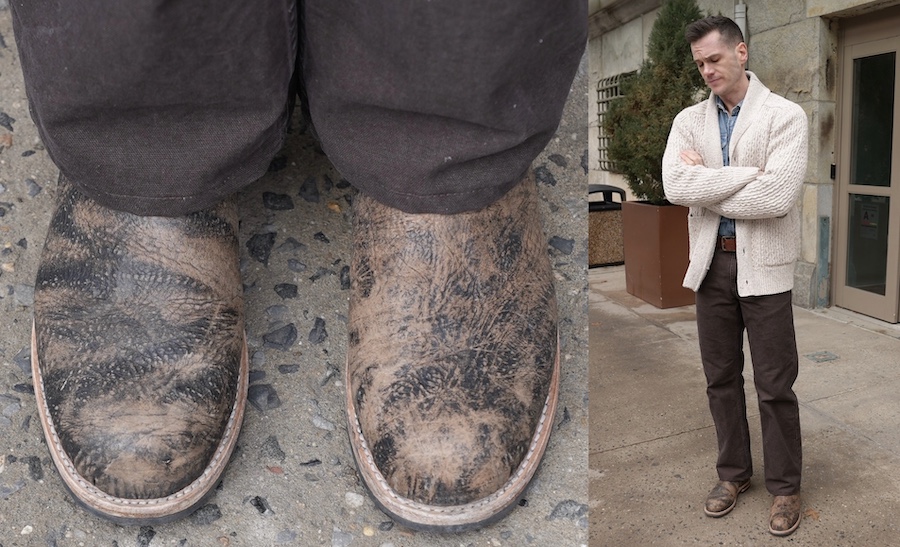
It’s less than $300, it’s got this cool-ass bison leather, it’s resoleable and water resistant, it’s not overbuilt, and it’s also wholecut. That means the upper is made with just one piece of leather that’s sewn together behind the heel. This is expensive and rare, especially on such a casual Chelsea. I find it really helps to spotlight the leather.
This is the rare Chelsea that's neither disposable nor dressy, Drew's uses rugged leathers and Goodyear welts to make a pretty reasonably priced casual boot.
There are also a few other touches that you can’t see that make this boot more expensive to produce. Most boots use a steel shank and synthetic celastic to stiffen the toe and the heel, but this one actually has more leather than the average boot; not more than the average PNW boot, but more than the average Goodyear welted boot.
Drew’s Chelsea is made with a leather heel counter, leather toe stiffener, leather lining, and a leather shank. Many purists prefer find this all leather internal construction superior for long term durability and comfort. It’s especially rare to get a leather shank, which a lot of guys find provides a superior balance of stiffness and flexibility than the more common steel shank.
The sizing is weird, and I honestly think they should redesign the last. But since you won’t sacrifice all the shock absorption if you remove the insole, the sizing weirdness isn’t the end of the word.
I know how that sounds, though, and I know most guys don’t want the sizing to be such a gamble. Fortunately, as ready-to-wear boots, it’s not a big deal if the sizing simply doesn’t work for you — returns are much easier than other PNW brands.
These are whole cut, resoleable, shrunken bison boots for under 300 bucks. I think they’re pretty cool boots.

By day: Manhattan-based journalist with reporting experience on four continents, published in Vice, Men's Health, Popular Science, and a bunch of other places.

by Nick English
Founded in 2018 to help men buy the best boots, we’ve since expanded our team and purview to review and celebrate casual footwear and menswear that’s as close to “buy it for life” quality as possible. We take great pride in being a trusted source for information while maintaining complete editorial independence. At no extra cost to you, we might earn a commission from a brand when you purchase through our links, which helps us keep our mission alive. Learn More
Casual Durable™.
Yup, we even trademarked it. Just because you’re dressed down, doesn’t mean you have to dress bad.
This site started to help guys find the best boots for their dollar and has since expanded to cover the highest quality casual menswear, from leather jackets to selvedge jeans to canvas bags — the kind of simple, fashionproof classics that help you get dressed without overthinking your “style.” Read more
Subscribe for an exclusive article to help you find the best deals on quality footwear.