Updated Jun 15, 2026

Stridewise
Boots, Denim and Casual Stuff
Editor’s note: This article is an op-ed. The views expressed herein are the author’s alone. Claims, assertions, opinions, and quotes have been sourced exclusively by the author, who also has a sick handwelted boot brand you should check out.
I’m a professional bootmaker, and I think it’s time to cut through the hype around the Goodyear welt.
I don’t get the internet’s collective obsession with the Goodyear welt. Somewhere along the way, the boot community started treating it like the absolute holy grail of boot construction.
It’s not. Not even close.

Don’t get me wrong, it’s a perfectly solid manufacturing process and brought durable, rebuildable welted boots to the masses, which is objectively awesome.
But let’s call a spade a spade: Goodyear welted boots are, by definition, factory-made products. The method was literally invented to speed up assembly lines, not to help highly skilled craftsperson make better boots.
If you want to talk about the absolute peak of footwear longevity and skill, the conversation has include hand welting methods.
To understand why hand welted boots still reign supreme, we first have to look at why the Goodyear machine was such a massive historical game-changer, and why that same machine introduced a built-in compromise most people don’t even realize they’re walking on.
Further Reading
We spoke to five bootmakers from all over the world so you can properly understand the debate. Learn more →
Back in the day, the footwear industry ran into a massive bottleneck: making a pair of quality boots took a long ass time.
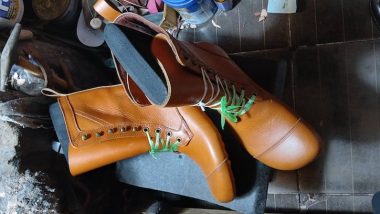
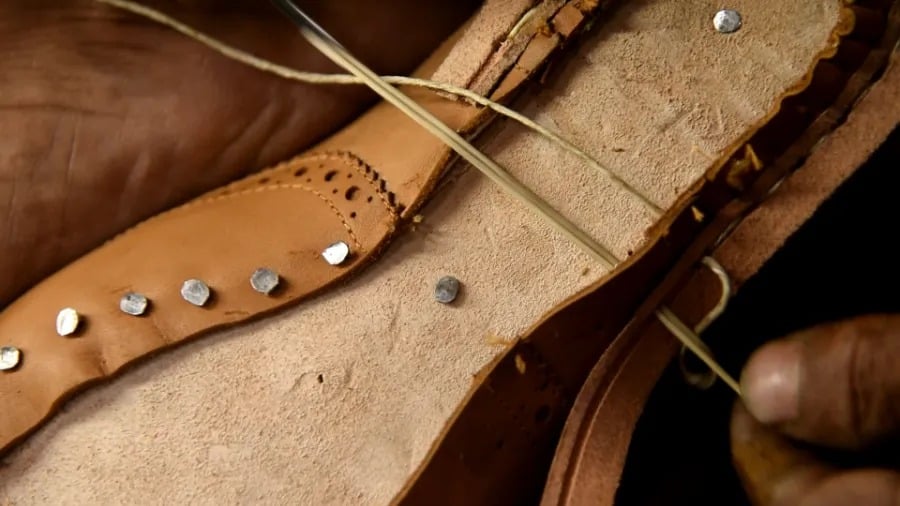
To do it right, you had to make hand welted boots. This meant a skilled craftsperson had to manually carve a precise channel (called a holdfast), directly into a thick leather insole.
From there, they had to stitch a leather welt around the entire perimeter by hand, which acted as the structural anchor for attaching the midsole and outsole.
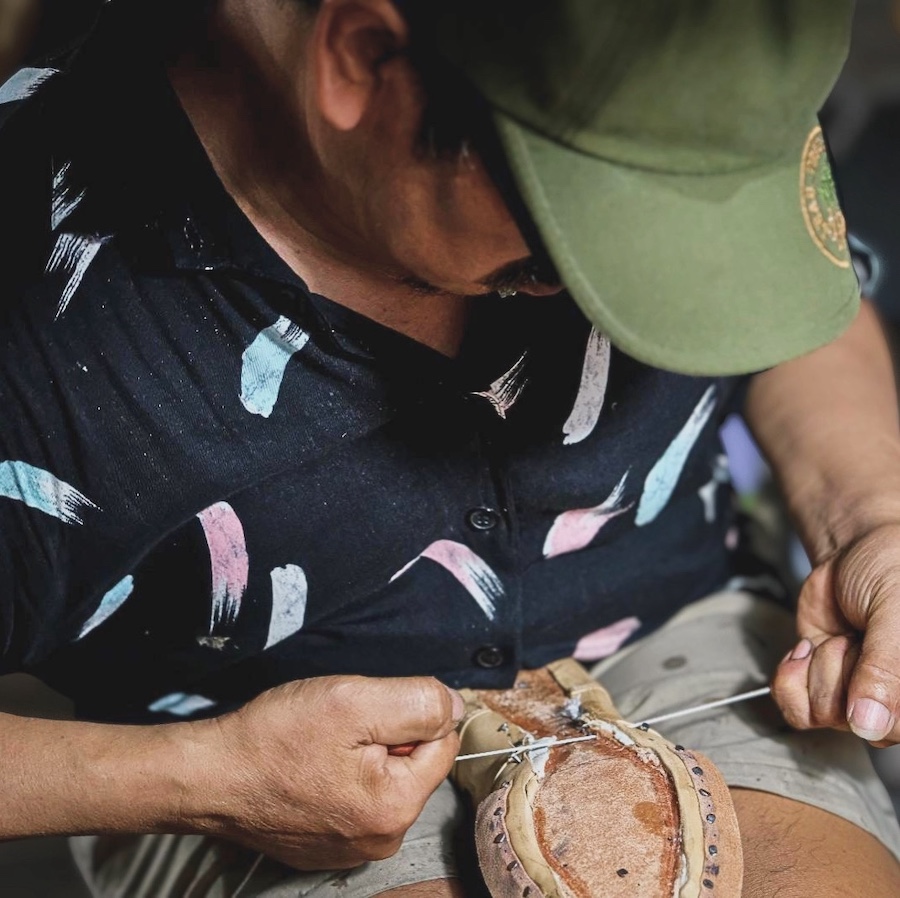
It was a beautiful, highly skilled example of traditional boot construction, but it was also incredibly labor-intensive. A single pair took hours of focused physical work, which became an issue when trying to scale up production and a workforce.
The faster alternative was to just slap some glue on the bottom of an upper, stick a sole to it, and send it out into the wild.
But these glued, or cemented, boots had the exact same issues in the early 1900s that they do today: they didn’t last. The adhesive could fail at any moment under stress or with prolonged wear, and once the sole wore down, proper boot resoling was usually out of the question.
The invention of the Goodyear welt massively sped up the boot making process and was lightyears ahead of the disposable, glued-together alternatives.
Further Reading

There are many more ways to make resoleable boots than the Goodyear welt. We visited a cobbler to get answers. Learn more →
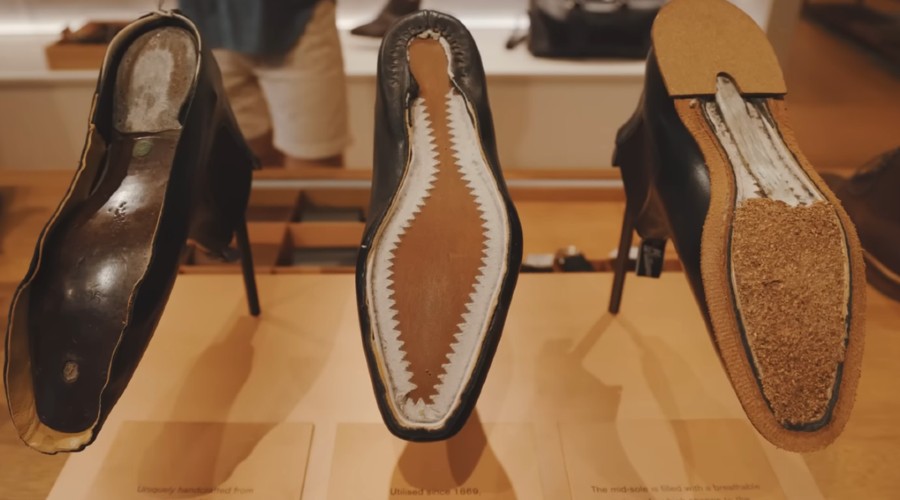
The Goodyear welt effectively bridged the gap between cheap glue jobs and time-consuming handmade boots by introducing a clever mechanical workaround called gemming.
Instead of a bootmaker spending hours carving that the holdfast directly into a thick leather insole, factory production lines glue a structured canvas rib, the gemming, to the bottom of a flat insole to act as the sewing anchor.
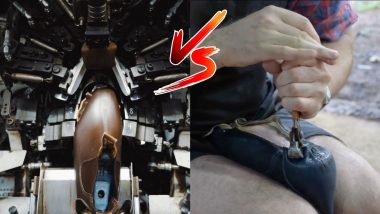
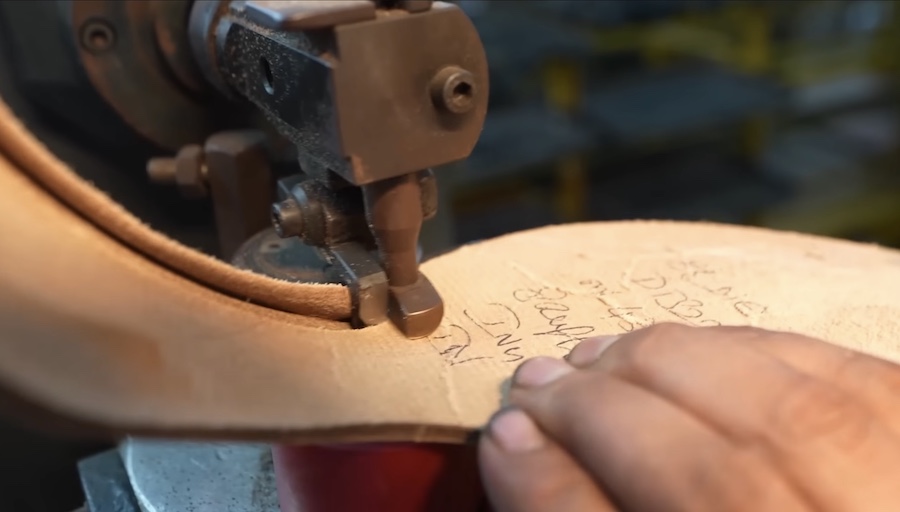
From there, the magic happens. Instead of a human meticulously sewing every single thread, a Goodyear welting machine flies around the perimeter of the shoe. It chain-stitches a leather welt directly into that glued canvas rib. Lastly, the machine attaches a welt to the boot in less than a minute, whereas doing it by hand takes hours of grueling labor.
This single invention completely flipped the script on boot construction. Because the assembly process gained a mechanical assist and was now significantly faster, high-volume factories could suddenly churn out durable, welted boots at a fraction of the traditional cost.
It gave the average person access to a rugged piece of footwear that offered genuine longevity and allowed for straightforward boot resoling all without the staggering price tag of fully handcrafted boots.
Don’t get me wrong: operating a heavy-duty Goodyear welting machine is absolutely a skill that takes serious practice to master.
But it’s fundamentally an industrial discipline focused on speed and efficiency. It simply isn’t the same level of boot construction as building hand welted boots, where a maker pulls and tests the tension of every single stitch by hand to create an unbreakable, tailored bond.
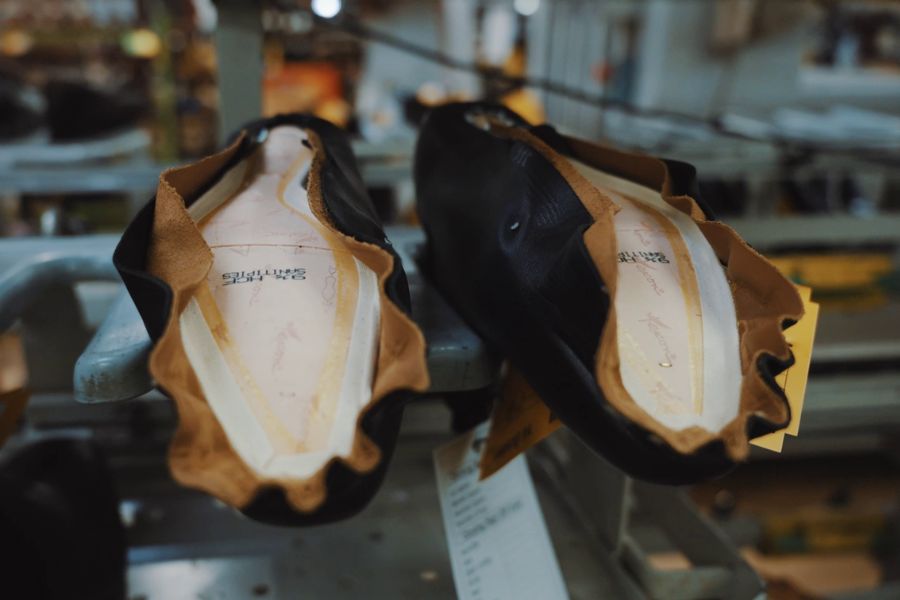
While Goodyear welted boots are a massive step up from disposable, glued-together deals, they still harbor a built-in compromise: gemming, and it is the true Achilles’ heel of machine-made boot construction.
Think about it: the primary bond holding a critical structural component of the boot together is just adhesive.
While that’s still a hell of a lot more durable than just slapping a rubber sole directly onto a raw boot upper, it means you’re still introducing a single point of failure right into the foundation of your footwear.
Now, let’s be fair, not all factory-made welted boots are created equal. A bargain-basement boot slapped together with the cheapest possible materials on a high-speed assembly line is going to fail sooner rather than later.

On the flip side, a dedicated maker who uses high-quality leather components and maybe even incorporates a heavy-duty storm welt for extra weather resistance will build a machine-welted boot that holds up significantly longer.
But no matter how much skill or top-tier material goes into a Goodyear-constructed boot, the physical reality of the engineering doesn’t change: that canvas gemming relies on glue, and glue eventually degrades under stress, moisture, and time.
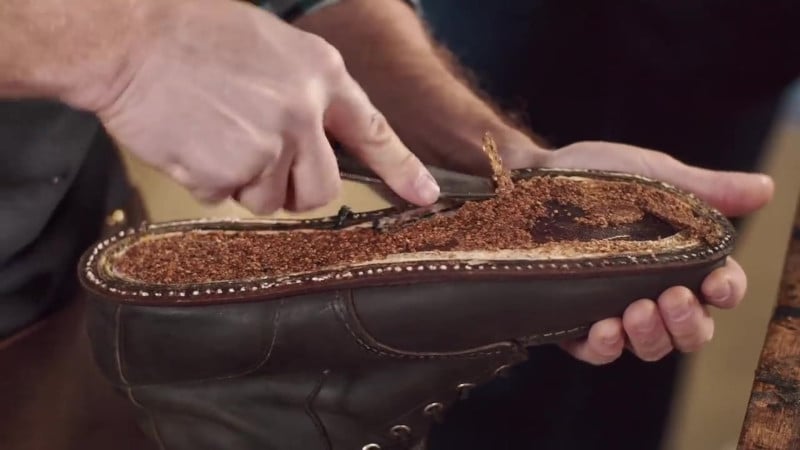
When that bond gives up, it goes one of three ways.
Sometimes it’s a total blowout, the outsole and welt peel off the upper like an alligator’s mouth. More often it’s a partial split under the ball of the foot, where the boot flexes most, and moisture starts creeping in and rotting it from the inside. The sneakiest is when the glue degrades in micro-sections, there’s no visible gap, but the boot goes sloppy and loses support underfoot.
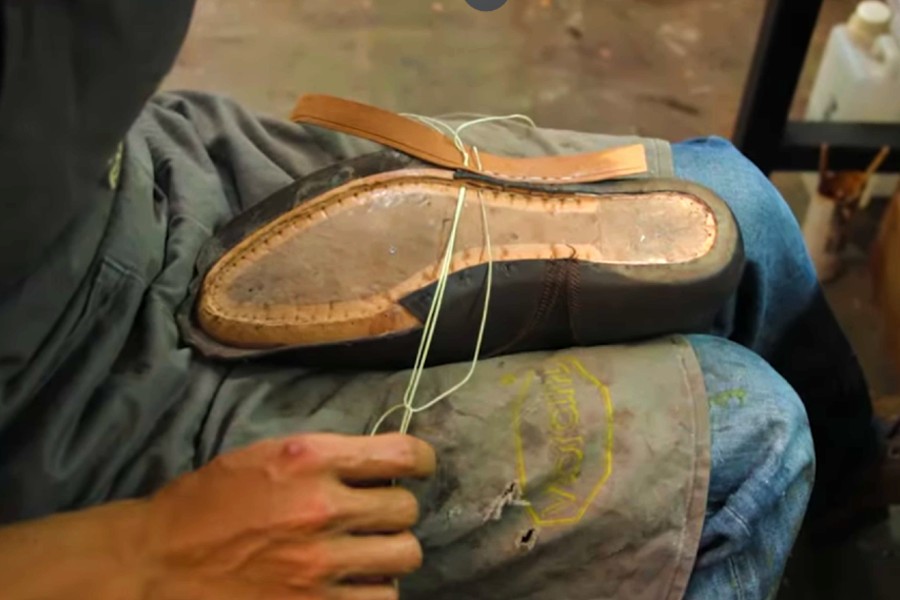
This brings us back to the traditional way of doing things: the high-skill, labor-intensive process of making truly handmade boots. This is the exact blueprint that the Goodyear machine was invented to copy, but like most automated shortcuts, the machine left behind the soul of the process.
When comparing a Goodyear welt vs hand welt, the most critical difference is that hand-welting uses absolutely zero glue to hold the core structure together. There is no canvas rib to degrade or separate. Because the welt is stitched directly into the carved leather holdfast of the insole, the bond is as permanent as it gets.
A machine applies the exact same uniform, mechanical pressure to every millimeter of the shoe, regardless of variances in the leather. A master bootmaker, however, feels every single stitch. They know exactly how much tension to apply, pulling tight enough so the welt is completely locked to the insole, but not so tight that it strains or tears the leather.
Because there isn’t a stiff layer of synthetic canvas beneath your feet, hand welted boots offer an entirely different experience. There is far less dead space between the insole and the midsole, resulting in a boot that flexes naturally with your foot and provides a much better connection to the ground.
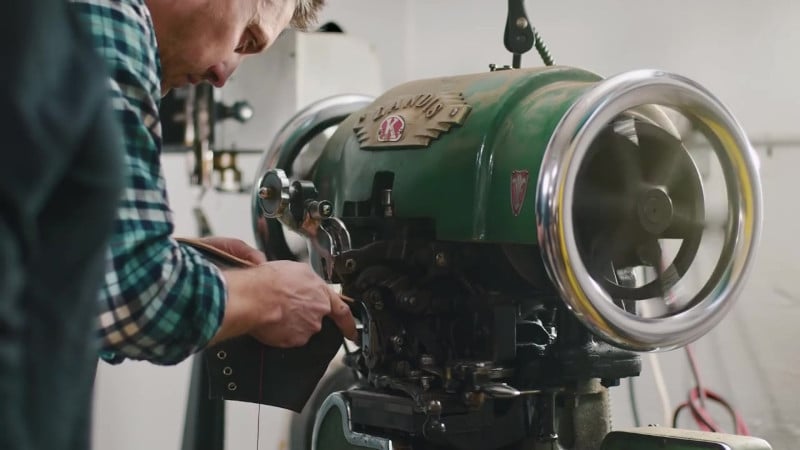
At the end of the day, the debate of Goodyear welt vs hand welt isn’t about calling one method complete trash and the other flawless.
We absolutely need both in the footwear ecosystem. Without Goodyear welted boots, the modern market would be entirely flooded with cheap, cemented garbage that ends up in a landfill after a single season of hard wear. It made affordable, rebuildable boots accessible to a wider market.
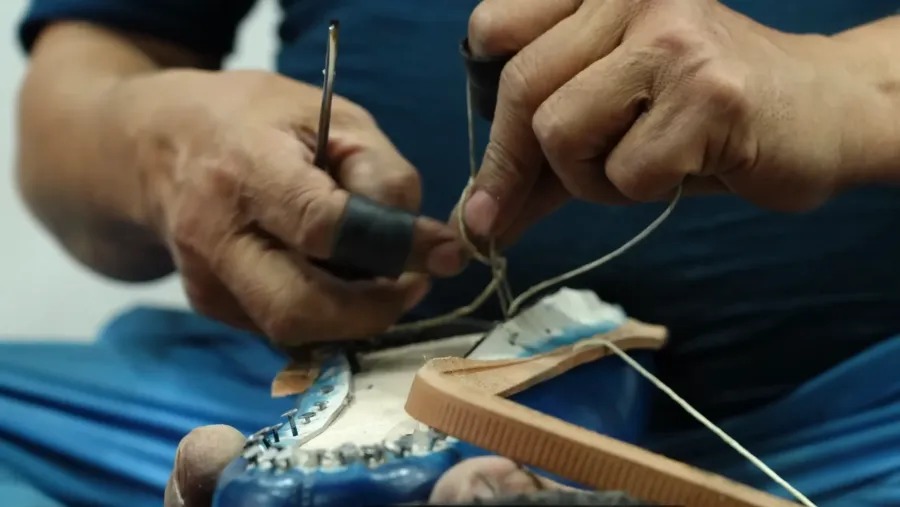
But when you want to look past mass-market efficiency and invest in hand welted boots , you take the boot wearing experience into the stratosphere.
The ground feel, flex, and overall functionality of a hand-sewn pair are entirely superior because the boot is built to conform to a human foot.
Because a master cordwainer stitched that leather welt directly into a carved channel in the solid leather insole, handmade boots can be completely stripped down and rebuilt over and over again for decades. It is the ultimate form of buy-it-for-life gear.

Dana is the designer, creative director, and co-founder of Naang Boots.

by Nick English
Founded in 2018 to help men buy the best boots, we’ve since expanded our team and purview to review and celebrate casual footwear and menswear that’s as close to “buy it for life” quality as possible. We take great pride in being a trusted source for information while maintaining complete editorial independence. At no extra cost to you, we might earn a commission from a brand when you purchase through our links, which helps us keep our mission alive. Learn More
Casual Durable™.
Yup, we even trademarked it. Just because you’re dressed down, doesn’t mean you have to dress bad.
This site started to help guys find the best boots for their dollar and has since expanded to cover the highest quality casual menswear, from leather jackets to selvedge jeans to canvas bags — the kind of simple, fashionproof classics that help you get dressed without overthinking your “style.” Read more
Subscribe for an exclusive article to help you find the best deals on quality footwear.