Updated May 3, 2026

Stridewise
Boots, Denim and Casual Stuff

Expert Verified By: Michael Batson, Vice President, North Star Leather Company
If a company wants you to think their leather’s high quality, they’ll usually call it “full grain.”
The idea is that it hasn’t had any of the outer layer sanded or smoothed down, and this is interpreted as meaning that full grain is the most durable and best looking leather.
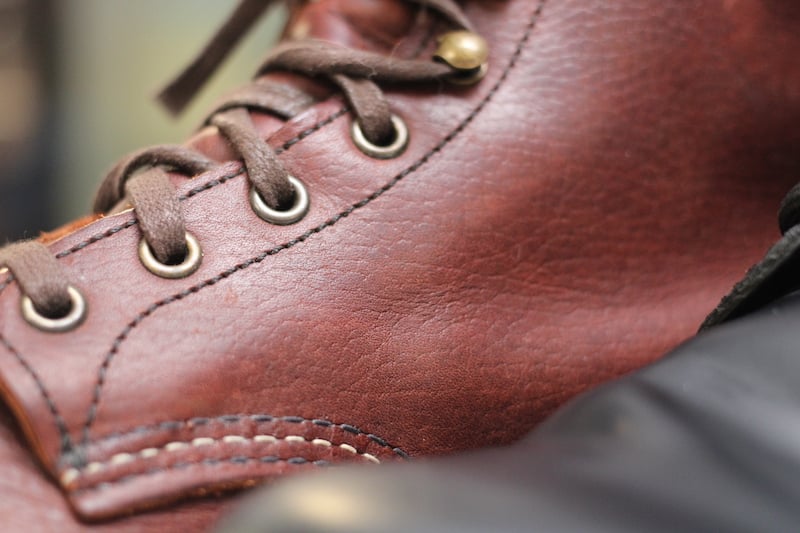
But after nearly ten years of covering this industry, I’ve learned that “durability” is more complicated than a leather’s grain — and that a lot of leathers called “full grain” have actually been smoothed a little.
So I wanted to write an article that discusses the ambiguity and differences between full grain, top grain, split grain, and corrected grain leather.
To get the most accurate info, I interviewed John Culliton, a VP at the world famous Horween Leather Company, and extra-impartial career leatherworker Michael Batson of North Star Leather.
Here’s the right way to talk about leather.
No one controls these terms, so it’s never 100% clear how they’re being used.
Among the general population:
But in the leather industry:
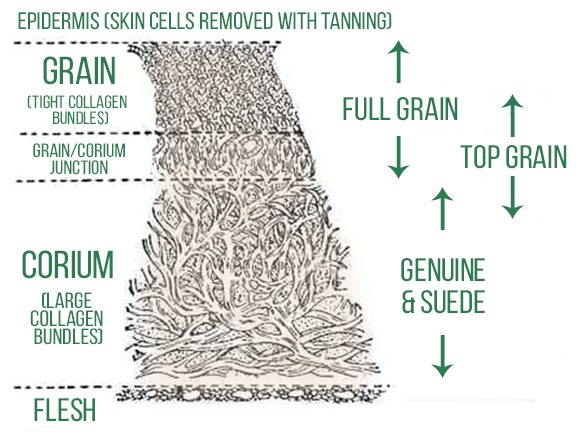
This is how it’s usually explained:
But folks who work in the leather industry tend to use these terms differently.
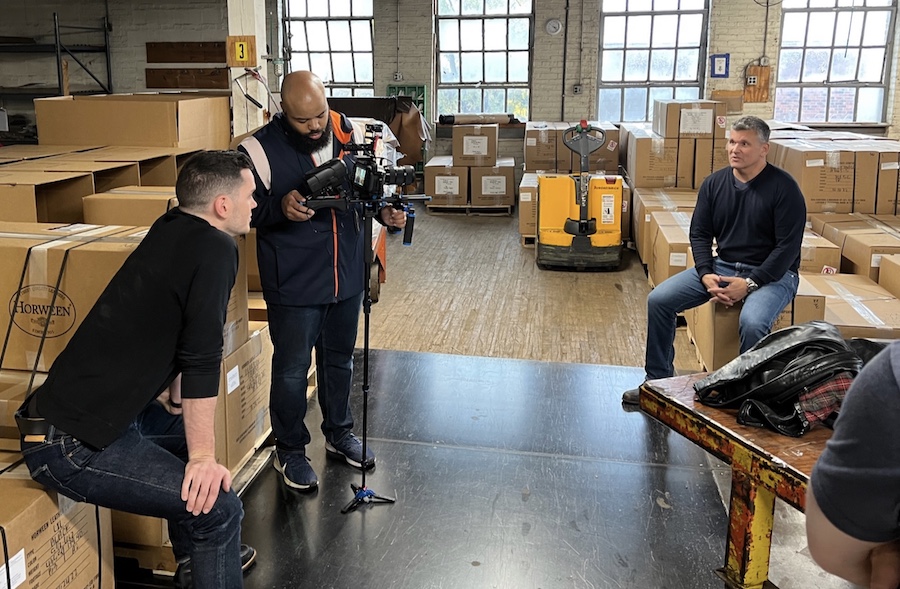
“Our industry is based on marketing, and while it’s a big industry in aggregate, tanneries tend to be smaller companies,” says Culliton. “We don’t have a GM or a Philip Morris to set industry standards. So, many tanneries — and companies to which they sell leather — come out with marketing terms that don’t necessarily correlate to what the product actually is.”
Among leatherworkers, what the public would call ‘full grain’ is actually considered a kind of ‘top grain.’
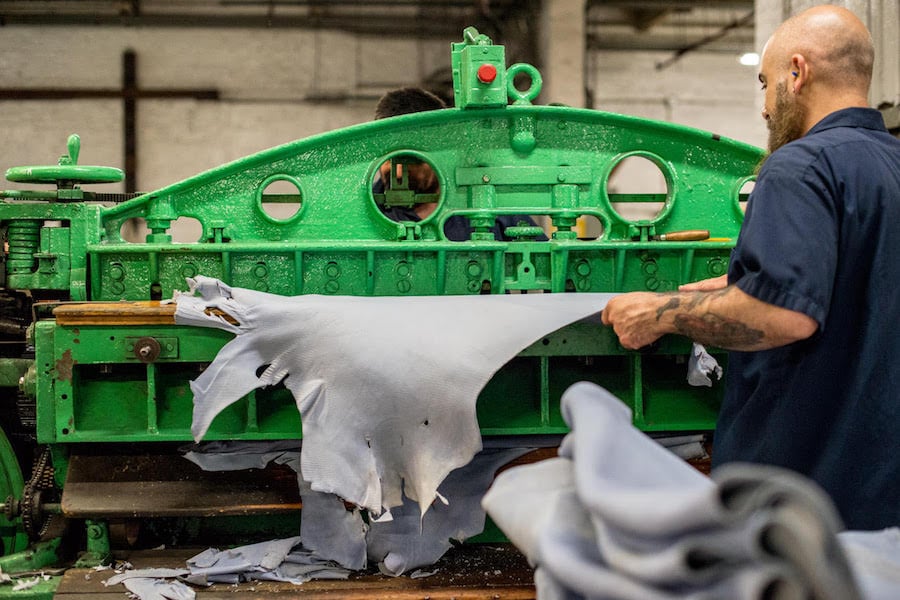
“When it comes to mechanical processes that are done to leather, you’re really only left with two types: top grain and splits. You might call the splits ‘suede,'” says Batson. “Top grain can then be broken down into corrected grain or full grain. Full grain is leather that hasn’t had any correction done to it.”
Note: Correcting means the leather has been smoothed down by removing some of the outer layer. It’s often used interchangeably with buffing, snuffing, sanding, and smoothing.
“When we process the hide itself, we split the top part of the skin from the underside — and that’s the top grain,” says Culliton. “Top grain used to mean a lot, but it’s been watered down. The true definition of top grain means you’ve kept the top part of the hide.”
So among leatherworkers, what the public might call full grain is, in fact, a kind of top grain. Because it’s all either top grain or split.
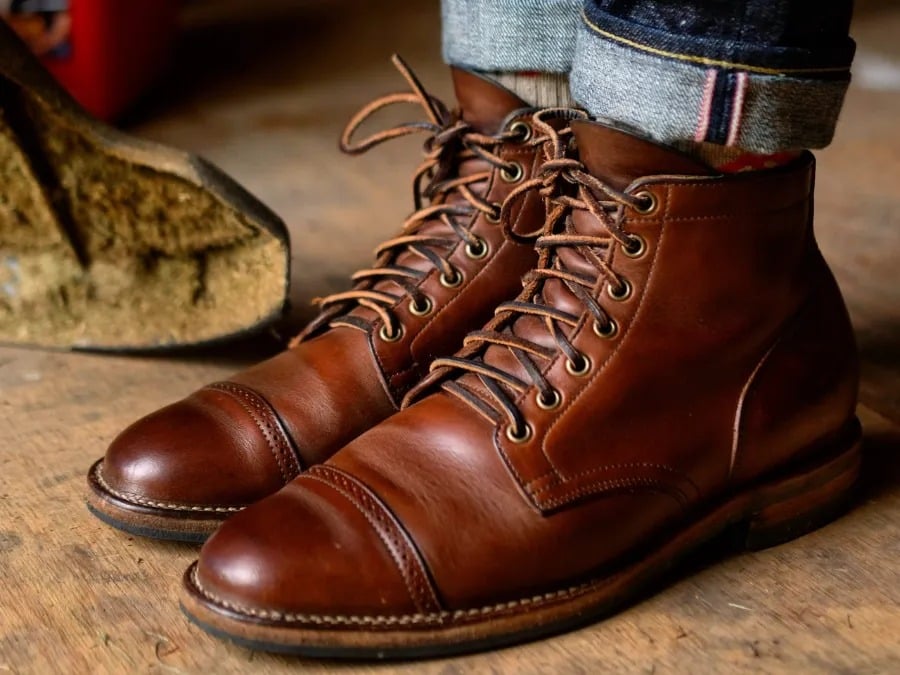
Full grain has a reputation for being the best. This has led to a problem: a lot of companies call their leather full grain when it isn’t.
The most beloved casual boot leather in the whole world is Horween’s Chromexcel. It’s dynamic, colorful, durable, water resistant, and there’s nothing more beautiful than really well worn Chromexcel boots.
Yet, it’s technically corrected grain, not full grain.
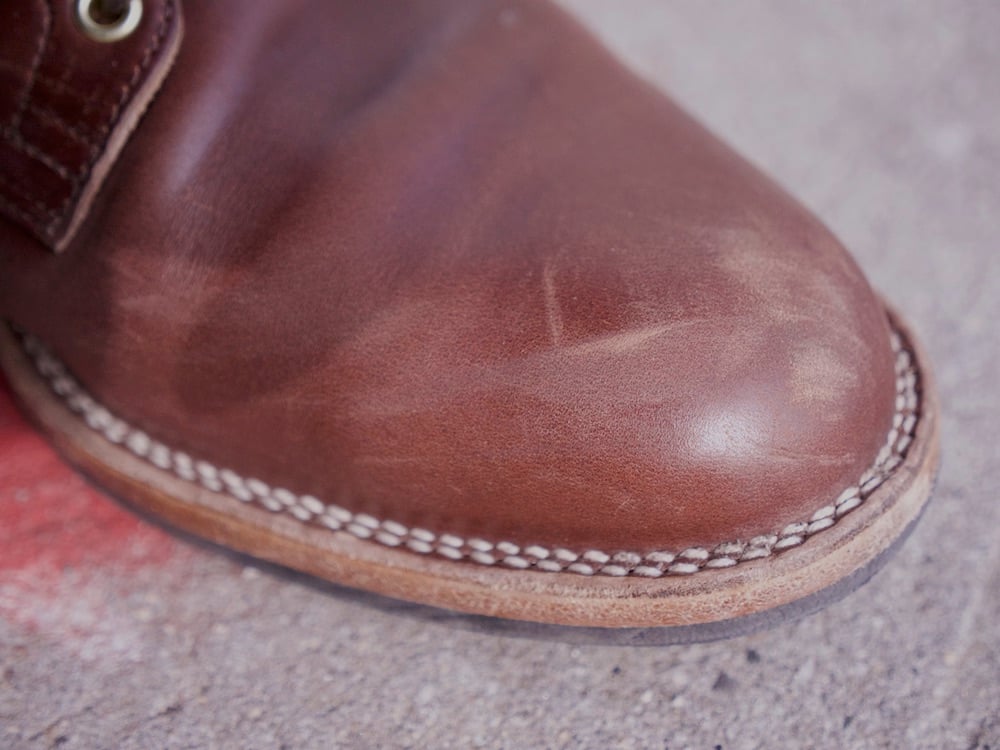
“Corrected grain is when the tannery will take something abrasive, like sandpaper, and level the grain out for cosmetic purposes,” explains Culliton. “The whole world thinks Chromexcel is full grain because when you look closely at it, you can see the grain. But we correct it — we just correct it so little that we leave part of the grain on the leather.”
I haven’t had to pay more or less for corrected grain leather than I do for full grain,
Corrected grain gets a bad rap because a lot of cheap leather that’s so-smooth-it’s-plasticky has been made with heavily corrected leather.
“The whole idea that ‘it removes imperfections in cheap leather’ gets a little exaggerated. I haven’t had to pay more or less for corrected grain leather than I do for full grain,” says Batson. “Most major imperfections are still visible because you’re not adding a finished coat. But corrected grain that has a heavy coat, like Doc Martens, absolutely does hide imperfections.”
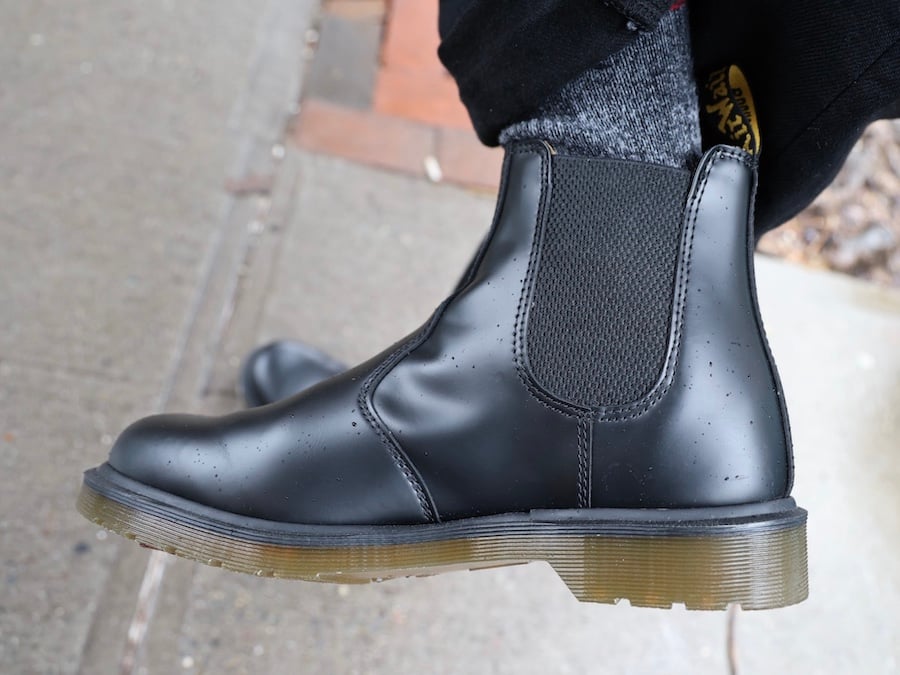
Correcting the grain doesn’t mean it’s bad leather. Oftentimes, leather is corrected simply because it makes it a lot easier for dye to penetrate it. In that regard, it’s a little like wood: sanding it a little helps it accept the stain.
The main takeaway is that correcting leather doesn’t mean it’s worse or even that it’s thinner than ‘full grain,’ since the thickness is all about where you’ve split the hide. The average boot leather is two millimeters thick, but a hide usually starts out well over five or ten millimeters.
You can even make very thick suede, since suede just means a little bit of the top layer has been removed. It doesn’t mean the leather (or suede) is going to be under a certain thickness. Check out this clip from an interview with the world’s best suede company:
Yeah, you use the split to make suede.
To recap: when tanneries get their hides, they split it lengthwise into two pieces: the top grain is split off from the rest.
The split is the part that falls off from the underside, and that’s where suede comes from. (Sometimes, a vinyl layer is applied to the surface and embossed so it looks like full grain, but don’t be fooled.)
Note that there’s a really wide range of quality within the category of split grain — you can get thirty-dollar suede shoes from Wal-Mart or you can get articles like Janus Calf or Waxy Commander from C.F. Stead, an English tannery famous for making the most premium and durable suedes on Earth.

Sometimes you’ll encounter roughout, which a lot of brands will call suede. They do look similar, but roughout isn’t made from the split, it’s made from the fuzzy underside of the top grain.
Further Reading
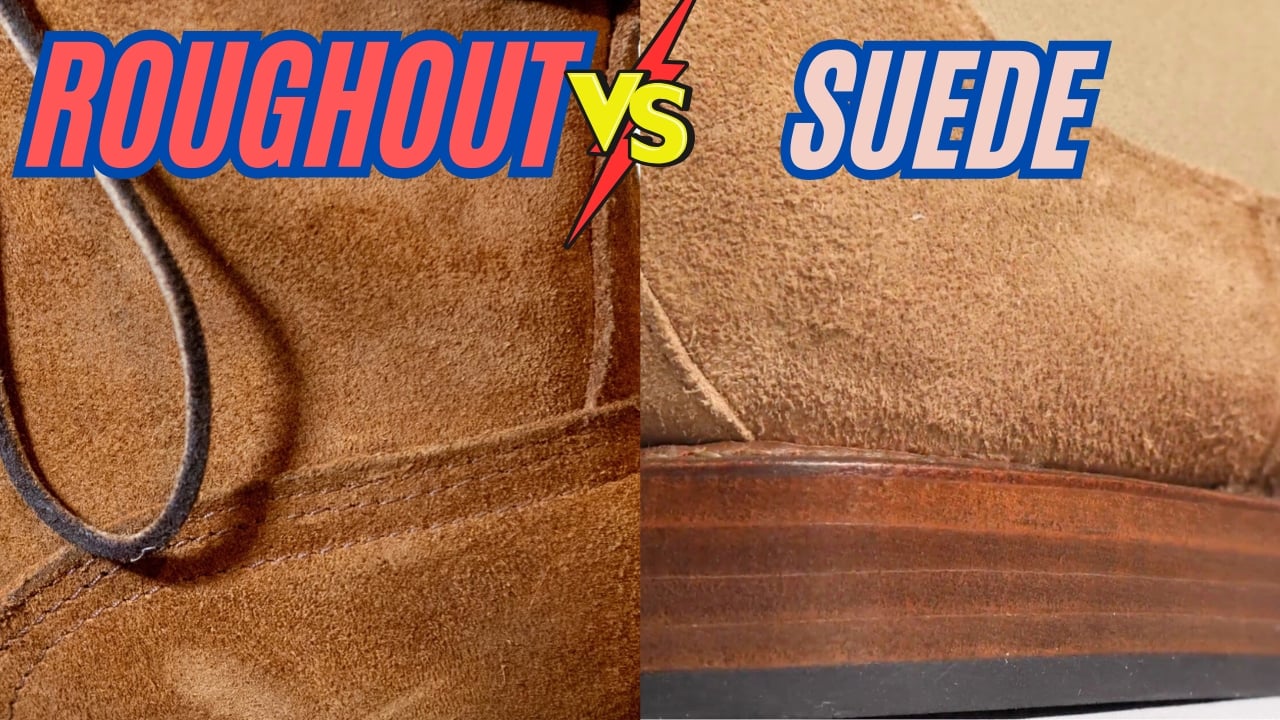
Learn the difference between the fuzzy leathers that tend to be used totally differently. Learn more →
So: the public and leatherworkers use different labels and categories to describe leather.
“What’s the difference between full grain and top grain” is the kind of question that’ll make you ponder the field of linguistics: if most people are using the terms “wrong,” then aren’t the “wrong” definitions how the words are used?
I’ll say this: when you’re looking at, say, a boot’s product page, you probably won’t see the words “top grain” or “split.” They’ll say “full grain” to mean the leather is smooth as opposed to fuzzy, like suede or roughout.
Among leatherworkers, “top grain” and “split” are just used to refer to the two pieces you get from the splitting operation that separates smooth leathers from fuzzy suedes.
This will help you navigate discussions about leather in different spheres with different people.
[Related: My list of The Best Boots]
Featured image via @horweenleather on Instagram.

This is my website, so I'll just write in first person. I'm the founder and editor of Stridewise, where I have spent nearly a decade covering boots and casual menswear.

by Nick English
Founded in 2018 to help men buy the best boots, we’ve since expanded our team and purview to review and celebrate casual footwear and menswear that’s as close to “buy it for life” quality as possible. We take great pride in being a trusted source for information while maintaining complete editorial independence. At no extra cost to you, we might earn a commission from a brand when you purchase through our links, which helps us keep our mission alive. Learn More
Casual Durable™.
Yup, we even trademarked it. Just because you’re dressed down, doesn’t mean you have to dress bad.
This site started to help guys find the best boots for their dollar and has since expanded to cover the highest quality casual menswear, from leather jackets to selvedge jeans to canvas bags — the kind of simple, fashionproof classics that help you get dressed without overthinking your “style.” Read more
Subscribe for an exclusive article to help you find the best deals on quality footwear.