Updated Jul 10, 2026

Stridewise
Boots, Denim and Casual Stuff

Expert Verified By: Weston Kaye, Founder & Leather Worker, Rose Anvil
If you’re an American who likes boots there’s a very good chance you own some Chromexcel. These days, it seems like every other boot on the market is made from this leather. It’s on everything from $200 boots like Thursday to mid-range boots like the Wolverine 1000 Mile and the Allen Edmonds Higgins Mill to $1,000 boots like the Viberg Service boot.
So why is this the default leather for American service boots? In this article, we’re joined by leather worker Weston Kay from Rose Anvil to learn all about this popular leather.
Chromexcel is the brainchild of the Horween Leather Company, a beloved American tannery that was founded in Chicago all the way back in 1905. It’s had an interesting history (it was used on engine seals in tanks during World War 2) and it’s known for its rich depth of color.
So why is it such a big deal? The unusual method of processing the leather. It’s not chrome-tanned, as the name might suggest. It’s a combination tanned leather that has been processed largely the same way since its 1913 birth. (We say ‘largely’ because a couple of controversial ingredients, like whale oil, have been swapped out.)

According to Horween, Chromexcel (CXL) undergoes “at least 89 separate processes taking 28 working days and utilizing all five floors of (their) facility.” You can read about the lengthy processing from the skin to CXL on their site, but the long and short of it is that the leather gets imbued with an enormous variety of oils, greases, and waxes, including food-grade beef tallow and cosmetic-grade beeswax. They call this “hot stuffing” and it’s responsible for the leather’s “pull-up” quality, meaning that when you give the leather a good firm rub, you can see the oils and waxes moving around the leather itself.

All of these fatty, waxy ingredients give Chromexcel its famous luster and depth that make it look pretty fantastic on a boot, particularly as it ages.
“Because they infuse so much into it, it’s a really saturated leather. It’s almost impermeable by oil and water because there’s so much in there already,” says Kay. “It’s really great for a lot of different products. We use it in camera harnesses because of its strength and its malleability. It’s one of those leathers you don’t have to break in super hard, it’s weather resistant, so it has a lot of characteristics that make it a really great leather.”
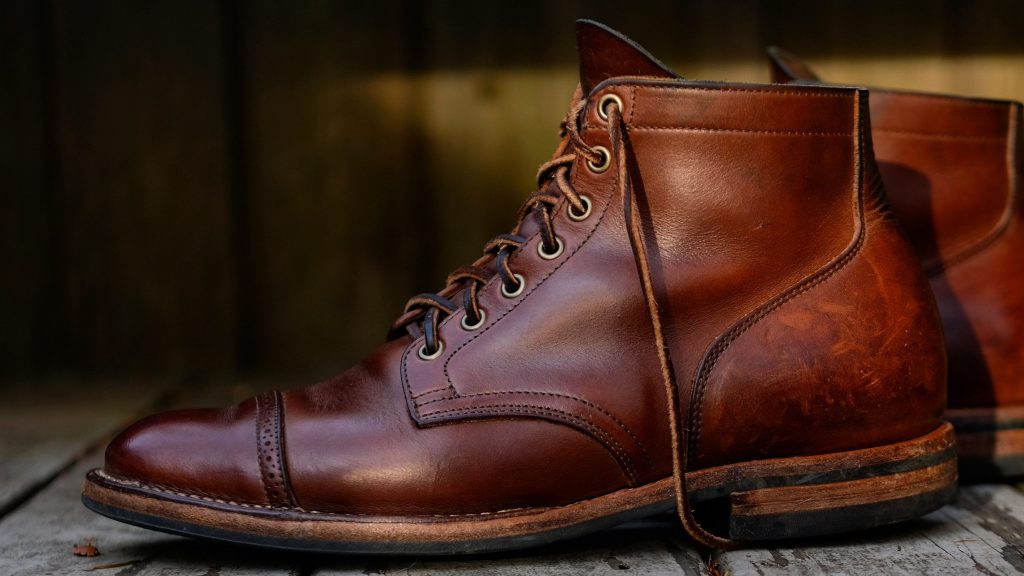
As a combination-tanned leather, some consider it to have the best characteristics of chrome tanned and vegetable tanned leather — it’s softer, easier to break in, and retains color better than purely vegetable tanned, but it’s more durable and lustrous than most chrome tanned leathers.
[Learn more: Chrome Tanned vs Vegetable Tanned vs Combination Tanned Leather]
First up, definitions:

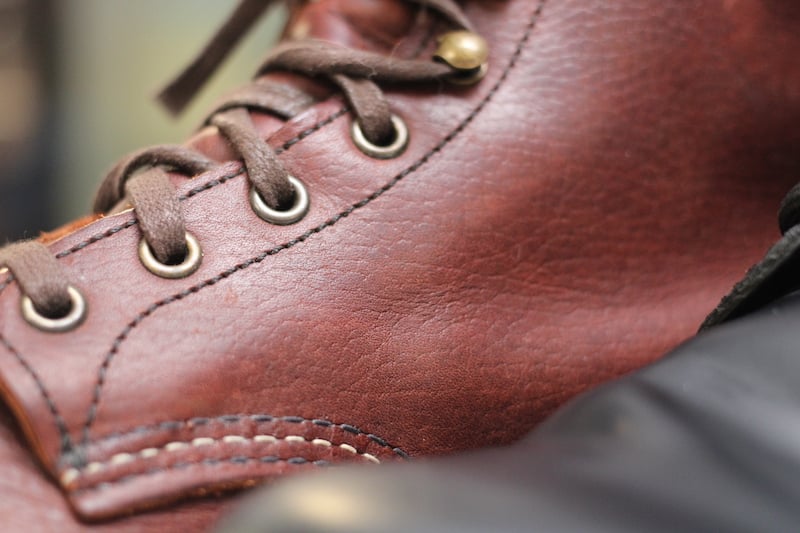
“Horween themselves consider it top grain,” says Kay. “But that doesn’t mean it’s a poor leather. They shaved off that very top layer to give it a more even finish and texture, because full grain can sometimes have too many flaws for whatever project or product you’re trying to make. Horween does a great job of sanding away just enough that it’s a really clean and evenly colored and textured leather, but still leaving enough grain in the leather to keep it strong and durable.”
[Learn more: Horween Discusses Top Grain vs Full Grain Leathers]
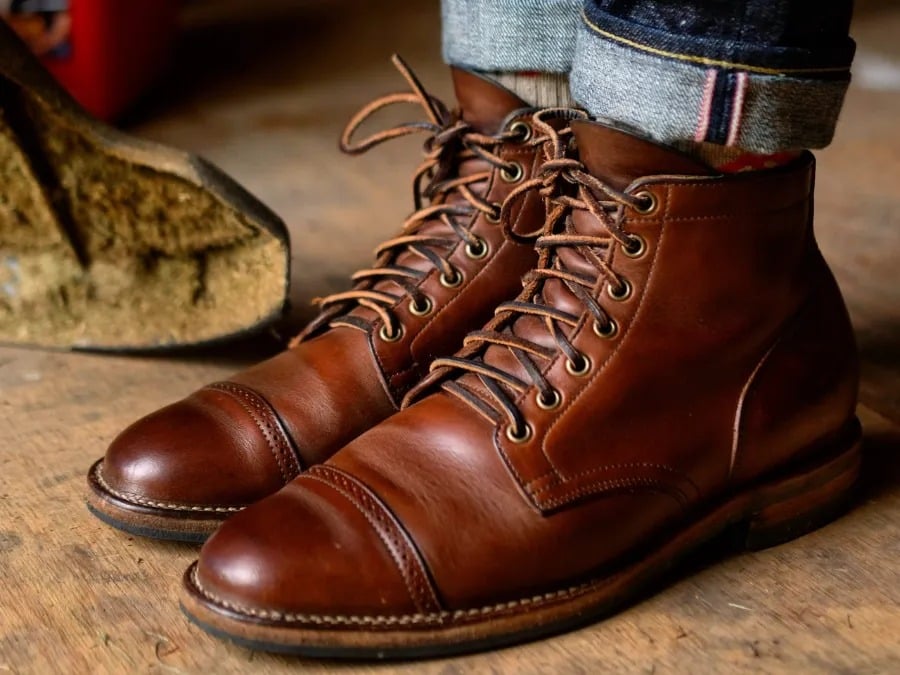
Caring for this leather comes in two stages: cleaning and then conditioning.
It’s smart to remove as much dust from the leather as you can before conditioning so that you’re not trapping too much grime and bacteria in the hide when you apply the conditioner.
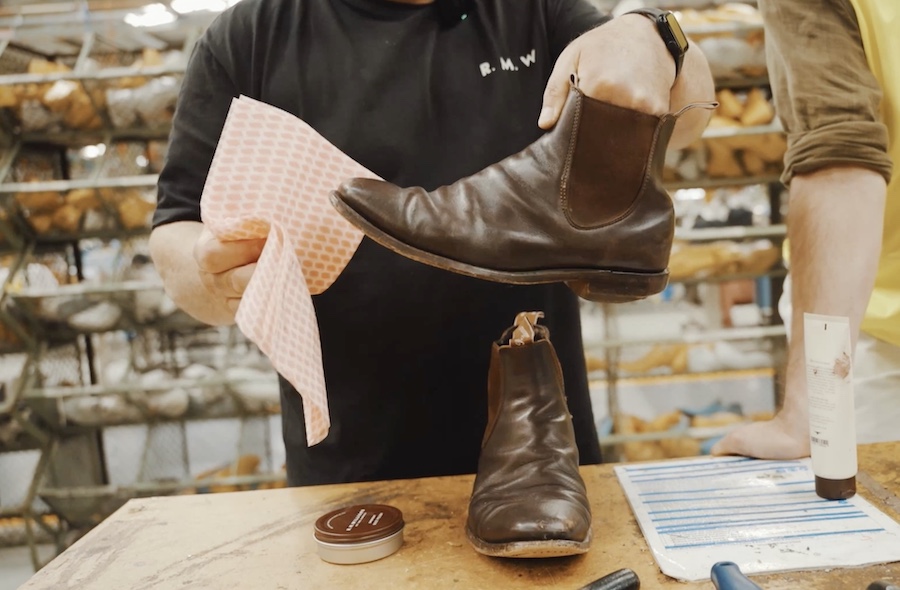
First, you want a good horsehair brush. Brushing vigorously not only helps to remove dirt, but it also heats up the leather, moving around the oils and helping to remedy scratches and scrapes.
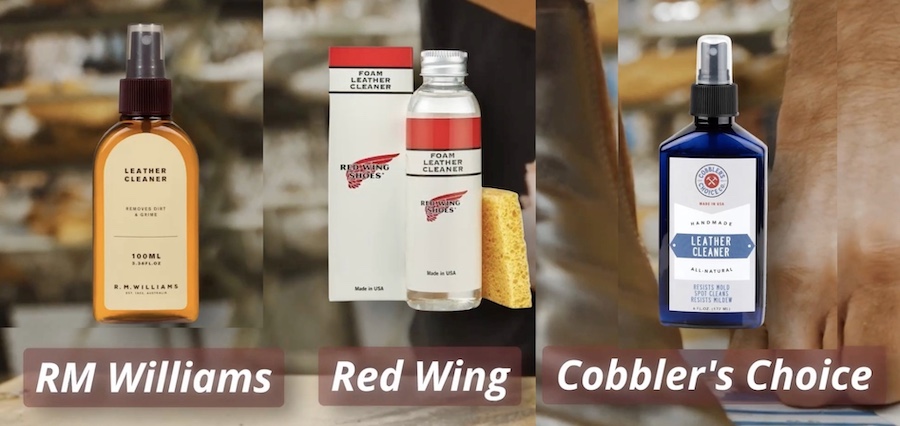
Take a rag and a gentle cleaner like Cobbler’s Choice. There are more ‘hardcore’ leather cleaners out there (that’s next) but foamy cleaners like this one are easy to use and can be employed as often as you like.
Just spray and wipe, remembering to clean hard-to-reach areas like welt stitching. Feel free to clean the same spot more than once if you need to, just keep an eye on your cloth to make sure you’re not removing any dye.

An inexpensive cleaner made with all natural ingredients, it's easy to apply and contains tea tree oil for some anti-microbial properties.
If dirt isn’t coming off, consider cleaning it with Saddle Soap. Be careful, though, as too much Saddle Soap can strip the boot of oils, waxes, and color.
You can use the horsehair brush from earlier, but a dauber brush is best. When you open the tin, you’ll see the Soap is hard, just like bath soap. Put some water in a dish, wet the brush, and rub it around the soap to work up a lather.
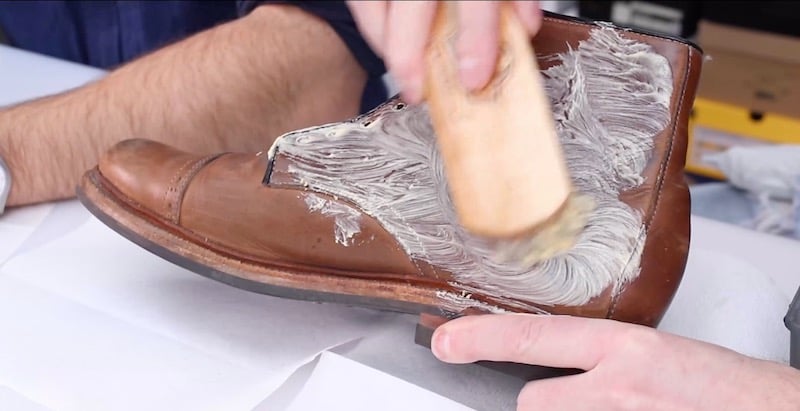
Rub it over the entire boot (not just the dirty spots), let it sit for just five or ten seconds, and wipe it off with a paper towel or a rag. If a stain remains, you can apply a little more just to that area itself and do the process again once or twice. Then, wash all the Saddle Soap off with a wet towel and leave it to dry before conditioning.
“Some people saturate the entire boot, soaked all the way to the flesh side, and it pulls as much of the oil as it can,” says Kay. “What you’re trying to do is put a light level on the top to remove dirt.”
Saddle Soap is so astringent that if you use too much or leave it on for too long, it can profoundly dry out the leather and even remove dye. Be sure to read our full guide to Saddle Soap before attempting!
Next, your job is to replenish the oils and waxes lost from the soaping. Even if you didn’t go as far as using Saddle Soap, oils, and waxes are lost simply by using the boots over months and years. It’s skin. It gets dry. It needs moisturizing.
What’s the best conditioner for Chromexcel? Plenty of products will do the job, but if you ask Nick Horween, who makes the stuff, he likes these three:
1. Saphir Greasy Leather Cream
This is a neutral-colored shoe restorer that’s neatsfoot oil- and jojoba oil-based.
Renovateur is pigment-free and mink oil-based. It’ll produce more of a shine on the Chromexcel, if that’s what you’re after.
Actually made in Chicago, this is one of the most popular creams for conditioning leather and is great for keeping it moist and flexible. It’s all I use on my Chromexcel.
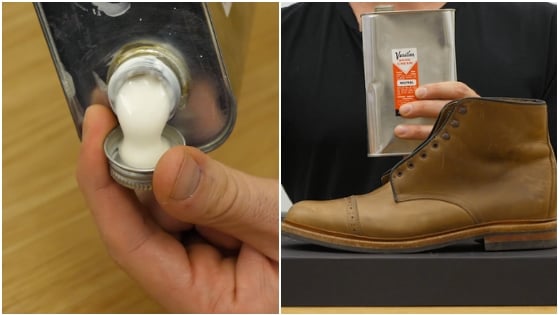
You’ll get a better result with a few light coats than one heavy coat, so apply a thin layer with a rag or your fingers, let it sit for an hour or two, and see how the boot looks.
How much luster and shine has returned to the boot will depend on how dry the leather is and how long it’s been since its last conditioning, but I’d recommend using two coats.
Once it’s all soaked in, buff it with a horsehair brush again help the cream sink into the leather and to restore some shine.
Avoid waterproofing sprays or creams if possible, since they can suffocate the leather and trap dirt and dust inside it — just clean ‘em with a brush and rub in some cream once or twice a year.
Further Reading
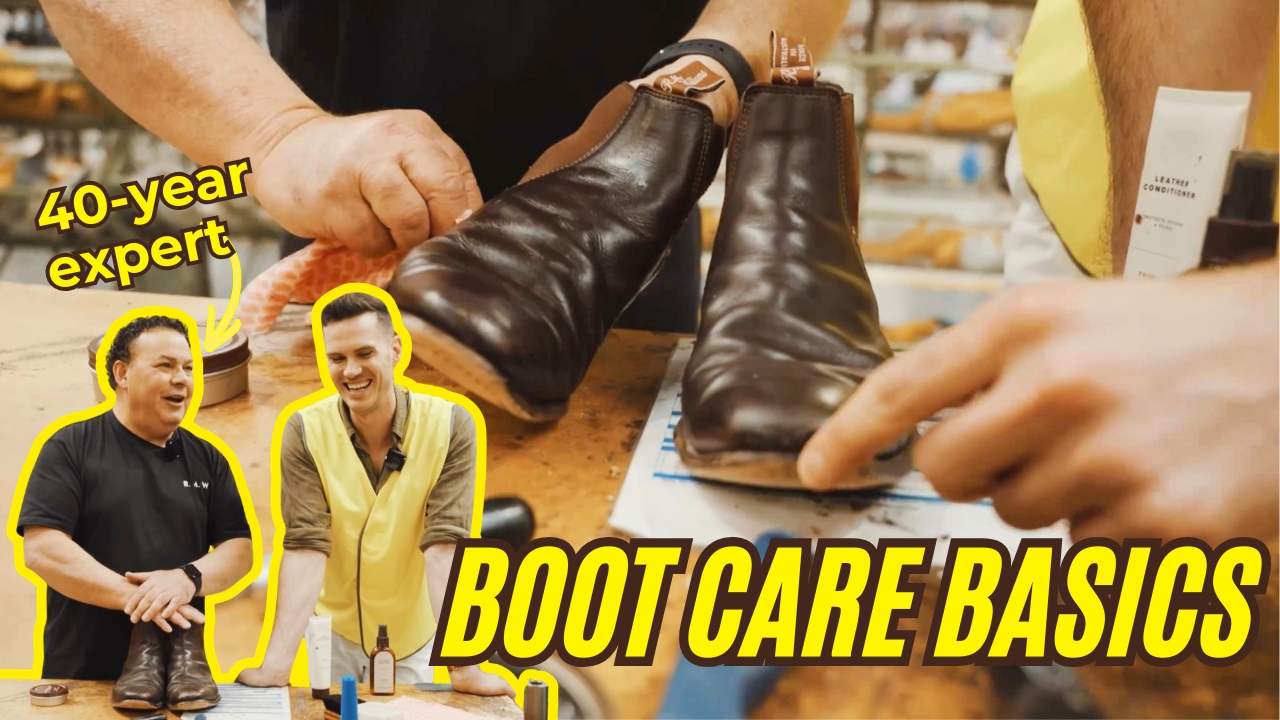
Making sure your boots last as long as possible doesn’t have to be a full-time job. Learn more →

This is my website, so I'll just write in first person. I'm the founder and editor of Stridewise, where I have spent nearly a decade covering boots and casual menswear.

by Nick English
Founded in 2018 to help men buy the best boots, we’ve since expanded our team and purview to review and celebrate casual footwear and menswear that’s as close to “buy it for life” quality as possible. We take great pride in being a trusted source for information while maintaining complete editorial independence. At no extra cost to you, we might earn a commission from a brand when you purchase through our links, which helps us keep our mission alive. Learn More
Casual Durable™.
Yup, we even trademarked it. Just because you’re dressed down, doesn’t mean you have to dress bad.
This site started to help guys find the best boots for their dollar and has since expanded to cover the highest quality casual menswear, from leather jackets to selvedge jeans to canvas bags — the kind of simple, fashionproof classics that help you get dressed without overthinking your “style.” Read more
Subscribe for an exclusive article to help you find the best deals on quality footwear.