Updated Nov 28, 2026

Stridewise
Boots, Denim and Casual Stuff
You’re probably a guy with a soft spot for a good, casual boot that’s traditionally made, has some interesting history, and has the kind of subtle and classic good look that works with your casual pants.
But that description doesn’t just apply to heritage work boots like Red Wing’s Blacksmith or Iron Ranger.
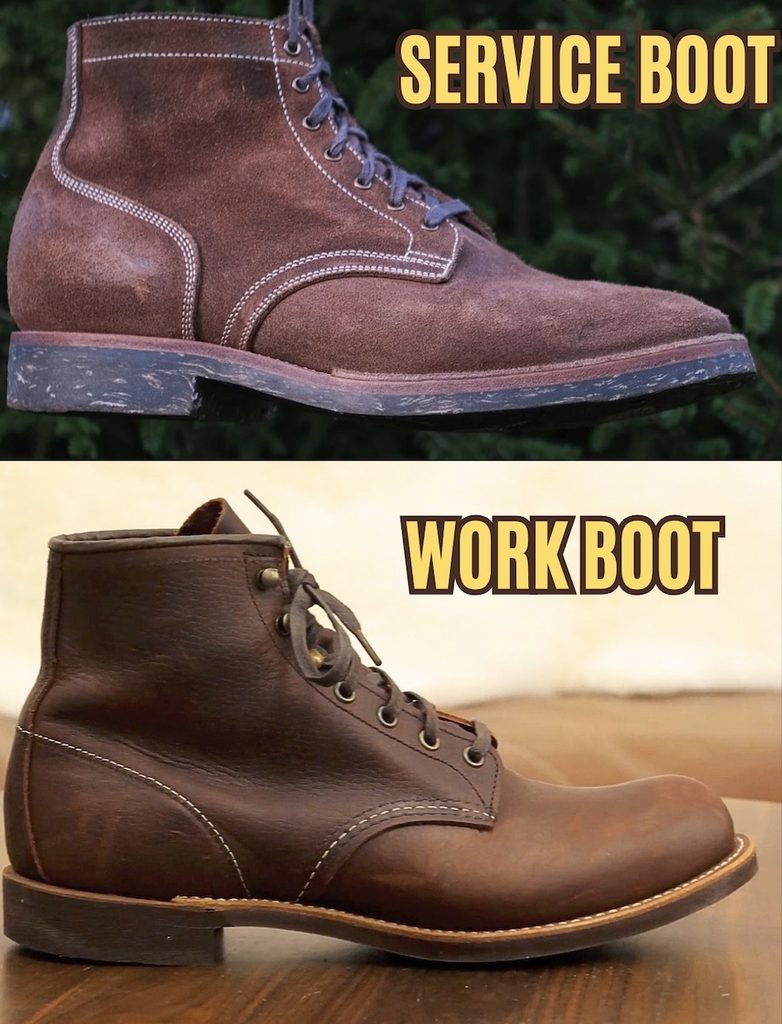
We are currently experiencing a resurgence of the service boot, a more subtle and versatile boot that deserves to be ranked alongside work boots as the best casual boot for men.
Today we’re breaking down the differences betwen the two.
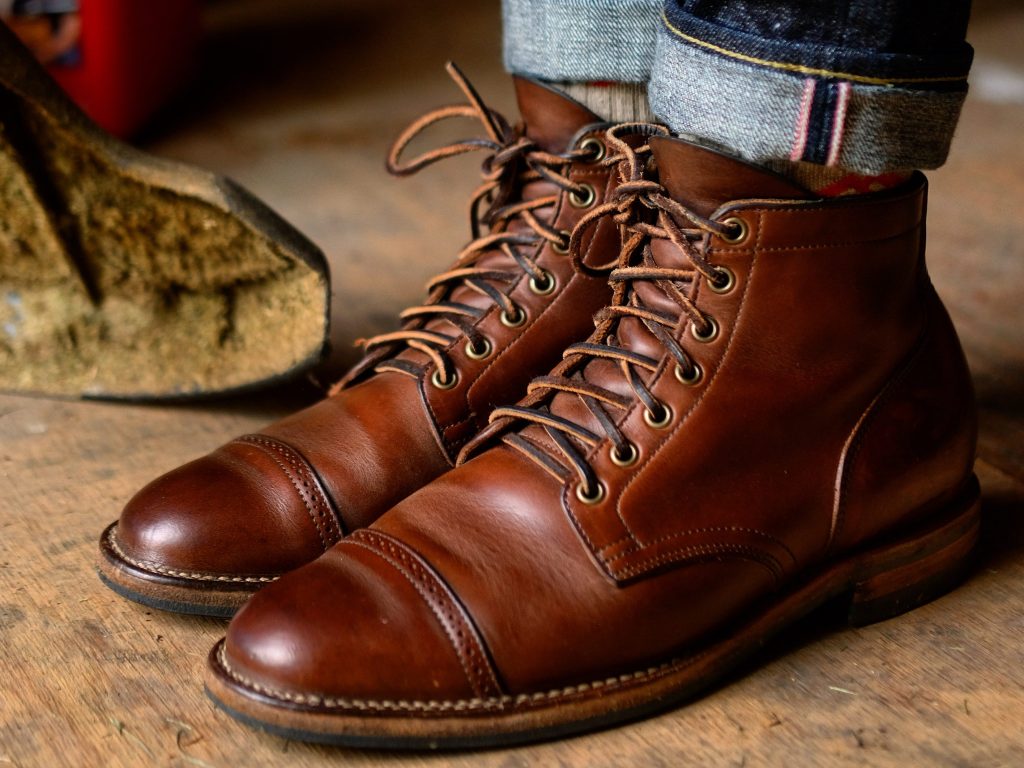
Service Boots are lace up boots with a low profile and sleek look, originally designed for soldiers who needed footwear that’s lightweight and weatherproof.
Work Boots come in many more forms and often boast certifications for different jobs (eg. resistant to biohazards), but when speaking broadly:
The main difference is that work boots are more voluminous (chunky) and designed to be more stable and protective.
Service boots are more designed for moving quickly in the outdoors.
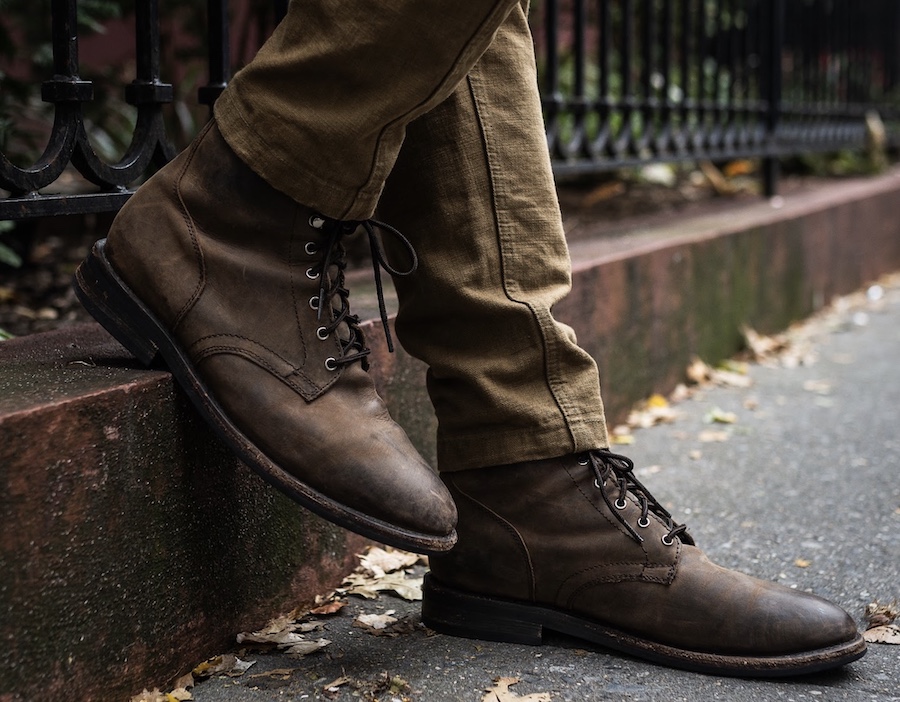
If a lace-up boot has a low and flat toe instead of a chunky, voluminous look, it’s generally categorized as a service boot.
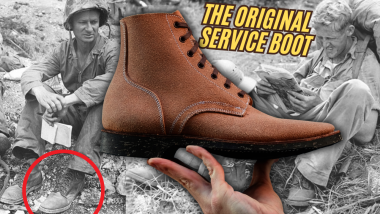
They’re called service boots because this kind of boot is closely associated with those worn by United States’ service members (a person serving in the armed forces) in World War 2.
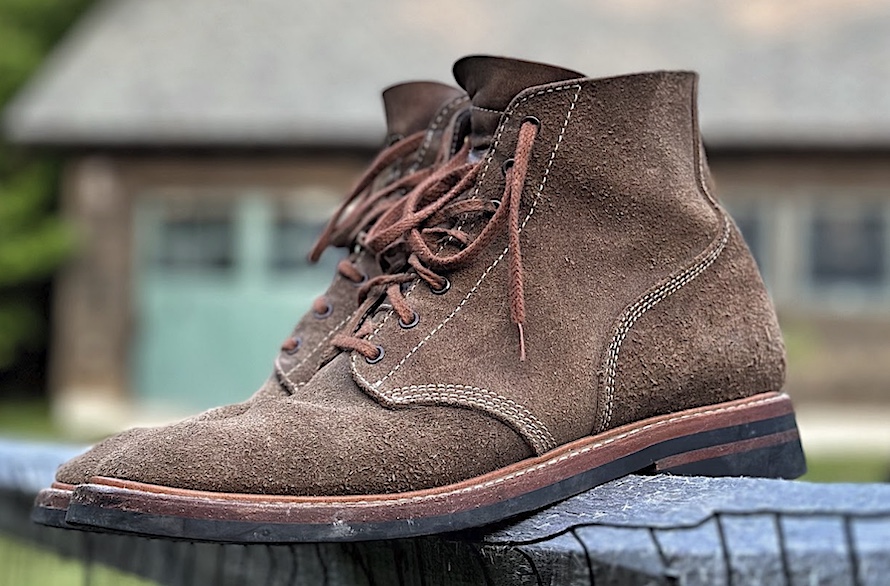
That service boot is called the boondocker, and we have this article about that particular boot’s origins. Suffice it to say: the first service boot was made with tan-colored roughout leather, which looks similar to suede but it’s typically thicker and cheaper to make.
Further Reading

They look similar, but roughout has a reputation as a harder-wearing leather, we see if that’s true.
Learn more →
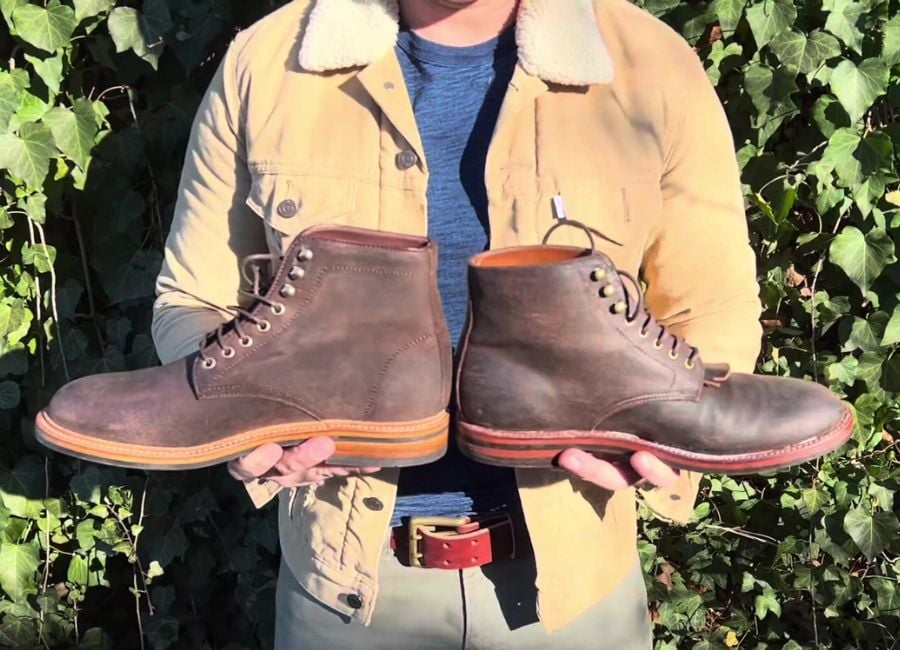
Today, a service boot can mean any lace up boot with a flat toe, though some will tell you a service boot shouldn’t have a toecap.
“(Service boots like) boondockers are more outdoorsy boots,” said Bagus Satriow, founder of Sagara Bootmaker. “They’re designed to have flexibility for movement and to move quickly in rough terrain and rough weather, while work boots are more about support: strong medial support and a heel that grips the foot really securely.”

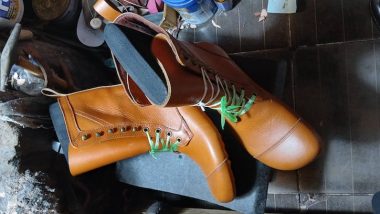
Fully customizable service boots with a range of options for leather, hardware, toe style, shaft height, and more.

While the main goal of service boots is to allow the wearer to move quickly on different kinds of terrain, work boots are made with an emphasis on stability, support, and protection.

But when the average person looks at the average service boot and the average lace up work boot, the first thing they’ll probably notice is the volume: work boots are chunkier.
The work boot’s extra volume may be to accommodate thick socks, a steel toe, a waterproof membrane, or all of the above. The original service boots had no structure in the toe at all.
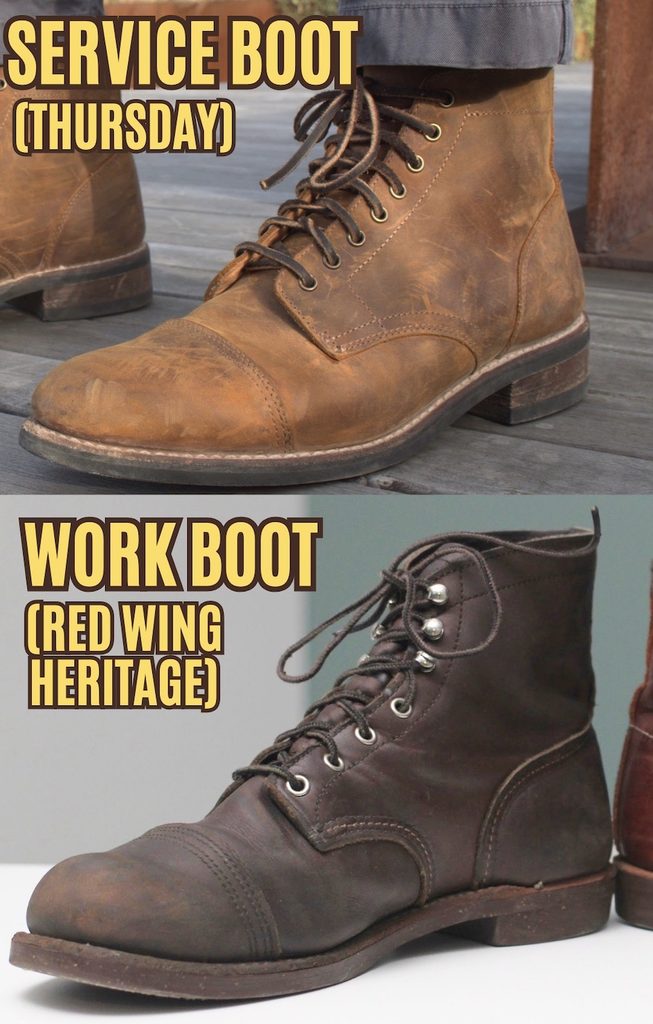
These days, most boots have some leather or thermoplastic in the toebox to give it shape. This includes both boots considered service boots and work boots, like the Vanguard and Iron Ranger in the picture above.
While some will say the difference is all about toe protection, both of these boots have the same kind of toebox, which has been stiffened with plastic-impregnated fabric called thermoplastic.

“Work boot” is a term that’s a bit too nebulous to clearly define: you can use it for a $100 slip-on boot for yard work and a thousand-dollar, 12-inch tall, high-heeled boot for felling trees.
So some people separate them into “work boots” and “heritage work boots.” The former can include any footwear required for any job: they’re seldom resoleable and usually have ASTM ratings for certain kinds of tasks, like electrical shock resistance.

Heritage work boots are the more old fashioned kind: they may not have an ASTM rating, but they’re made to be far tougher and to endure multiple resoles and multiple decades of use. Nicks Handmade Boots (above) and Red Wing Heritage (their pics have been all over this article) are great examples.

The pinnacle of rugged American boots, Nicks is universally revered among both casual enthusiasts and the Pacific Northwest's firefighters, loggers, and linemen.
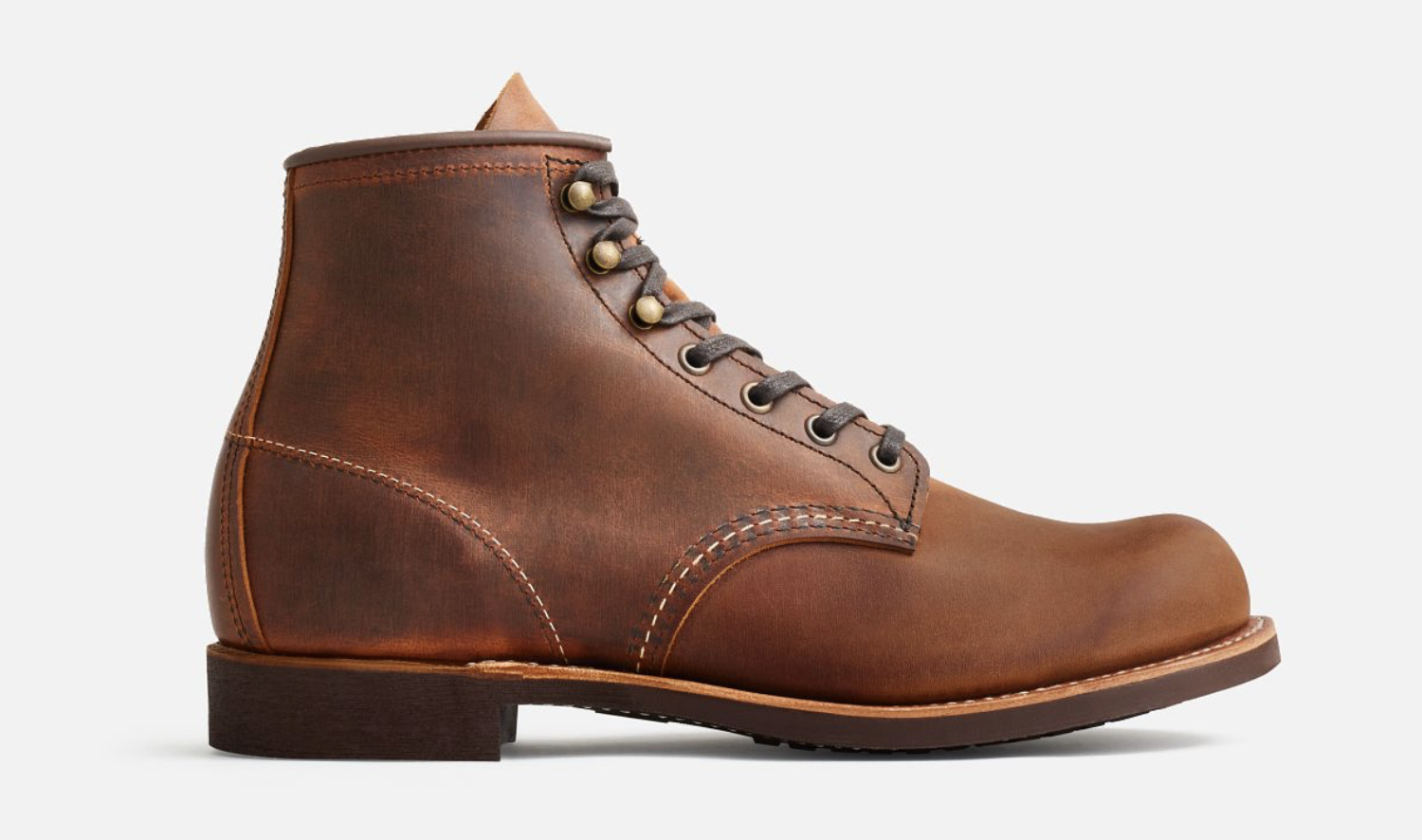
Goodyear welted and crafted from leather tanned by Red Wing themselves, the Blacksmith is a must-have for those looking for a clean, all-season boot.
Obviously, you should go for a work boot if you require one for your job. (If you do, it probably has to have an ASTM rating.)
But what about people who don’t actually require boots for a jobsite and are just looking for a casual boot? Something that looks good with jeans, can handle rough weather, and isn’t too uncomfortable?
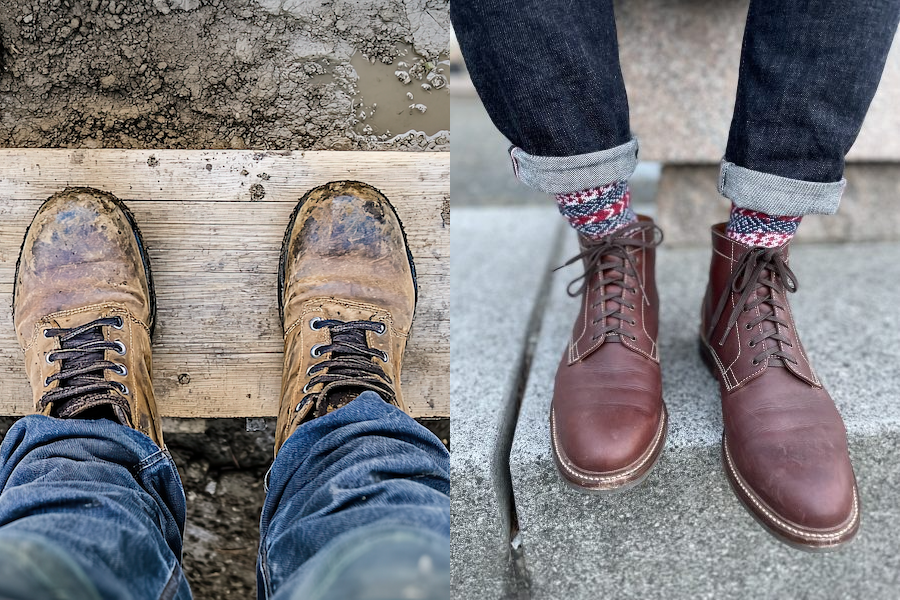
If they think about boot categories at all, most guys separate them into “work boots” and “nice boots,” like Chelseas or wingtips.
But most guys don’t know about service boots and in our opinion, service boots are better for the average guy: they’re lighter, more outdoorsy, and more versatile.

I'm the founder and editor of Stridewise, where I have spent nearly a decade covering boots and casual menswear.

by Nick English
Founded in 2018 to help men buy the best boots, we’ve since expanded our team and purview to review and celebrate casual footwear and menswear that’s as close to “buy it for life” quality as possible. We take great pride in being a trusted source for information while maintaining complete editorial independence. At no extra cost to you, we might earn a commission from a brand when you purchase through our links, which helps us keep our mission alive. Learn More
Casual Durable™.
Yup, we even trademarked it. Just because you’re dressed down, doesn’t mean you have to dress bad.
This site started to help guys find the best boots for their dollar and has since expanded to cover the highest quality casual menswear, from leather jackets to selvedge jeans to canvas bags — the kind of simple, fashionproof classics that help you get dressed without overthinking your “style.” Read more
Subscribe for an exclusive article to help you find the best deals on quality footwear.