Updated May 20, 2026

Stridewise
Boots, Denim and Casual Stuff
I just gifted a very nice, very blue denim jacket from Tanuki to my friend Chris Madaras from YouTube, and his first text was:
I’ve never owned a real quality denim product before. Do I wash it? Do I not wash it? Or I just let it naturally break in over time?
And I realized the internet needs an explainer for guys who just got their first raw denim, don’t feel compelled to learn the culture’s whole glossary about looms and indigo subtypes, andjust want to make sure that their denim doesn’t wreck anything and that they don’t wreck their denim.
(And they can get interested in all the funky subculture stuff later, if they want.)
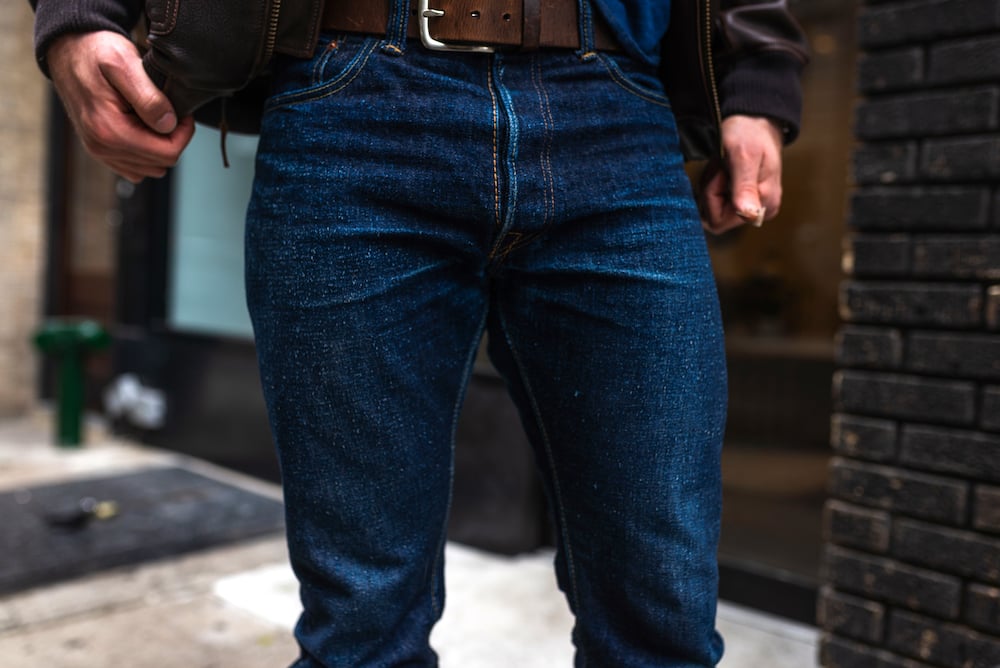
When it’s new, you need to treat raw denim differently.
Brand new raw denim can “bleed” blue dye, especially when it’s wet. Until you’ve washed it a couple of times, you might want to avoid wearing white.
The first few times you wash, turn the garment inside out and wash it on “cold” with other dark colors only.
Again, once you’ve washed it a few times, you can treat it more like any other garment.
It’s easier to cut and sew denim when it’s stiffer, so at the factory where they make your jeans, the denim usually has a bunch of starch in it. Once they’ve finished making the jeans, the factory will typically wash them to get the starch out before sending it to customers. This makes the denim softer and more comfortable from the get go.
Raw denim hasn’t been washed. This means that brand new raw denim jeans are stiffer and less comfortable than most jeans.
Many guys prefer buying their denim “raw” because this stiffer fabric does a better job of taking up the shape of the body that’s wearing it: they find it fits better with wear.
It also means that you, the customer, are the person who “fades” the jeans with use. No one is doing the fading for you. So raw denim gives you a more individualized fit and appearance with wear.
But the main practical thing you should know is:
If you’ve bought something labeled ‘raw denim,’ it will slowly lose a significant amount of dye.
In other words, it will fade. The fades will make it look cool and you will love them. But it means that when your raw denim is new, you need to make sure you don’t dye any of your other clothes or furniture.
Further Reading

Check out our favorite raw denim brands on the market. Learn more →
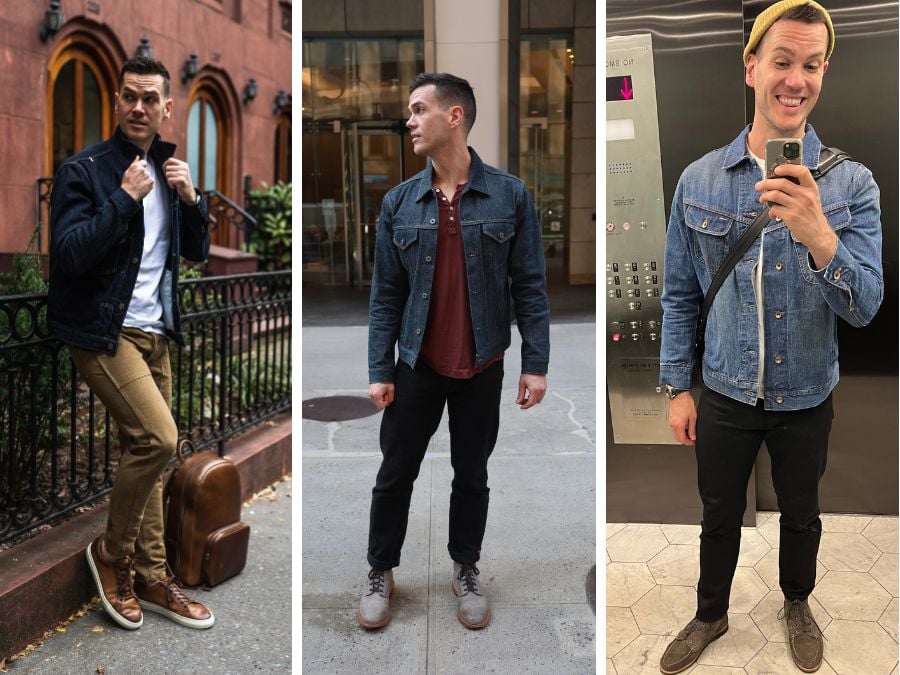
Those are the Cliff Notes, you’re welcome. Lots of guys argue about when to wash their raw denim (more on that later), but those <counts> six bullet points are all you really need to know about your new raw denim.
Because most fabrics are now colorfast, there’s a decent chance you’ve never had to separate lights and darks in the laundry. But your parents always did because it used to be more common to have fabrics that can lose dye and darken lighter clothes in their proximity, especially (but not only) when they’re wet.
Again: after you’ve washed them a few times, you can wash your raw denim jeans like your other clothes. But they lose the most dye on the first few washes, so you should be careful with newer jeans.

If raw denim is left in a wet ball, it will leave spider veins all over the surface.
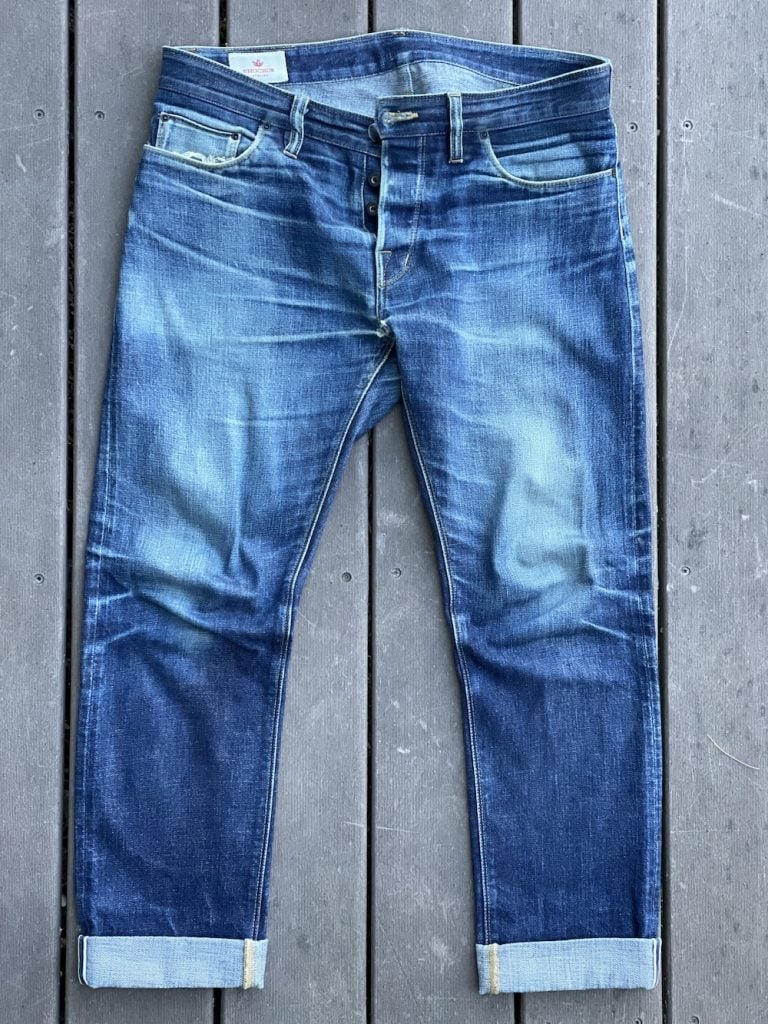
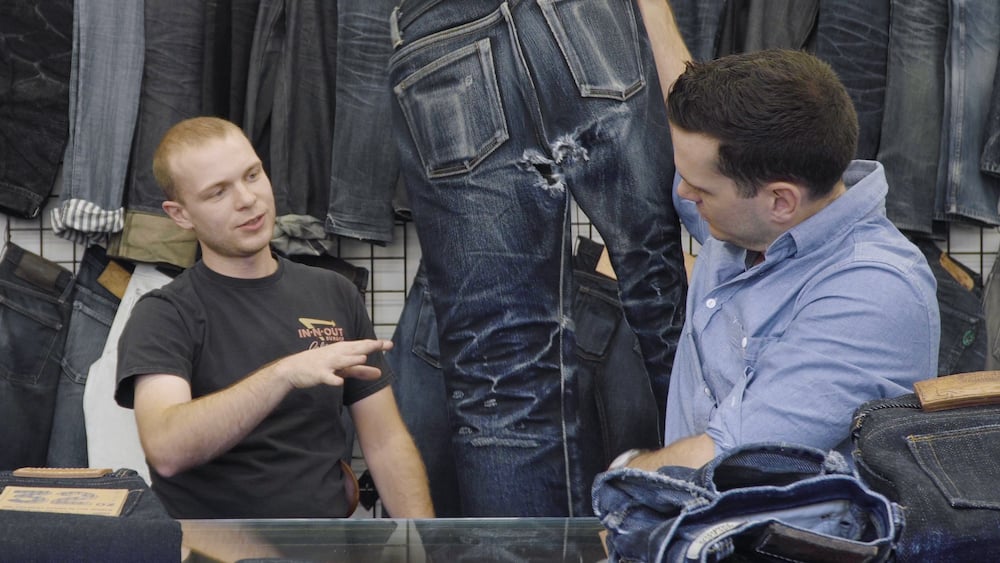
Check out my my very expensive Iron Heart jeans in the picture above. That happened because I tossed them in the washing machine and went out for a few hours. Because they were not inside out and were left in a wet and crumpled ball for a long time, the dye got messed up. It is not fixable.
The same thing does not happen if your jeans get wet while you’re wearing them. It happens if they’re wet and lying in a heap.
No, you can use any detergent you like. You don’t need to give yourself any more of a headache about washing, just remember to do it inside out with similar colors on cold, and you’re fine.
Some guys import Japanese denim detergent, but even most experts say that’s overthinking it. I’ve always just used regular old Tide.
If you want to minimize fading, use a product for washing colors like Woolite Dark. If you want to maximize the fading, add a little capful of bleach to the wash.
Further Reading
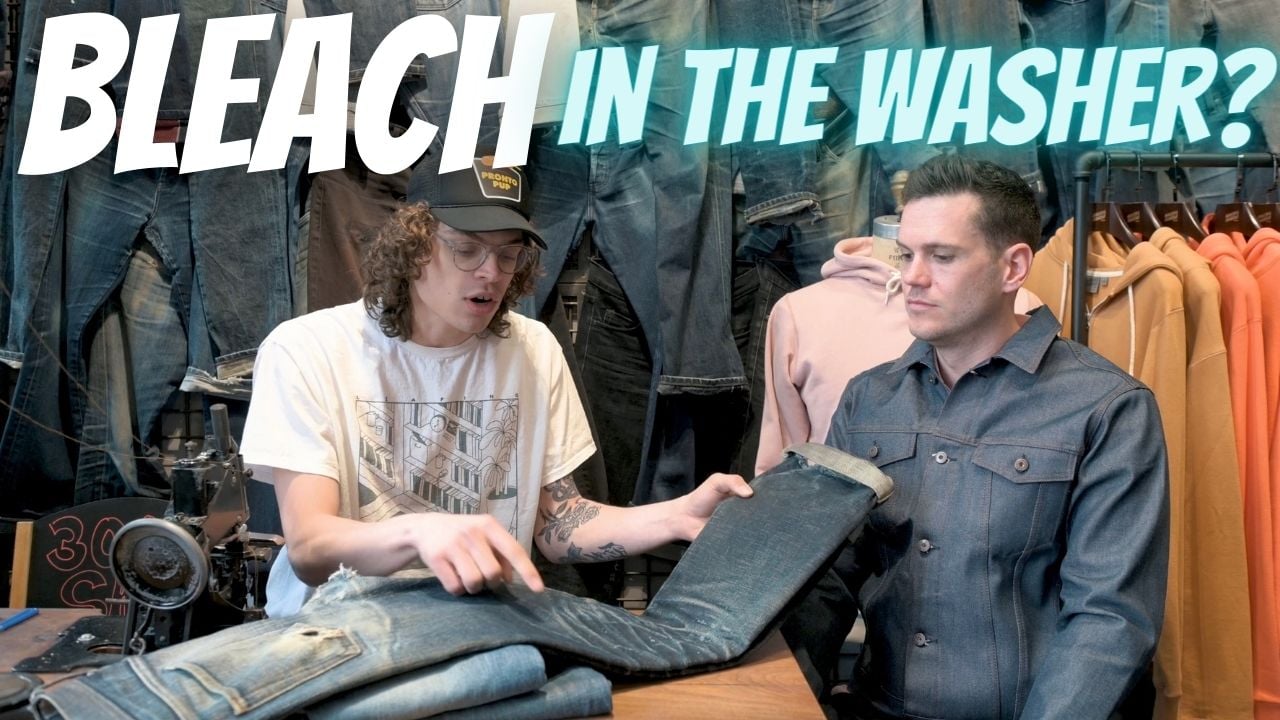
If you’re really committed to getting hall of fame fades, we asked the experts for their tips.
Learn more →
Most guys wash raw denim with cold water.
The reasoning is that warmer water causes you to lose more indigo. That might sound ideal, but more fading means less contrast in your fades and a higher risk of the other clothes in that load getting blue.
Don’t care about maximizing “contrast” in your fades? I don’t blame you, I can see why that’s not worth thinking about. It’s fine to wash on warm, just note the jeans will probably shrink a little and take a wear or two to stretch back out to your favorite fit.

Experts are split on this, but it seems like the safest move is to hang dry your jeans.
Some people insist that a dryer causes unnecessary damage to the denim’s fibers and impacts its longevity.
Practically speaking, it probably won’t make much of a difference, but a dryer will shrink your jeans a fair amount and they won’t go back to the original size until you’ve worn them a few times. (That’s how I kept my too-big summer jeans looking not-too-big in the pictures above.)
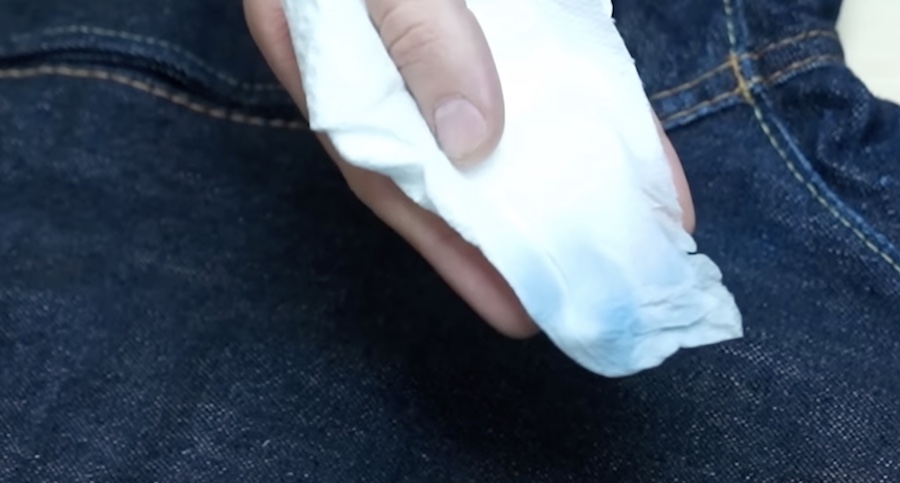
If it’s raw and if it hasn’t been washed much, anything that wet denim touches will probably get blue.
Let’s say you’re wearing a new denim jacket at a friend’s movie night. You do the dishes, get your wrist cuffs wet, and go back and finish the movie. If you rested your hands on your thighs while sitting, you probably got your wrists blue. If you rested them on the armrest of your friend’s couch, you’re in trouble.
In fact, when your raw denim is very new, even when it’s not wet, you should stay away from any light colored upholstery.
I’m making this real clear: wash it whenever you feel like it.
I’ve made multiple videos on the topic but here is its conclusion: washing isn’t bad for your jeans.
The less you wash raw denim, the higher contrast the fades will be, and some guys find that look desirable.
The reason many guys rarely wash their raw denim is because the less you wash it, the higher contrast the fades will be, and some guys find that look desirable.
If you wash them more often, the lighter bits will blur into the darker bits instead of being “crisp” and defined, like sharp lines of white or electric blue.
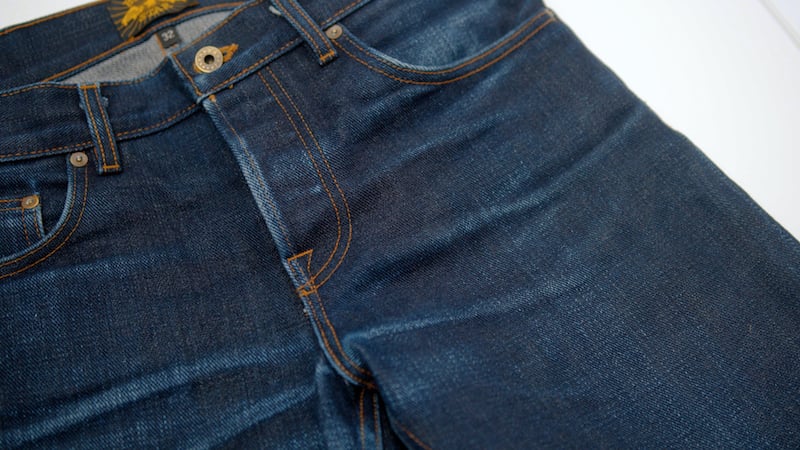
If you’re the kind of guy who would rather wash his jeans after a few wears, you’re free to. They’ll still fade.
It’s best not to go, like, hundreds of wears without washing. Not only will the jeans eventually look yellower and greasier, and not only will the crotch wind up smelling like pee, but going ages without washing will degrade the fabric and the stitching.
They won’t last as long, and durability is sort of the point of good denim.

If you’re new to wearing raw denim then you should know the dye can transfer outside of the washing machine as well. Dye is especially likely to transfer when your denim is new.
Dye is especially likely to transfer when your denim is new and when it’s wet.
I have a lot of leather boots with a bit of indigo around the collar, and lighter footwear — especially suede and roughout — really picks it up. If you don’t want your boots to look like the ones in the picture above, you should stick to darker footwear.
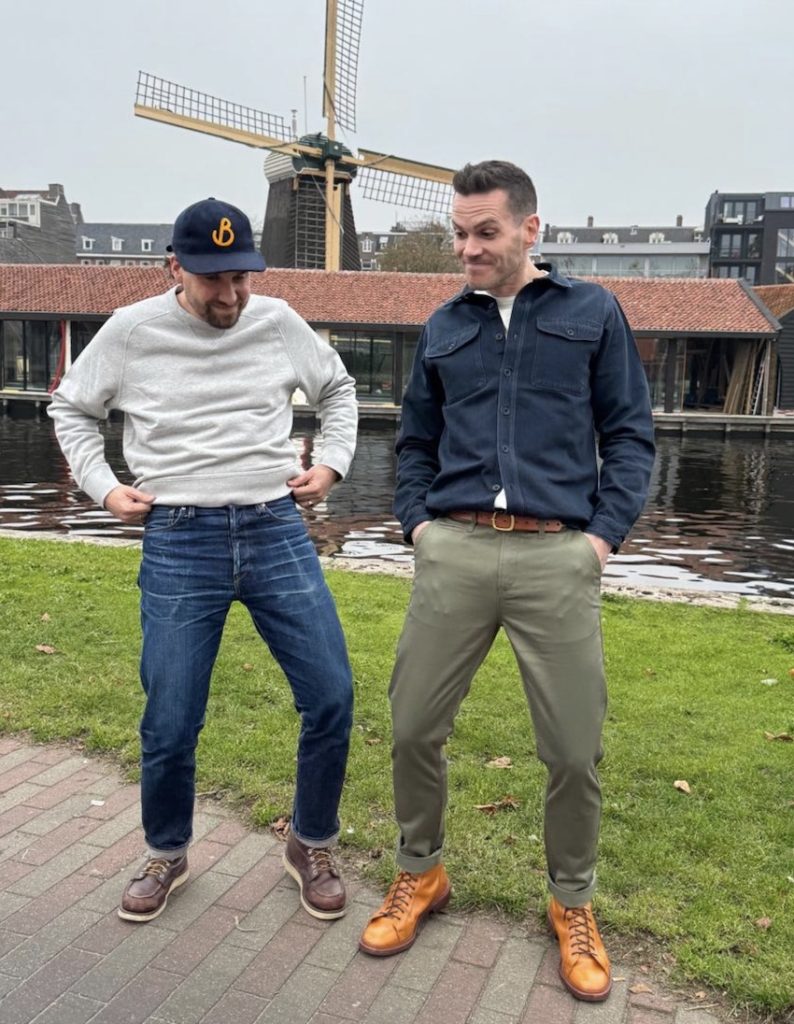
Now, heaps of denim guys love that look of stolen indigo on their boots and sneakers. Some, like my mate Ben at @slubcheck, actually prefer wearing white t-shirts with streaks of blue dye.
But if you want to preserve your whites, you should know that it’s best to wear your denim with darker colors, at least until it’s had a few washes. Like I said earlier, it won’t lose much more dye after that — unless you get rained on. You might want to be mindful of the weather forecast when wearing jeans with white shoes.
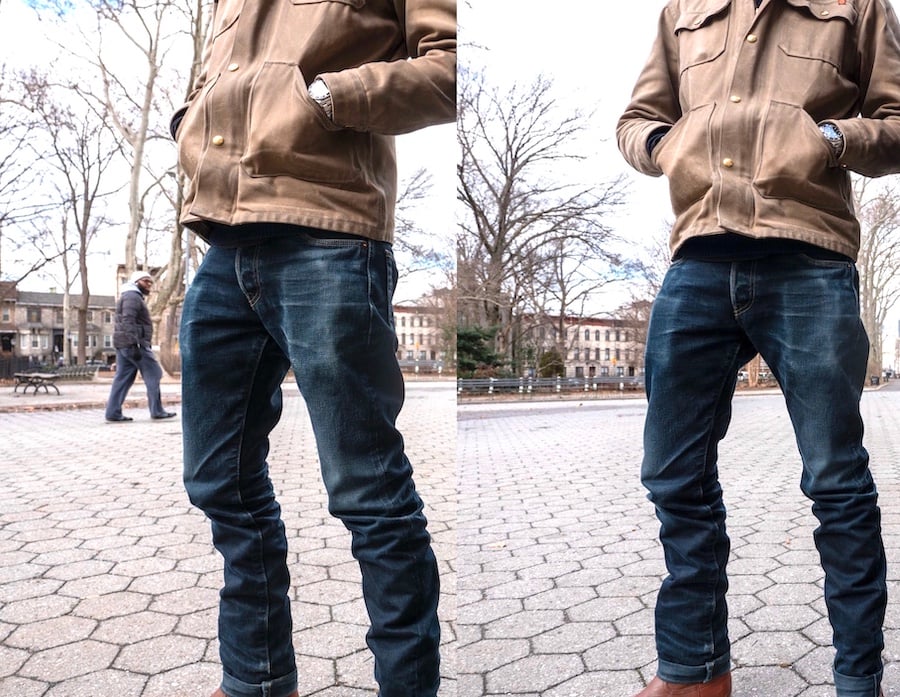
You really can wear your denim as often as you want. They’re not like boots, which seem very durable, but you’re not meant to wear the same pair every day because that won’t leave enough time for your foot humidity to air out.
Denim can be worn as much as you like. That said, if you hang up your jeans or jacket between wears, they’ll air out a bit and be less likely to smell iffy or feel musty.
I almost forgot this, but it’s one of the reasons guys cuff their jeans, and it’s why some guys return denim jackets when they shouldn’t.
As your arms or legs bend and flex a zillion times, the fabric will develop creases behind the knees or elbows that some guys call “honeycombs.” They’ll also fade, and eventually, these areas will just stay a little bunched up at all times.
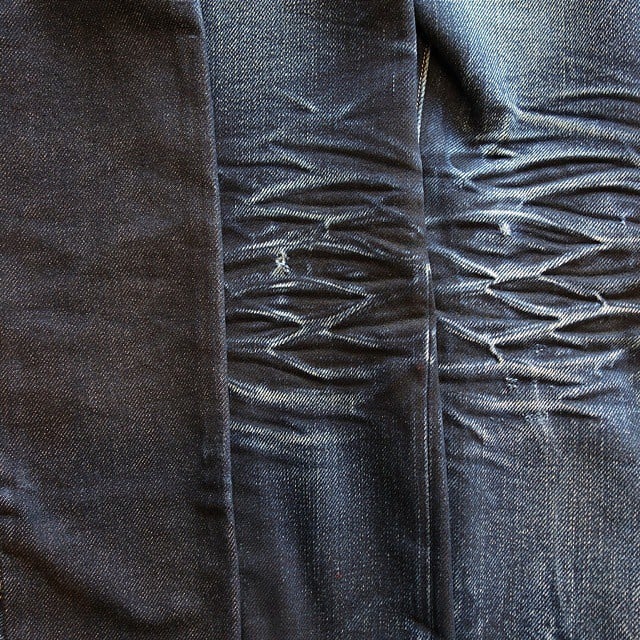
“When you fold a piece of paper, it creates something like a memory in the paper, right? When you put it down on the table, it doesn’t just magically go back to the way it was,” says Naked & Famous’ CEO, Brandon Svarc. “It’s the same thing with your jeans. Wearing them creates a kind of memory in the fabric. It won’t go back to ‘smooth’ again.”
So if your sleeves are a little long, that’s a good thing. You’ll be grateful they were once the sleeves start crunching upward.
And if you’re getting jeans hemmed, leave some extra length to allow for the upward creep.
Ugh, that reminds me about hemming…
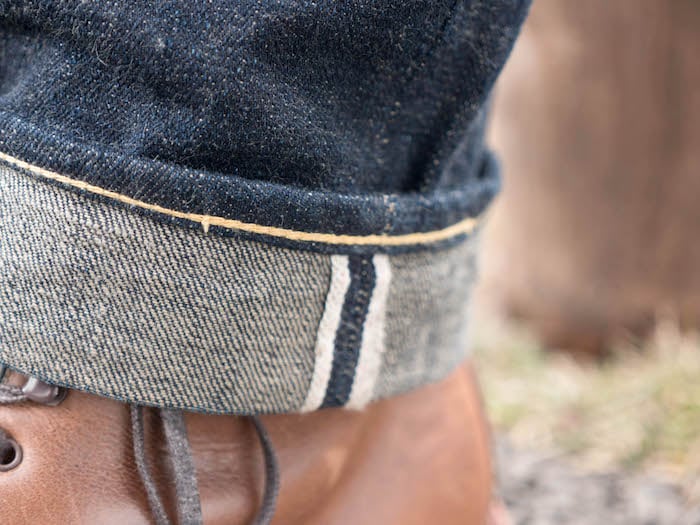
Raw denim brands usually just sell their jeans in one inseam length, but they usually offer to hem them for you once you buy them. (No returns!)
But if, for whatever reason, you get unhemmed jeans that you need to get altered, you’ll quickly see everyone online saying the only way to get nice jeans hemmed is with a vintage chain stitch machine.
You do not have to. You can just go to your local dry cleaners to get them hemmed like anything else.
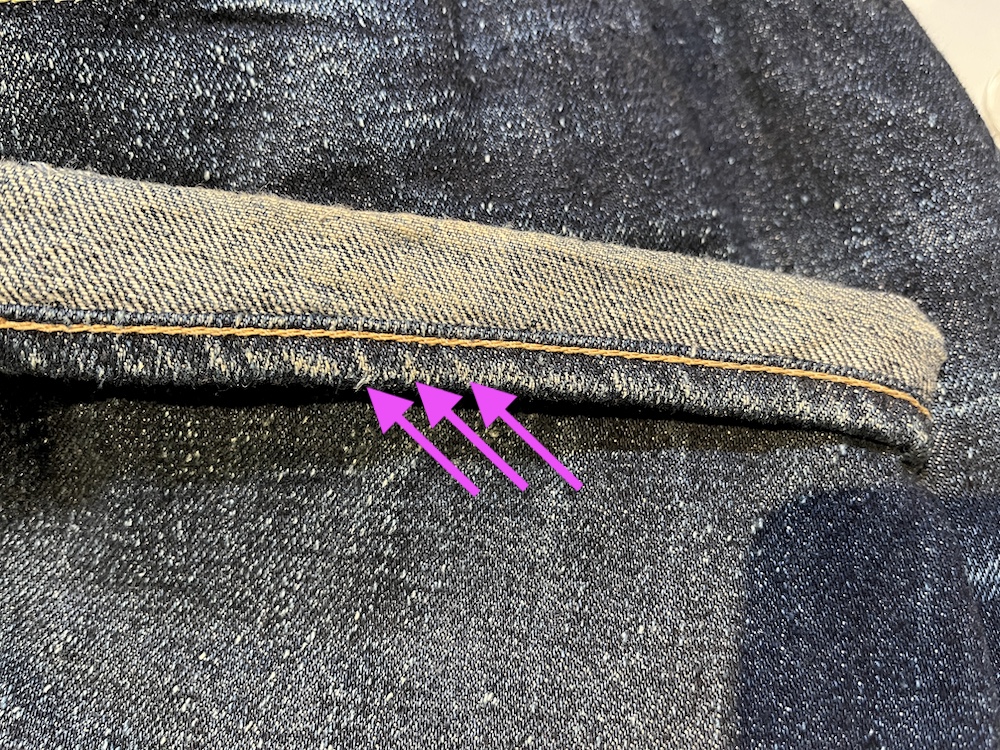
The main reason so many guys like the chain stitch is because it makes the fades along the stitches at the bottom of the legs a little wavier. Chain stitches are also a bit less likely to unravel, but when they unravel, the whole thread will start unspooling out of your jeans.
Don’t give yourself the headache or the expense. Just get them hemmed the normal way, it does not matter.
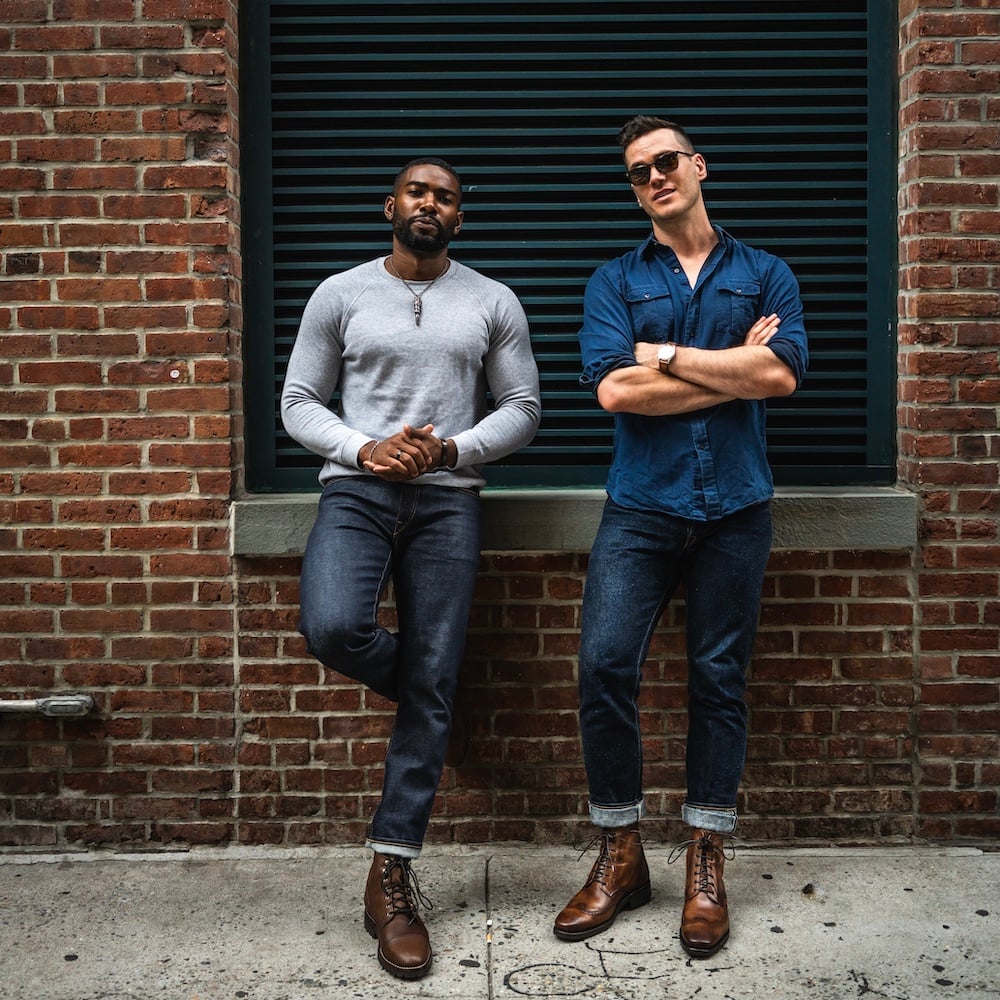
Most jeans have polyester and/or spandex in them, and you might be reading this because you just bought your first jeans that are 100 percent cotton.
This kind of denim behaves differently: those synthetics help jeans stay the same size and shape. When it’s made of all natural fibers like cotton, the fabric is more dynamic: it better conforms to your body with wear, and it’ll also shrink a bit after washing and stretch out a bit with post-wash wear.
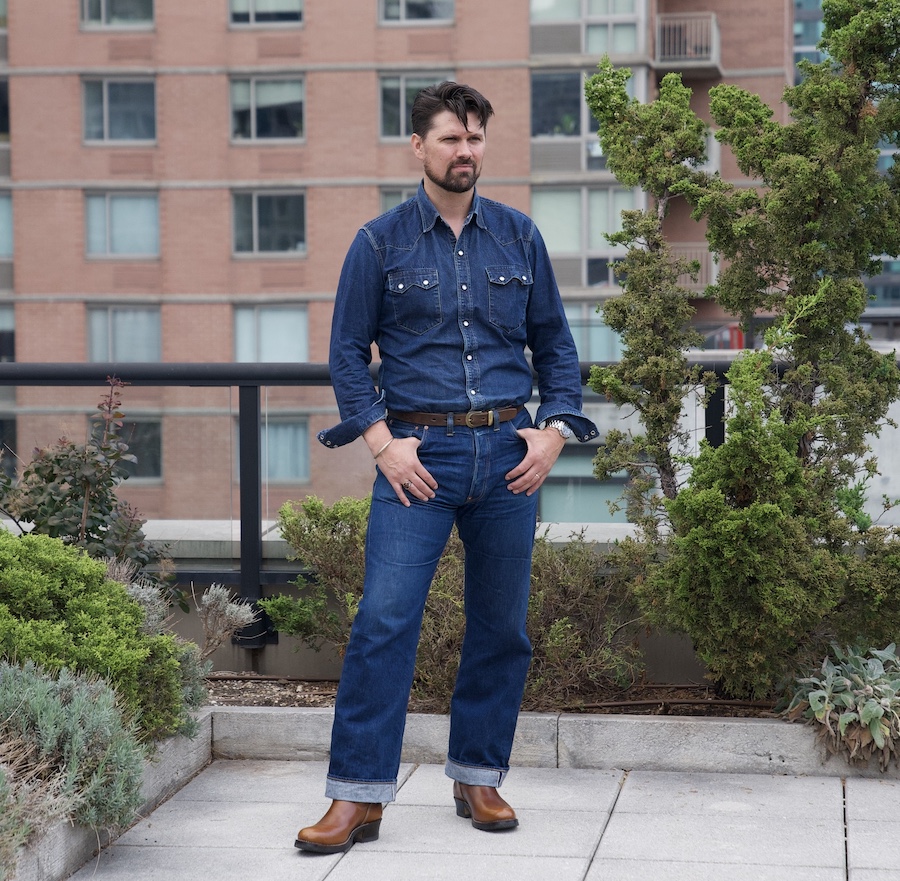
Most guys expect raw, 100-percent cotton jeans to permanently stretch about an inch in the waist.
Unfortunately, this isn’t consistent across all jeans: denim with a loose weave might stretch more, while denim with a really tight weave might not stretch much at all.

I’m speaking from experience: I bought these 14-ounce Iron Heart jeans very tight because I expected them to stretch out like other brands — and they never did.
Anyway, a good rule of thumb is to buy your jeans snug and expect the waist to stretch about an inch after the first couple of wears. But always ask the brand (or store clerk) about this, because not all raw denim is the same.
I tried to avoid giving you jargon to learn but you do need to double check if the raw denim you’re buying is sanforized or unsanforized. It’ll say so on the product page. If it doesn’t say so, then it’s definitely not unsanforized, and you can skip this section.
Sanforizing is a way of treating fabric at the mill (usually with heat and steam) to keep it from shrinking too dramatically.
You might have heard the slogan “shrink to fit” associated with Levi’s. That’s referring to what denim always did before sanforization was invented in the 1930s: jeans would shrink a good size or two on the first wash.
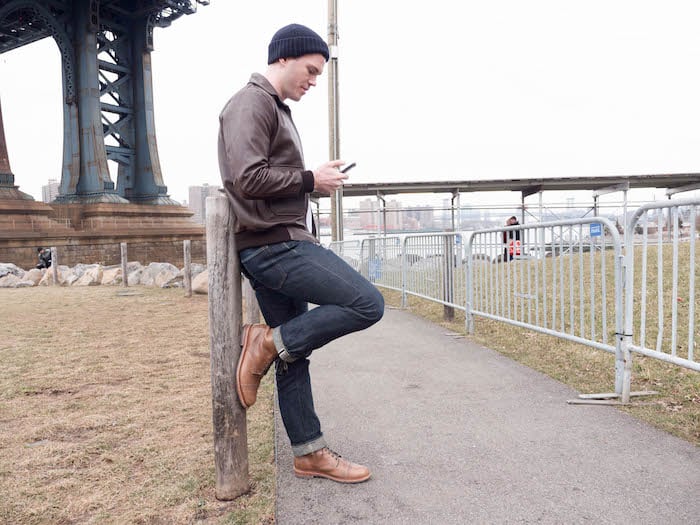
Nowadays, almost all denim is sanforized, even in the raw denim world. (Some guys argue that sanforized denim isn’t raw, but that’s majoring in the minors.)
But some denimheads prefer to buy unsanforized denim because it’s more old fashioned or because they prefer the way it wears. For example, unsanforized jeans are famous for “leg twist”: the inseam slowly snakes around the leg with wear. Some guys adore that (it’s what the first jeans wearers experienced!), others would rather not risk buying jeans that won’t fit after a wash.
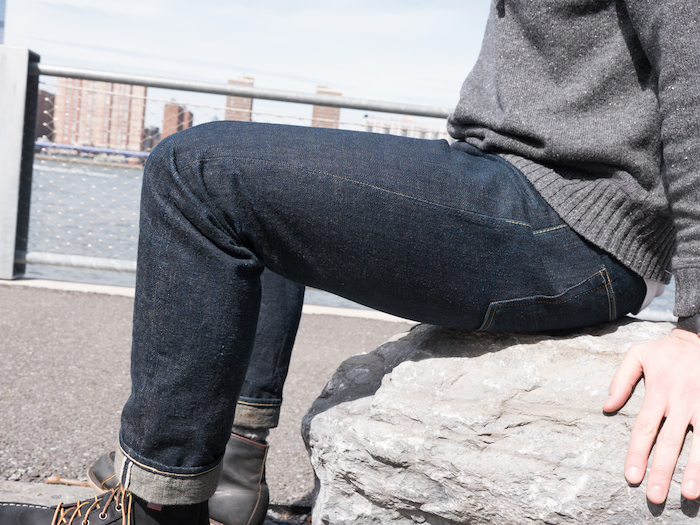
If your denim is unsanforized, it will shrink a good size or two the first time you wash it. If it’s sanforized, it’s just normal.
“If it’s unsanforized and you don’t want it to shrink, then don’t wash it in warm water,” says denim historian and brand owner Mohsin Sajid. “Cold water will shrink it too, but less so. Even dry cleaning is still using chemicals, so that will still shrink unsanforized denim. Even wearing unsanforized denim will shrink it a little, because of your body sweat.”
Tiny addition: I hung my denim jacket on a wire hanger for years and it made little pinpoint fades appear on the shoulders, which I didn’t like.
That’s everything I can think of.
I’m sorry i had to talk about sanforization, I really wanted to keep this free of jargon, but you do need to check for that one.
Otherwise, the main takeaway for first time raw denim buyers are to wash the garment (jeans or jacket) inside out with cold water whenever you want to wash it, and don’t let them sit in a crumpled wet pile. That’s the main thing to know.
The other big takeaway is that raw denim fades, so be mindful of that when you wash it or get it wet. Wear and wash your raw denim as much as you want, but keep an eye out for when they look like slick and yellowish and smelly.
There’s more to talk about with nice denim, and from here you can dive into looms and slub and nep and dyeing techniques and more. But as far as what’s practically important, I think this article is all you need!

This is my website, so I'll just write in first person. I'm the founder and editor of Stridewise, where I have spent nearly a decade covering boots and casual menswear.

by Nick English
Founded in 2018 to help men buy the best boots, we’ve since expanded our team and purview to review and celebrate casual footwear and menswear that’s as close to “buy it for life” quality as possible. We take great pride in being a trusted source for information while maintaining complete editorial independence. At no extra cost to you, we might earn a commission from a brand when you purchase through our links, which helps us keep our mission alive. Learn More
Casual Durable™.
Yup, we even trademarked it. Just because you’re dressed down, doesn’t mean you have to dress bad.
This site started to help guys find the best boots for their dollar and has since expanded to cover the highest quality casual menswear, from leather jackets to selvedge jeans to canvas bags — the kind of simple, fashionproof classics that help you get dressed without overthinking your “style.” Read more
Subscribe for an exclusive article to help you find the best deals on quality footwear.