Updated Feb 2, 2026

Stridewise
Boots, Denim and Casual Stuff

Expert Verified By: Bahzad Trinos, Creative Director & Product Development, Naked & Famous Denim
Given practically everybody wears jeans, a lot of people have hit a point where they wonder if there’s a “better” kind of jeans than your bog standard, mall brand Levi’s and American Eagles. There is: it’s selvedge denim.
But as soon as you start searching for brands, or simply whether or not selvedge denim is worth the money, it can quickly become a confusing endeavor as more and more jargon and gatekeeping get fired in your direction.
Selvedge. Raw denim. Shuttle looms versus projectile looms. Sanforized or unsanforized? Do people really not wash their jeans? Why is there such a strong subculture surrounding a particular kind of pants?
We get it. So we made this article. And this video!
There are two angles:
What Selvedge Is: Woven on vintage looms.Most denim today is made on projectile looms, but selvedge is woven on shuttle looms, a technology that’s centuries older. It’s technically a little stronger if you’re comparing it with an identical denim from a projectile loom.
What Selvedge Tends to Be: Thicker, cooler, stronger. Denim enthusiasts and makers often prefer selvedge because of its history. Because it attracts the experts, selvedge denim jeans are usually higher quality than non-selvedge. It’s also more likely to be unusually thick or textured, qualities that are enjoyed by such “denimheads.”
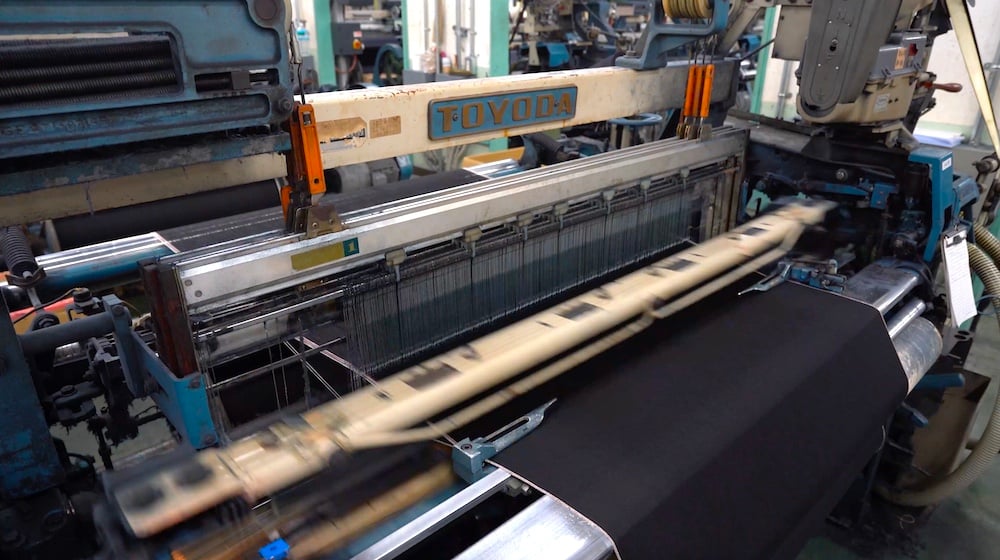
Looms are what weave the yarns together to make fabric, and shuttle loom technology is centuries older than projectile looms, which became widespread at the same time denim did in the 1950s.
“Selvedge denim means it’s been denim woven on antique shuttle looms instead of the more commonplace projectile looms,” says Bahzad. “Shuttle looms are the same types of looms that were used to make denim back when denim started, and they call it a shuttle loom because the fabric is woven using a shuttle.”
Some very simple background: denim’s made by weaving yarns coming from two different directions: the warp and the weft.
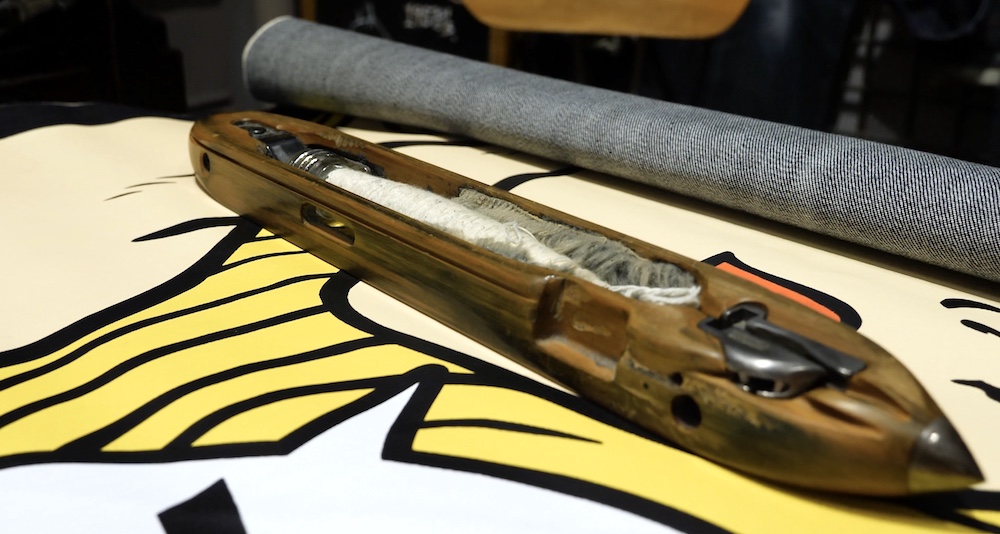
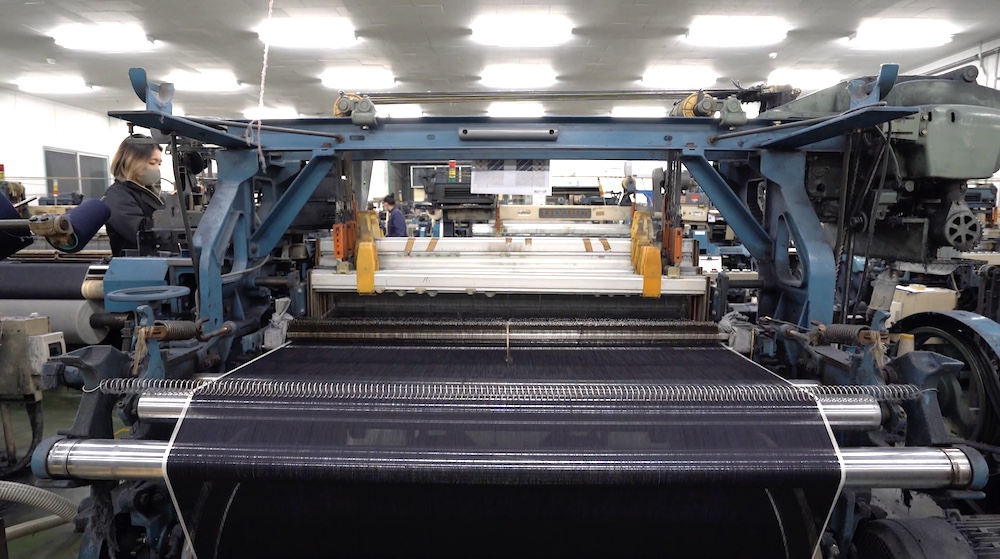
Invented in 1733, the shuttle in a shuttle loom carries the weft back and forth on the loom, making a strip of denim that’s usually about 30 inches wide.
Mass produced denim is made on projectile looms, which came into commercial use in 1953, over 200 years after the shuttle loom’s invention. They’re bigger, faster, more widespread, and cheaper to make.
“Projectile looms can weave tremendously fast,” says Bahzad. “Basically, they’re injecting the weft one yarn at a time instead of one continuous weft running back and forth, which is what shuttle loom does. A shuttle loom produces about 5 meters of fabric per hour. A projectile loom makes 25 meters of fabric per hour at double the width.“
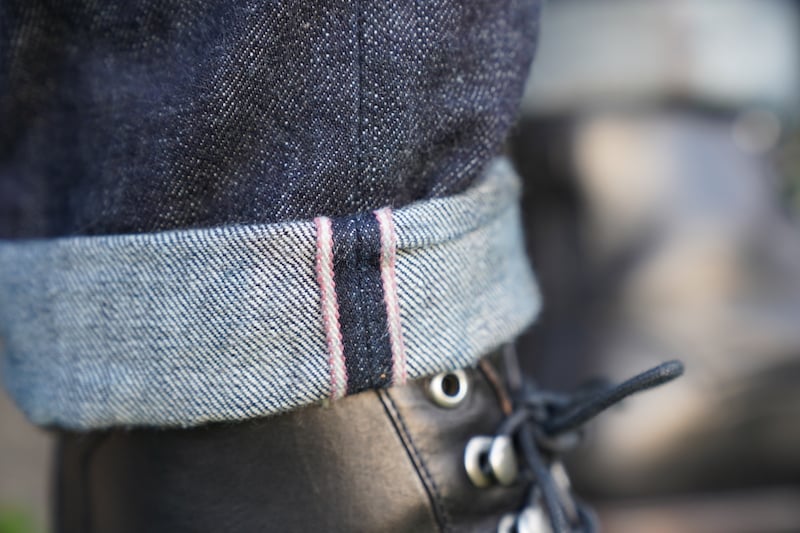
On every pass, the shuttle seals the edge of the fabric so it doesn’t fray. That sealed edge is also called the “self edge,” which eventually got contracted to “selvedge” (or sometimes “selvage.”) That’s where the name comes from, and that self-finished edge is what you can see when you flip up the cuff of your jeans.
“Projectile looms make fabric up to one and a half meters wide, which is about twice as wide as you can get with shuttle looms,” says Lennaert Nijgh of Benzak Denim Developers.
“A lot of the appeal of selvedge denim is just knowing that it’s made the old school way,” says Bahzad. “It’s kind of like a luxury automatic watch versus a digital watch. Both tell time, but one does it in a way with gears and springs and takes a lot of time and dedication to make versus something that’s more mass produced.”
While selvedge is usually higher quality, most people I’ve interviewed on the topic have told me it isn’t higher quality by definition. You can make the same denim on either kind of loom, but selvedge tends to be higher quality because enthusiasts prefer using selvedge denim — it’s the original denim, after all.
But Lennaert Nijgh of Benzak Denim Developers gave me a different take when I visited him in Amsterdam to film the video above.
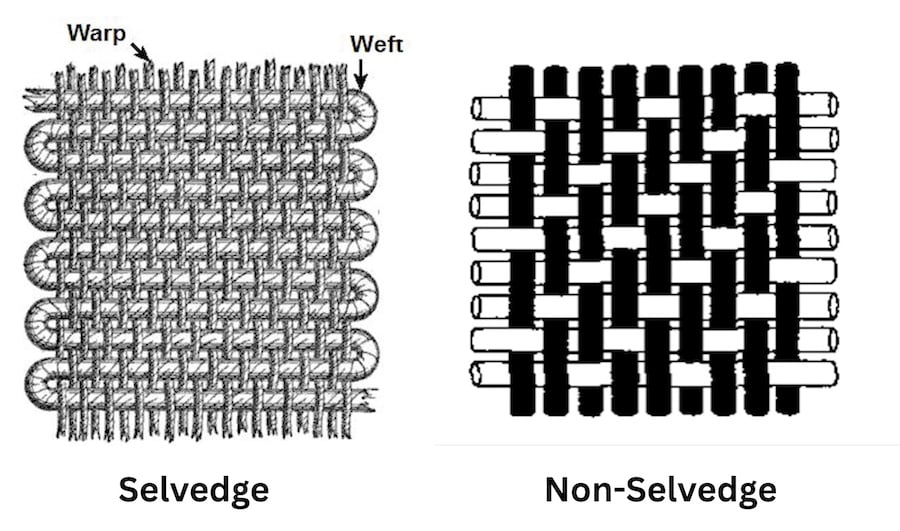
“With projectile looms, it’s all separate yarns being woven through the weft,” says Lennaert. “On shuttle looms, the warp is one continuous yarn traveling back and forth as it’s woven. Because it’s one continuous yarn, selvedge tends to be stronger.”
Keep in mind that in this thought experiment where you’re comparing selvedge and non selvedge fabrics, everything else is identical: weave density, staple length, fabric composition, cotton origins, and so on.
So remember there’s a difference between a technical answer and a practical answer: technically, selvedge is a bit stronger. Practically, you’ll probably never be able to hold up a selvedge and non-selvedge denim and say “the selvedge one is stronger.”

The main reason you see selvedge on high end brands is because guys who love denim tend to like working with denim’s original form. Selvedge jeans are usually better because that denim is favored by enthusiasts, rather than it having any intrinsic advantages.
But the fact is that if it’s selvedge, it’s likely to be better. What does that mean?
Further Reading
We look into a wide range of selvedge denim from Americana to post-heritage Japanese selvedge denim and even stretch jeans. Learn more →
Your average jeans are about 11 or 12 ounces per square yard. Denim enthusiasts (“denimheads”) often like the novel, protective feeling of wearing thicker jeans, and even your basic, entry-level selvedge denim jeans are usually 13 or 14 ounces. (Naked & Famous’s flagship Left Hand Twill is 13.75 ounces.)
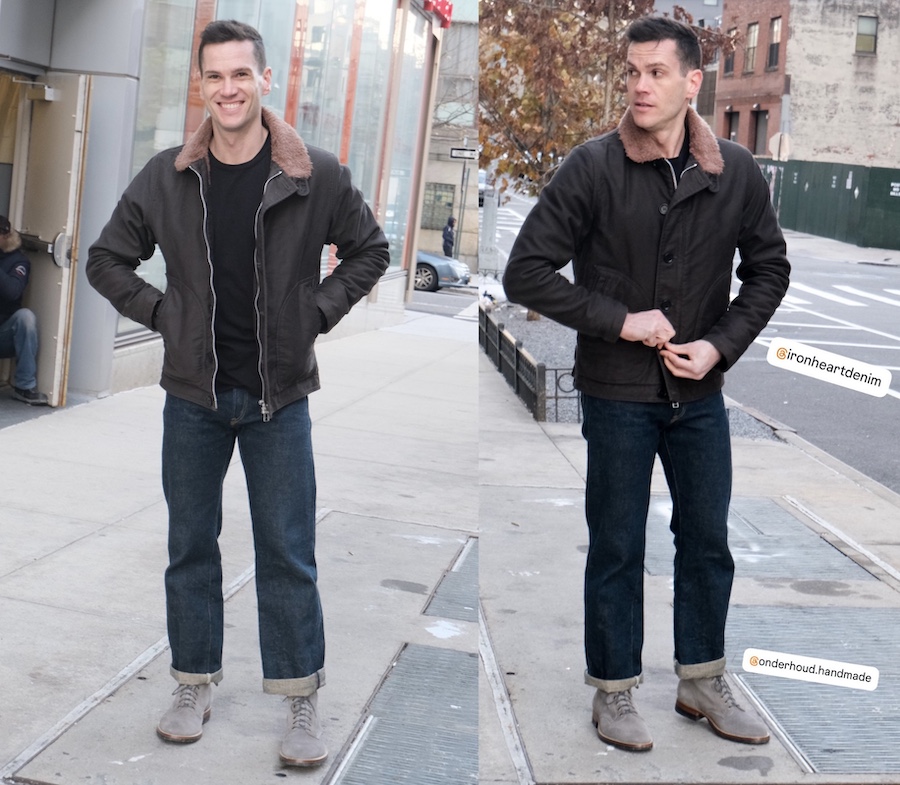
Denimheads will usually have at least one extra heavy pair of jeans for the colder months. Perhaps the best known is Iron Heart’s 25oz jeans (reviewed by Troy here), while I own 20oz and 21oz pairs from Oni Denim Co and Iron Heart, respectively.
You could make such heavyweight denim with a projectile loom, but only weirdos like us would want to wear it, and weirdos prefer selvedge. If it’s thick, it’s almost certainly selvedge.
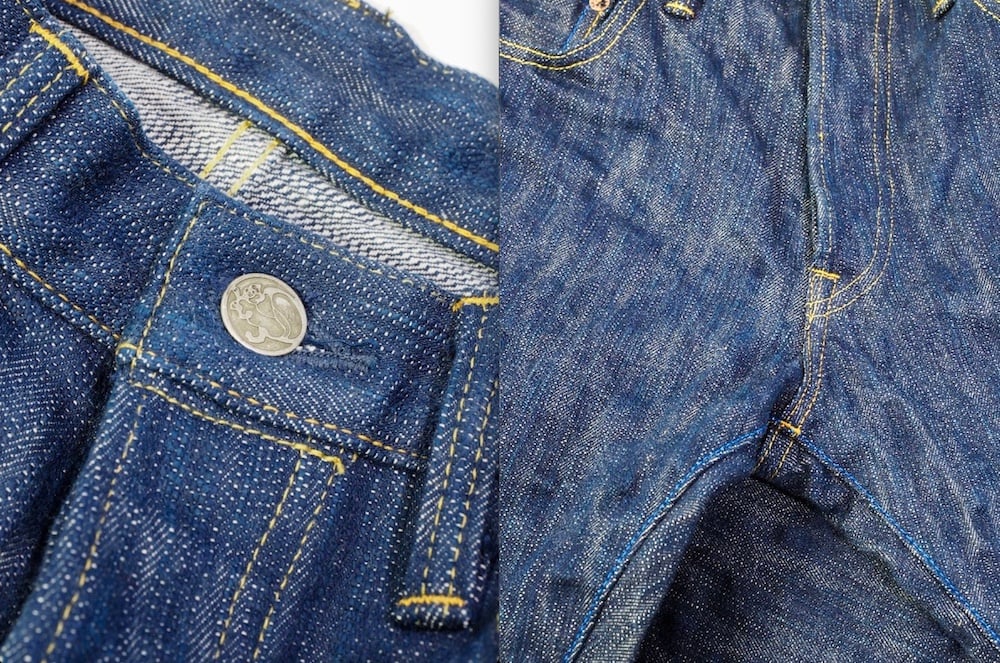
“What people tend to associate with selvedge denim is that it is thicker, it’s more complex, it’s more irregular, it’s more durable, and the fades are more interesting,” says Bahzad.
Examples of the character that selvedge fans enjoy are slub (when the warp yarn differs in thickness throughout, creating a “streaky” appearance), and nep (cotton fibers protrude from the surface, looking a little like snow sitting on the fabric.
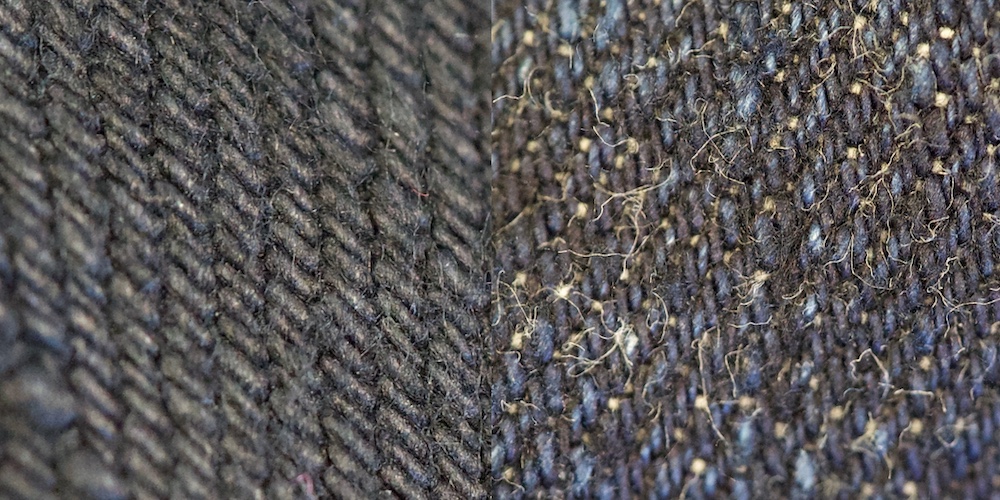
Historically, slub and nep were considered defects, but denimheads like them because they signify a more vintage, imperfect, and (sort of) human manufacturing process. When fabrics have irregularities like this, no two pairs will be identical.
Your journey with your jeans, and the way they become distinctly you as they fade and shape to reflect how you’ve worn them, is a big part of the attraction with raw denim. Even if it’s a smooth and consistent kind, different selvedge denims are unique to one another in a way that mass produced denim isn’t.
Other unusual characteristics you’ll often find in this realm are denim that’s extra hairy (due to excess fibers not being singed off), dyed with unusual sources and colors (like persimmon or black soybeans), or minimally processed.

You’ll often hear the words “raw selvedge denim” together. While selvedge denim doesn’t have to be raw , fans of one usually prefer the other.
“They’re two very different terms,” says Bahzad. “Selvedge denim just refers to how the fabric is made. Raw denim refers to whether or not the fabric has been rinse washed or not. A raw denim is a denim that basically comes off the loom.”
Raw means it hasn’t been softened, faded, or distressed before you buy it. Even if you’re not buying pre-faded jeans, most jeans are not raw because they get a wash or two at the factory to soften them up before being sold to customers.
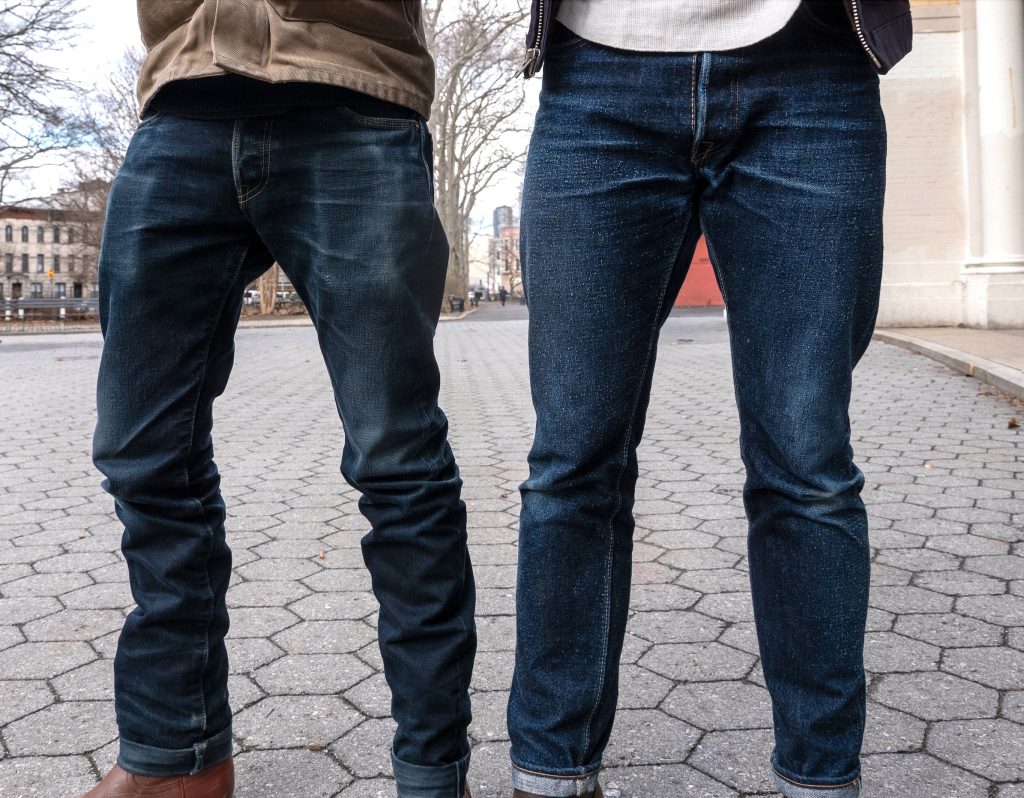
Raw denim jeans are quite stiff and “crunchy”, partly due to the starch in the fabric that hasn’t been washed out. (It’s added to make the fabric easier to cut and sew.)
“Some people will argue over the definition of ‘raw denim’ because most raw denim will still get some finishing processes like sanforization, anti skewing, things like that,” says Bahzad. “I think they are. I think anything that hasn’t messed with the dye is raw denim.“
Denimheads like raw denim because they like fading their own jeans. If you buy it raw, then all the fades belong to you, not the factory’s washing process. Denimheads feel a greater sense of ownership of their jeans when they buy them raw.
Further Reading

We’ve traveled the world looking for the best raw denim out there. Learn more →
Back in the day, you had to buy denim a little big, then wash them, then they’d shrink about 10 percent, and then you’d know how they fit you. (I underwent this process when I bought my first pair of selvedge from Studio d’Artisan.) This is the origin of Levi’s old slogan, “shrink to fit.”
It’s a fairly stressful experience buying clothes without knowing how they fit, so in 1930, one Sanford Cluett devised a process that treats fabric to pre-shrink it. “Sanforization” is usually performed with steam and water, sometimes with extra chemicals.
“Sanforized jeans still shrink when you wash them, maybe between 1 and 3 percent, but an unsanforized denim will generally shrink between 5 and 10 percent,” says Bahzad. “If it’s unsanforized, you’ve got to buy jeans two sizes bigger and wash them, and hopefully they’ll shrink to the right size.'”
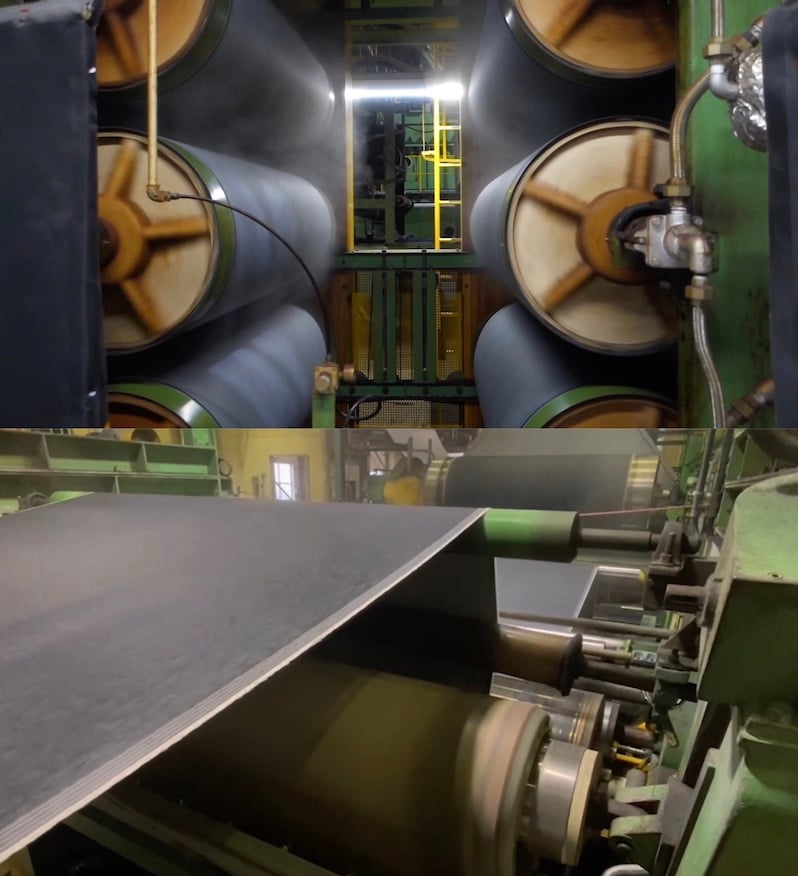
Why buy unsanforized if it’s so problematic? To be clear, very few people buy unsanforized denim, even big time raw denim enthusiasts. And brands don’t love selling it in the first place, given the increased risk of returns.
But some guys love unsanforized or “loom state” jeans because it’s less processed, it’s more vintage, and it seems to contour to the body a little differently with wear. Some guys find that unsanforized jeans take up the shape of their body even better than regular raw denim.
There are other elements of unsanforized denim that certain folks enjoy: “leg twist” is an example. With wear, the outer seam of unsanforized jeans will often wind up snaking around the leg a little.
[Further reading: A Guide to Sanforized vs Unsanforized Denim]
“Selvedge versus non-selvedge denim, it doesn’t matter,” says Bahzad. “So long as they’re both raw denim, they’re both going to fade. But (the way they) fade is going to be dependent on a lot of things.”
Most selvedge is produced in Japan, where most of the world’s vintage shuttle looms exist, and they tend to make it with rope dyed yarns.
“Rope dyed yarns are white cotton yarns that go through a set of indigo baths,” he explains. “They dip the cotton yarn in the indigo, they pull it out, they let it dry, they dip it back into the indigo, and this repeats dozens of times. You end up with a white center core yarn with all these layers of indigo on top. As you wear your jeans, those indigo layers shed away and they start to reveal all the different shades of blue underneath. And that’s why your jeans will fade from blue to white.”
That could happen whether your jeans are selvedge or not; it’s very dependent on the warp yarn. Just about any jean will fade with wear, but the amount of contrast you’ll see depends on that initial dyeing process and the way they’re washed and cared for. It doesn’t really have anything to do with if it’s selvedge or not.
There’s a lot to say about washing jeans, but I realized that I didn’t need to put it in this article because this article is about the ins and outs of selvedge denim, not raw denim.
Raw denim has rules about washing and fading. Selvedge denim is usually raw, so usually that information is relevant, but it wouldn’t make sense to write it all out in an article describing what selvedge denim is. But since we’re here, real quick:
Check out the article below and the video above for some more in-depth info on fades and washing.
Further Reading
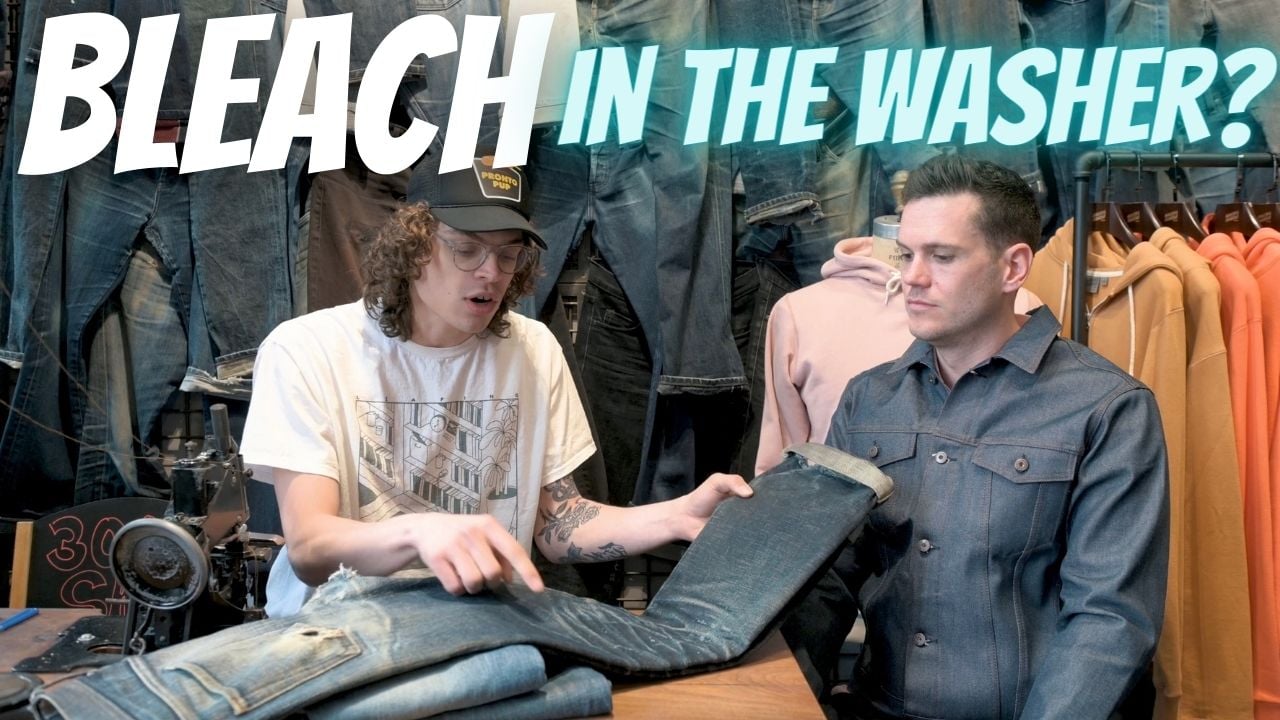
Your selvedge is probably raw, so here’s a bunch of information about washing and fading it. Learn more →
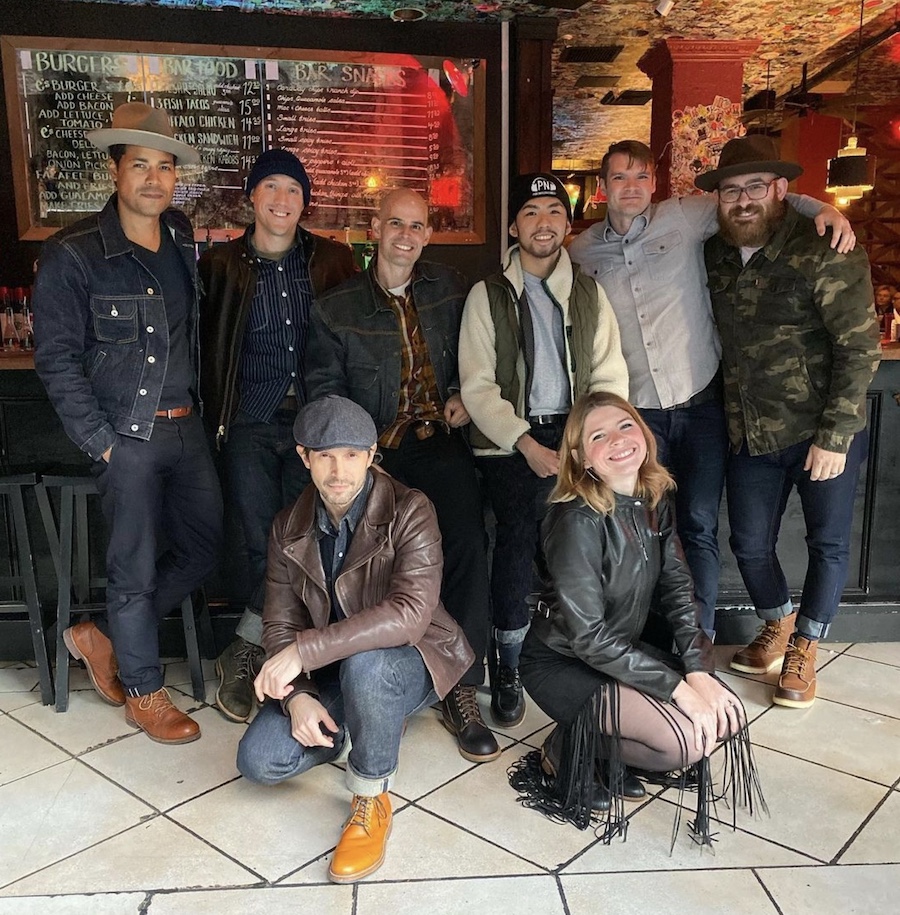
There are lots of reasons people might get excited about this stuff.
In a world where fast fashion and uniform production methods dominate the textile industry, selvedge denim is seen as a symbol of authenticity and uniqueness. The use of shuttle looms creates a fabric with subtle (and sometimes not-at-all subtle) variations and imperfections that denim enthusiasts appreciate for their uniqueness, texture, and rarity.
It’s made more slowly and skilfully. It’s made on hard-to-find and hard-to-maintain vintage looms. Many see it as a more “authentic” reproduction of and homage to pre-war workwear and the working class. It’s often made with 100% natural materials, and many have a bias against polyester, elastane, and other fabrics derived from fossil fuels that are sources of microplastics.
A big draw is that selvedge is typically thicker, sometimes over twice as thick as regular jeans, making for a significantly different feeling when wearing them that many liken to wearing armor, or a carpet. Thicker denim is warmer, plus it confers an interesting feeling of, well, protection from the elements.
It’s also rarer and harder to make, two elements that always draw collectors and enthusiasts.
There’s also the fact that many guys wear their denim practically every day, making them something of a companion with which they share an intimate bond, a stalwart component of their journey through this life. Seriously!
Because of the old fashioned production method there’s often crossover with the world of heritage fashion: folks who like their apparel to be durable and natural with a vintage and casual bent. They’ll often flank their jeans with, say, a waxed canvas jacket up top and welted boots underneath. The raw denim subreddit regularly has posts about those items of clothing, which aren’t at all raw denim.
Whatever the draw, people fall in love with selvedge. And in bigger cities, if you look in the right places on Instagram and Reddit, you’ll often find a community of denimheads who like to get together to chat about jeans and boots and loopwheeled tshirts. In NYC, my go-to is @tristatedenimhangs.
But remember that when you walk down the street, just about everyone is wearing jeans; you don’t need to like vintage watches to simply want a step up in the quality of your daily denim.
[Further reading: Inside Vietnam’s Raw Denim Community]
In conclusion, selvedge denim represents a rare dedication to both tradition and innovation, and it’ll give you jeans that will last a long time and reflect your lifestyle. Its appeal lies not only in the way it’s made but also in the individuality it offers. Whether you prefer sanforized or loom state, selvedge or non-selvedge, wild and hairy or smooth and uniform, there’s every reason to wear better quality jeans. It’s not just hype, the draw isn’t just a brand name: there are both completely practical and totally esoteric reasons to enjoy selvedge, which is why it’s relatively widespread.
Enjoy the journey of wearing and caring for your denim, knowing that each pair will tell a story that is uniquely yours, and you’re wearing jeans made the way we used to make them, when clothes were made with natural materials and to last as long as possible.

This is my website, so I'll just write in first person. I'm the founder and editor of Stridewise, where I have spent nearly a decade covering boots and casual menswear.


by Nick English
Founded in 2018 to help men buy the best boots, we’ve since expanded our team and purview to review and celebrate casual footwear and menswear that’s as close to “buy it for life” quality as possible. We take great pride in being a trusted source for information while maintaining complete editorial independence. At no extra cost to you, we might earn a commission from a brand when you purchase through our links, which helps us keep our mission alive. Learn More
Casual Durable™.
Yup, we even trademarked it. Just because you’re dressed down, doesn’t mean you have to dress bad.
This site started to help guys find the best boots for their dollar and has since expanded to cover the highest quality casual menswear, from leather jackets to selvedge jeans to canvas bags — the kind of simple, fashionproof classics that help you get dressed without overthinking your “style.” Read more
Subscribe for an exclusive article to help you find the best deals on quality footwear.